Hand tattoos don’t live in the same category as most other placements. They’re visible all day. They’re harder to heal. They require more maintenance than people expect.
You can’t test-drive a hand tattoo either. Once it’s there, it becomes part of how strangers read you, how employers react to you, and how your tattoo ages under constant use.
This hand tattoo guide is meant to save you from the most common mistake. Choosing a hand tattoo like it’s a forearm tattoo. It isn’t. If you want to do this well, you need to understand pain, healing, fading, and the real-life consequences before you book.
Why Hand Tattoos Hurt More Than People Expect
The hands have thin skin stretched over bone with minimal padding. That combination makes them one of the more intense areas to tattoo because the needle doesn’t have much buffer between the surface and the nerve density underneath. Even people with multiple tattoos sometimes get humbled by how sharp the sensation feels here.
The top of the hand
The top of the hand tends to be more painful than people assume, especially near the knuckles where the skin is tight and movement is constant.
Fingers
Fingers usually feel worse. The webbing between fingers and the sides of fingers can spike the discomfort fast, and the pain often feels more concentrated than it does on larger areas.
If you’ve never been tattooed before, hands are a risky starting point. The pain is more intense, and the healing demands are higher. Research what to expect from your first tattoo before you commit to something this visible and high-maintenance. It’s not about fear. It’s about setting expectations so you don’t tap out mid-session or panic during healing.
That leads to the next reality check.
What Makes Hand Tattoo Healing More Complicated
Healing is where most people realize why hand tattoos have a reputation. You use your hands for everything. You wash them constantly. You touch public surfaces, phones, keyboards, steering wheels, doorknobs, gym equipment. You can’t wrap your hands in bubble wrap and pretend life stops for two weeks.
The first week is the hardest
Your tattoo is still an open wound and your hands are constantly exposed to friction and bacteria. Washing is unavoidable, but overwashing can strip the protective layer your skin is trying to build. Underwashing is obviously worse. Hand tattoos require a more deliberate routine than most placements because the margin for error is smaller.
Dryness is another factor people forget
Depending on the season, your hands can crack and get irritated easily, which doesn’t help healing. You’ll need to keep the skin supported without suffocating it, and you’ll need to avoid turning moisturizer into a thick glossy layer that traps heat and bacteria.
Fingers come with their own set of challenges.
Why Finger Tattoos Are Harder to Heal and Harder to Keep Crisp
Finger tattoos aren’t only painful. They’re unpredictable. Fingers bend nonstop, touch everything, and deal with constant friction. That movement can affect how the ink settles, and it’s one of the reasons finger tattoos are more likely to blur, fade, or heal unevenly.
The sides of the fingers
The sides are especially prone to fading because they rub against everything, including your own fingers all day long.
Knuckles
Knuckles are tricky because the skin stretches and compresses constantly.
That doesn’t mean finger tattoos are a bad idea. It means your design needs to be realistic for the area. Simple shapes, minimal symbols, and small bold marks tend to perform better long-term than intricate details. The more detail you try to force into a tiny moving surface, the more likely it is to soften into something unreadable later.
Which brings us to fading in general.
Do Hand Tattoos Fade Yes and Here Is Why
Do hand tattoos fade? Yes. Faster than most placements. That’s not an opinion. It’s the reality of how hands live.
Hands are exposed to the sun more than almost any other part of the body. They’re washed repeatedly. They experience constant friction. And the skin turnover on hands is faster than areas like the upper arm or back. All of that works against ink retention, even when the tattoo is done well.
What drives fading most
UV exposure breaking down pigment. Handwashing and soap drying out skin. High friction from daily use. Faster cell turnover compared to other areas.
Fine line designs blur quicker on hands because the lines are already thin. Bold designs with strong outlines and contrast typically hold up better. Even with great aftercare, touch-ups are common. If you live in NYC, your hands get sun exposure year-round, so sunscreen isn’t optional if you want the tattoo to stay readable.
Back-of-hand tattoos usually hold up better than finger tattoos. Palm tattoos are in their own category and tend to fade extremely fast, which is why most artists are cautious about them.
Now for the conversation nobody wants to have.
The Job Reality You Cannot Pretend Does Not Exist
Hand tattoos still carry a “job-stopper” reputation for a reason. Acceptance has improved, especially in New York, but it depends heavily on the industry and the role. There’s a huge difference between a creative studio environment and a conservative client-facing profession.
Industries that are often more accepting
Fashion, music, entertainment, advertising, and certain tech and freelance worlds.
Industries that may still push back
Corporate finance, law, healthcare with patients, traditional client services, and roles where appearance expectations are tied to trust and professionalism.
This isn’t about morality. It’s about perception. People will judge visible tattoos differently depending on where you work and who you deal with. That’s why this falls under “things to know before getting a hand tattoo” even if you personally don’t care what strangers think.
So how do you figure out if it’s the right move for you?
Things to Know Before Getting a Hand Tattoo Based on Your Actual Life
Be honest about your situation, not your ideal future. Do you meet with conservative clients? Are you early in your career? Are you planning a career change later? Do you work somewhere with inconsistent standards depending on who’s hiring?
Some people get hand tattoos because their industry won’t blink. Others wait until they’re established enough that it won’t close doors. Neither approach is wrong. The mistake is pretending it doesn’t matter when it still does for many people.
If you’re on the fence, you can always tattoo another visible area first and see how it feels to live with it socially and professionally. A hand tattoo can be a great choice, but it’s a choice that follows you everywhere.
Once you’ve thought through the practical side, design becomes the next priority.
What Styles and Designs Work Better on Hands Over Time
Hands reward simplicity and punish over-detailing. Bold graphics, clear symbols, and designs built around strong outlines tend to age better than dense micro details.
Back of the hand
The back of the hand gives you the most usable space.
Fingers
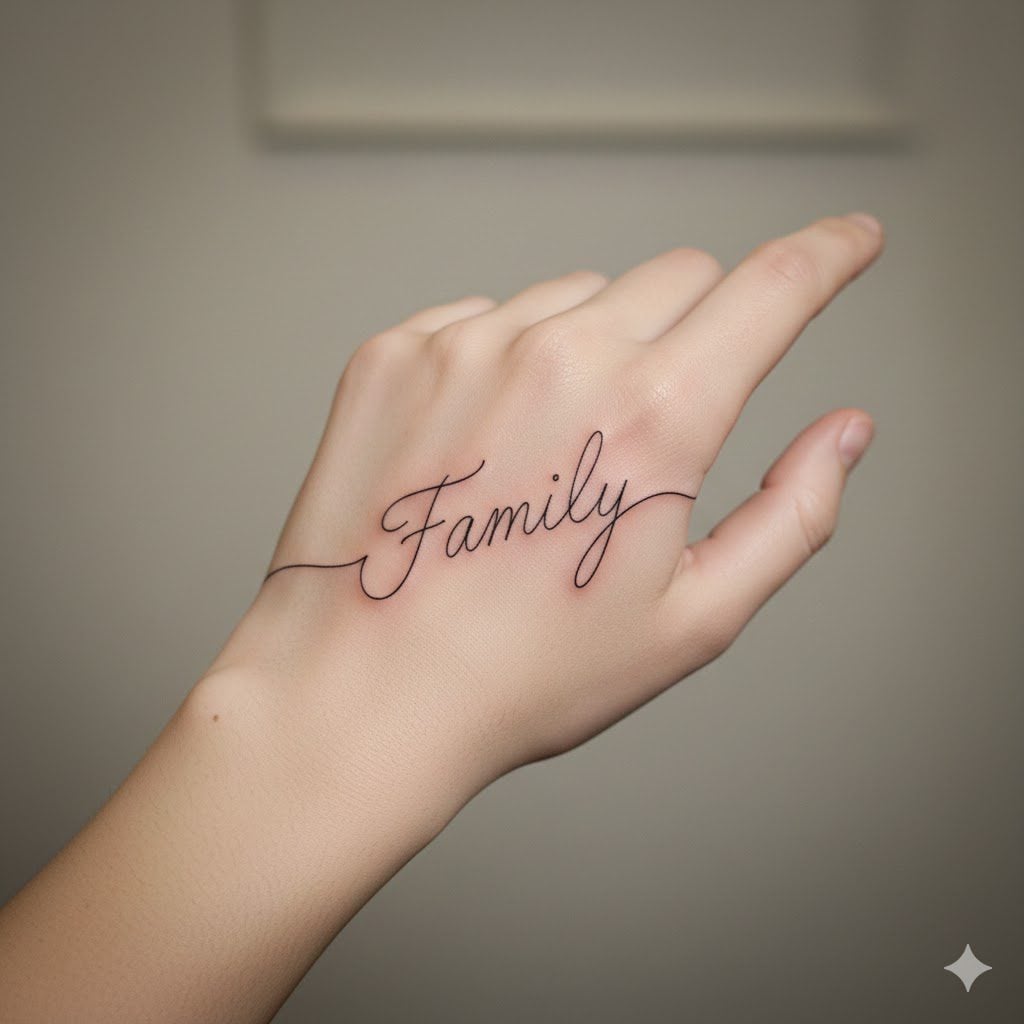
Fingers are better for short words, simple marks, or small shapes that still read when they soften.
Movement matters
A design that looks perfect when your hand is flat may warp when you make a fist or flex your fingers. A solid artist will design for the way hands actually move, not how they look in a staged photo.
If you love delicate aesthetics, keep in mind that fine, airy linework often struggles in this placement. Hand tattoos need designs that can handle time, friction, sun, and constant motion.
Before you book, run through a few honest questions.
Questions to Ask Yourself Before You Book Anything
- Do you already have other tattoos, or is this your first?
- Can you realistically follow aftercare while living a normal life?
- Does your career allow visible tattoos now and later?
- Are you prepared for touch-ups every few years?
- Have you looked at healed hand tattoos, not only fresh photos?
This isn’t meant to scare you. It’s meant to protect you from making a decision based on a fresh-ink fantasy.
If the answers feel solid, finding the right artist is your next step.
Hand Tattoos Are High Commitment for a Reason
Hand tattoos hurt more, heal harder, fade faster, and come with professional and social consequences that other tattoos don’t. That doesn’t mean you shouldn’t get one. It means you should treat the decision with more respect than you would a tattoo you can cover with a sleeve.
If you’re unsure, take time. Look at healed work. Talk to people who live with hand tattoos every day. You can always get a hand tattoo later. Removing or fixing one is expensive and frustrating, and most regrets come from rushing.