
Japanese tattoo art has captivated people for centuries. Known as Irezumi, these tattoos tell stories through mythology, nature, and symbolism rooted deep in Japanese culture. This guide to traditional Japanese tattooing covers what makes the style so distinct.
The tradition survived being banned in Japan, thrived underground, and became one of the most respected tattoo styles worldwide. Understanding Irezumi helps you make better choices about your own piece.
Why Traditional Japanese Tattoos Take So Long
Gaman is a Japanese concept about endurance and seeing things through. It’s central to understanding Irezumi because these tattoos take real time. We’re talking months or years for larger pieces like full sleeves or body suits.
Each session builds on the previous one. The artist plans how everything flows across your body’s natural shape. Background elements like wind bars, waves, and clouds tie different images together into one complete story instead of just filling space.
Japanese Tattoo Symbols and What They Mean
Every image in Irezumi carries meaning from Japanese and Chinese mythology. Here are some of the most common symbols.
Dragons Mean Wisdom and Protection
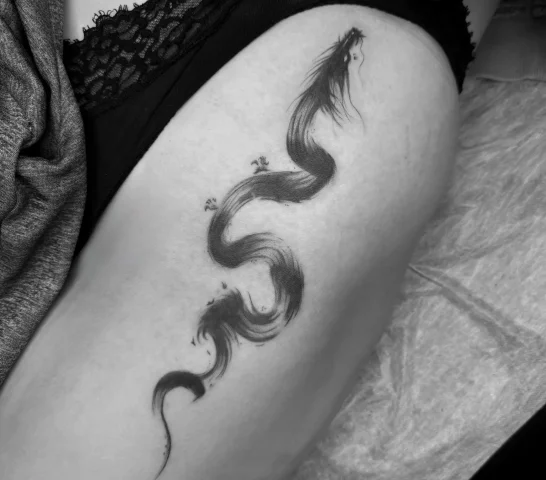
Dragons in Japanese tattoos are different from Western dragons. In Eastern tradition, they bring rain for crops, offer protection, and represent wisdom rather than hoarding treasure. Dragon tattoos in the Japanese style often coil around arms or span across backs because their long bodies flow naturally with your shape.
Different artists who specialize in Japanese style work interpret dragon imagery in their own ways, from bold traditional renderings to more delicate contemporary approaches.
Koi Fish and Perseverance
Koi fish carry one of the most powerful stories in Japanese tattooing. Legend says koi swam upstream through the Yellow River, fighting strong currents to reach the Dragon Gate. The ones that made it transformed into dragons.
The meaning behind koi fish tattoos connects with pushing through obstacles and transformation. Red koi represent love and bravery. Black koi represent overcoming hard times.
Tigers Represent Courage
Tigers appear in Japanese tattoos as guardians against bad luck and evil spirits. They represent courage and the instinct to protect what matters. You’ll see them crouching in bamboo or prowling through mountains.
The Hannya Mask Shows Complex Emotions
The Hannya mask reflects intense human emotion. This demon mask from Japanese Noh theater shows a woman overcome by jealousy and rage. Understanding the hannya mask tattoo meaning helps you appreciate why it resonates with people. The horns, metallic eyes, and sharp teeth create a recognizable image about how passion can turn destructive.
Flowers, Water, and Nature Symbolism in Japanese Tattoos
Japanese tattoo art has always connected deeply with nature. These natural elements aren’t just decorative. Each one carries a specific meaning that adds layers to your piece.
Cherry Blossoms
Cherry blossoms represent life’s temporary nature. They bloom beautifully for just a few weeks, then fall. This fleeting beauty reminds us that nothing lasts forever, making every moment more precious.
Chrysanthemums
Chrysanthemums symbolize longevity and perfection. As the flower of the imperial family, they carry associations with nobility and refinement. You’ll often see them paired with other elements to balance compositions.
Water
Water represents life’s constant motion and the ability to adapt. It flows around obstacles rather than fighting them. Wave patterns in Japanese tattooing echo the famous prints of Hokusai, creating dynamic movement across the skin.
The Phoenix and Rebirth
The Phoenix rises from flames to emerge renewed. This mythical bird speaks to anyone who’s rebuilt themselves after loss or setback. Phoenix tattoos often feature elaborate tail feathers that sweep across shoulders or wrap around the torso. Looking through examples of Japanese tattoo work shows the range of styles from traditional to modern interpretations.
Hand-Poked vs Machine Irezumi
Historically, Irezumi was done through tebori, a hand-poked method using bamboo or metal tools attached to wooden handles. The artist manually inserted ink beneath the skin. This took extreme skill and created a different texture than machine work.
Most artists today use modern machines for Japanese tattoo work. Machines allow for consistent lines and faster completion. What matters more is the artist’s understanding of traditional composition and symbolism than the specific tool they use.
Coverage Options for Traditional Japanese Sleeves and Bodysuits
Full body suits represent the peak of Irezumi artistry, but not everyone wants that much coverage. Traditional Japanese sleeves and bodysuits come in several variations, each with its own aesthetic and commitment level.
Soushinbori
This is the ultimate expression of traditional Japanese tattooing. A soushinbori covers your entire body from neck to ankles, leaving only the hands, feet, and a vertical strip down the center of the torso bare.
Kame No Kou
Named after the tortoise shell pattern it resembles, this style covers the back, chest, and upper arms. It creates a protective “shell” of artwork across the upper body.
Hikae
A hikae focuses on the shoulders and arms, framing the chest without covering it completely. This style works well for people who want significant coverage while keeping options open.
Munewari
This split chest bodysuit leaves a vertical strip bare down the center of the torso. The design creates symmetry on both sides while maintaining that traditional gap in the middle.
Nagasode
A long sleeve that extends all the way to the wrist. This gives your artist the most canvas to work with on arm pieces and allows for complete storytelling from shoulder to hand.
Shichibusode
The seven-tenth sleeve stops at mid-forearm. This option gives you substantial coverage while keeping the lower forearm and wrist free for professional settings.
Gobusode
A five-tenth sleeve ends just above the elbow. This shorter option still allows for meaningful traditional work while being easier to conceal under short sleeves.
What to Look for in an Artist
Creating authentic Japanese tattoo work takes more than technical ability. The artist needs to understand cultural context, symbolic meanings, and compositional rules developed over centuries. Not every tattoo artist works in this style.
Look at portfolios to see how different artists interpret traditional Japanese motifs. Some stay closer to classical approaches while others blend traditional elements with contemporary techniques. Pay attention to how they handle background elements, color saturation, and design flow across body contours.
Large-scale pieces involve ongoing conversation. During initial meetings, you’ll discuss which symbols connect with your story, how different elements work together, and where on your body the design flows best. Learn about irezumi tattoo meanings and ask questions about every part of the design.
The Complicated History of Tattoos in Japan
Irezumi has a complicated history in Japan. For decades, tattoos were tied to yakuza and criminal elements, creating social stigma that still exists in some places. Many Japanese bathhouses and gyms prohibit entry to visibly tattooed people.
Outside Japan, people appreciate this art form for its visual power and symbolic depth. Getting Irezumi means understanding and respecting where it comes from. It’s not just borrowing an aesthetic but engaging with a living tradition.
Why Japanese Tattoos Require Commitment
Traditional Japanese tattoos take commitment, patience, and close collaboration with your artist. From the first consultation through the final session, you’re building something that carries personal and cultural meaning. These aren’t quick afternoon sessions. Full sleeves can take months or years, with each session building on previous work.
The symbolism runs deep. Each element means something. The way they connect tells a story. Getting Irezumi means participating in a tradition that predates modern tattooing by centuries.
If you’re considering a large-scale Japanese piece, talking through your ideas during a consultation helps you understand the commitment and plan the design properly.
These tattoos tell stories that last. Make sure yours is worth telling.