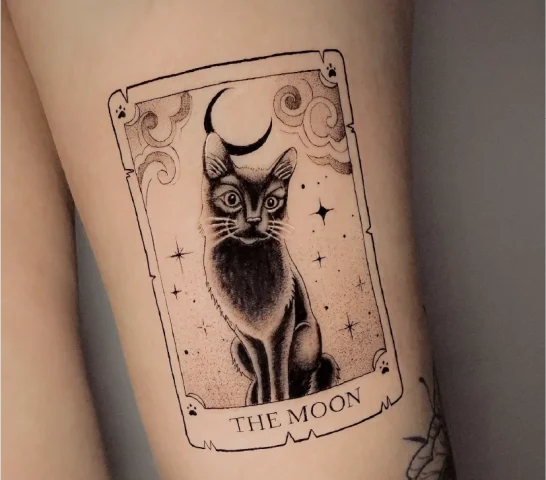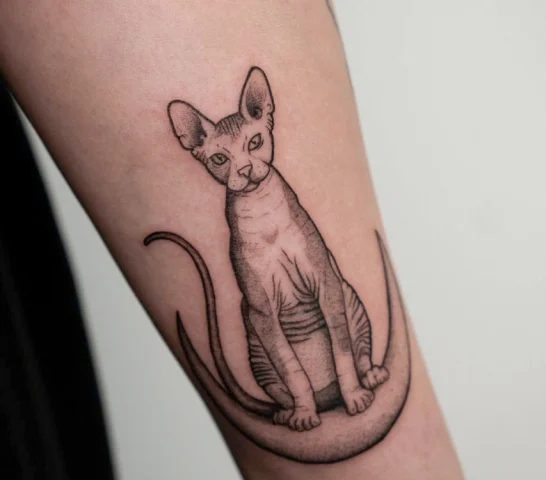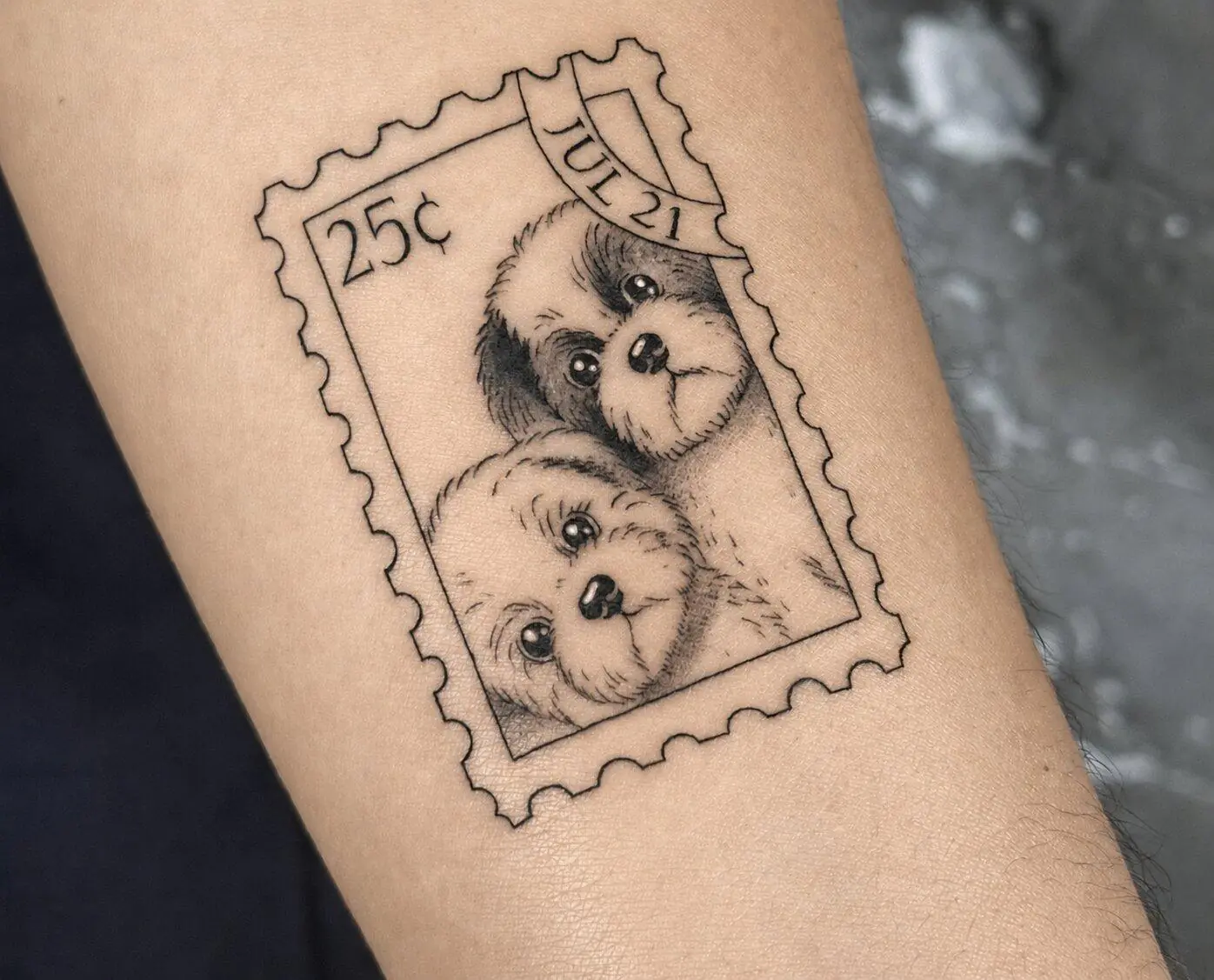
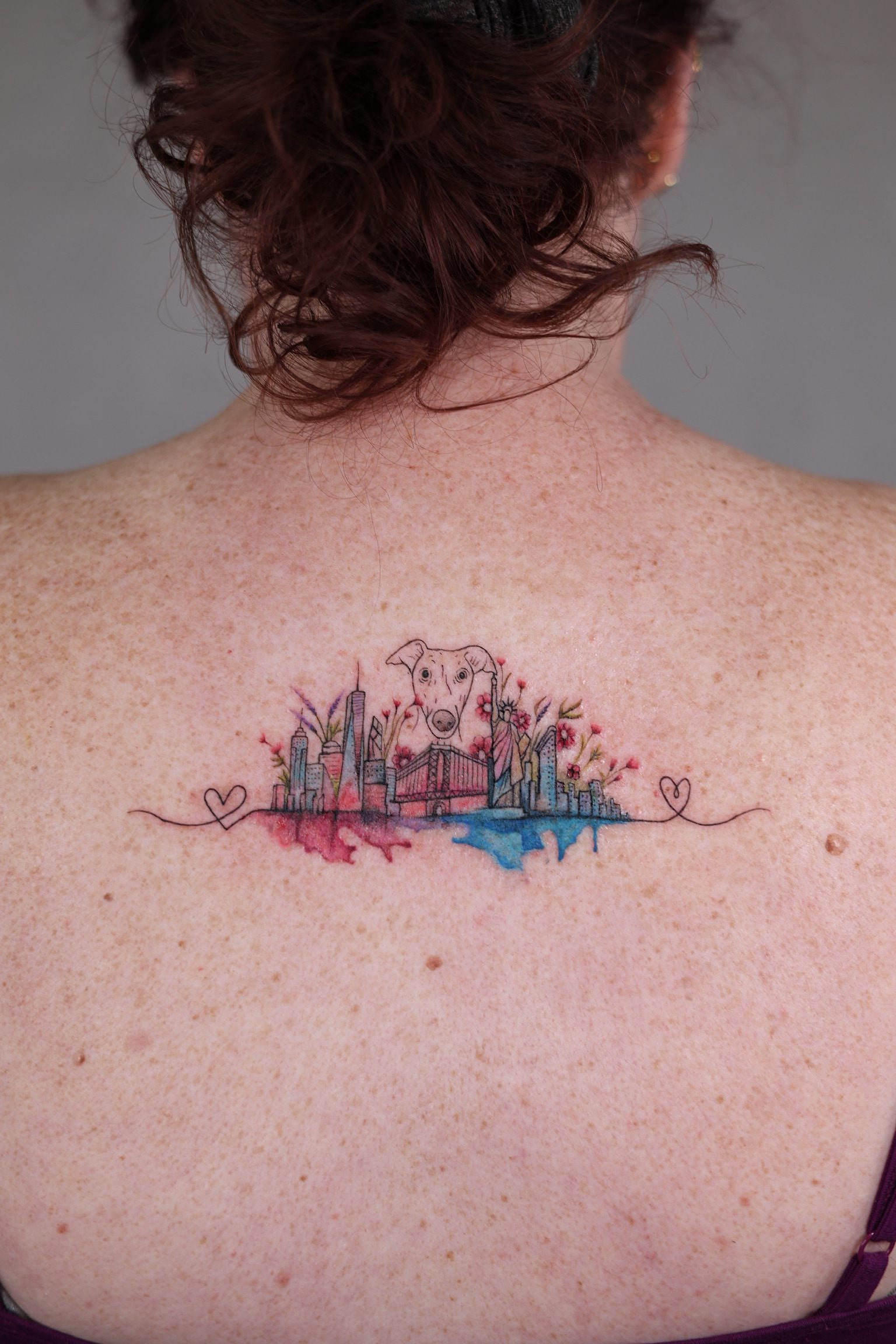
There are few bonds as uncomplicated as the one between a New Yorker and their pet. In a city of tight schedules and small apartments, a dog or cat becomes a constant. They fill the quiet of a studio, greet you after a long commute, and sit with you through everything. For a lot of people, the idea of carrying that presence permanently is not sentimental overreach. It is a completely reasonable response to love.
That is the foundation of a micro-realism pet portrait tattoo. Not a cartoon, not a symbol. An actual likeness, rendered in ink.
The Rise of Pet Portrait Tattoos in NYC and Beyond
Pet portrait tattoos have been growing for years, but 2026 has pushed them into a different category. Coverage from Allure and Painful Pleasures both point to pet portraits, particularly in micro-realism, as one of the defining tattoo directions of the year, with search interest up over 125% compared to the year prior.
A big part of that growth reflects a shift in how people think about celebratory and memorial tattoos. A pet portrait is not reserved for loss. Many people come in with a living animal they want to honor. Both motivations lead to equally meaningful work.
How Micro-Realism Captures What Other Styles Cannot
Micro-realism builds tonal depth through fine gradients and layered shading at a smaller scale than traditional portrait work. For fine-detail micro realism tattoos, this translates to individual fur strands, the wet glint in an eye, the specific texture of a muzzle. The result does not look like a painting. It looks like the animal.
The technique depends on restraint. Artists work with controlled saturation to maximize contrast and longevity, letting shading carry the weight. A well-executed piece reads as three-dimensional at a distance, something looser or more stylized approaches rarely achieve at the same scale.
What Makes a Good Reference Photo for a Pet Portrait Tattoo
A strong reference photo shapes everything. Natural light is essential. Flash flattens facial features and washes out the texture that micro-realism depends on. Shoot outside or near a window during the day, with your pet’s face filling most of the frame.
Eyes are the focal point of almost every successful pet portrait, so sharpness there matters most. Bring multiple angles to your consultation. A front-facing shot, a three-quarter profile, and a candid expression if you have one all give the artist more to work with. Higher resolution in the reference means more detail achievable in the final piece.
Best Placement and Size for a Realistic Pet Portrait Tattoo
Micro-realism needs surface area. Three inches is roughly the minimum before shading gradients start to compress and lose definition. Most clients land between four and six inches, which gives the artist real flexibility in how the composition is built.
Placement follows from size. The forearm works consistently well, with relatively flat skin and good visibility. The upper arm and outer calf are strong choices for slightly larger pieces. High-movement areas and spots close to bone, like the inner wrist or foot, can affect how fine tonal work holds over time and are worth discussing during your consultation.
What to Expect From a Pet Portrait Tattoo Session
The work starts before any tattooing happens. Artists review your reference photos, walk through sizing and placement, and build adjustments into the design before anything goes on skin. You will see a sketch before the session begins, and that is the point to ask questions or request changes.
Most mid-sized pet portraits run between three and five hours. More complex sessions are sometimes split across two appointments to maintain quality throughout. Aftercare follows standard protocol for detailed work. Keep the area moisturized, out of direct sun, and away from soaking water for the first two weeks.
Finding the Right Artist for a Pet Portrait Tattoo
Artists who focus on micro-realism portrait tattooing develop a specific set of skills over time, including the demands that pet work in particular requires. That means rendering different coat textures, capturing depth in the eyes, and composing pieces that hold together at the intended size.
Reviewing a portfolio gives the clearest sense of what an artist brings to this style. Those researching options for a realistic pet portrait tattoo will find that finished examples speak louder than descriptions. Consultations are typically collaborative, and the reference photo review and design conversation shape the piece before a single line is drawn.
Carrying the Memory of a Pet With You
City life creates a particular closeness between people and their animals. A shared apartment, a daily routine, years of mornings and late nights together. That relationship accumulates into something genuinely worth marking. Micro-realism is the style that comes closest to capturing not only what a pet looked like, but what made them recognizably themselves.
For people exploring meaningful pet memorial tattoo ideas or wanting to honor an animal still very much in their life, the impulse comes from the same place. A portrait in this style is not decorative. It is personal, permanent, and built to last.