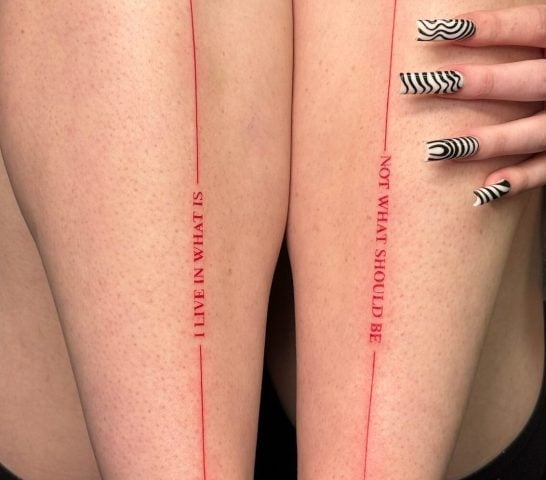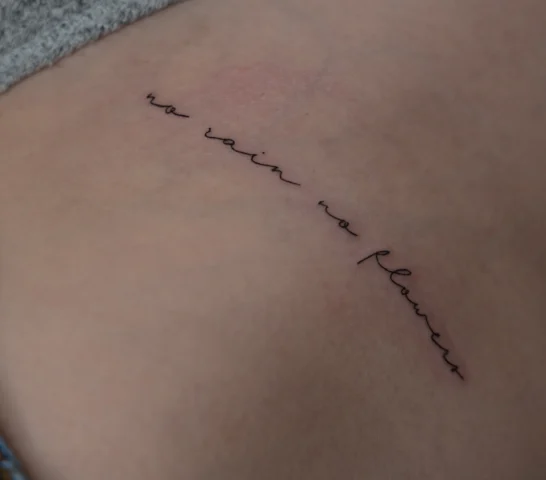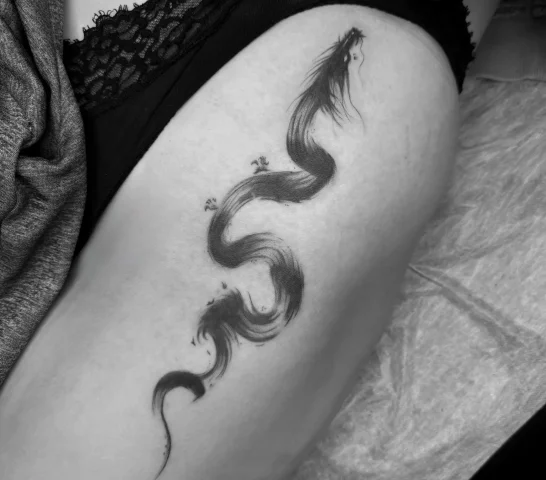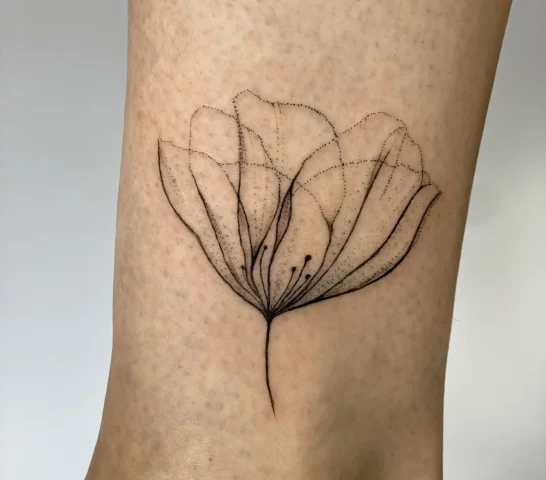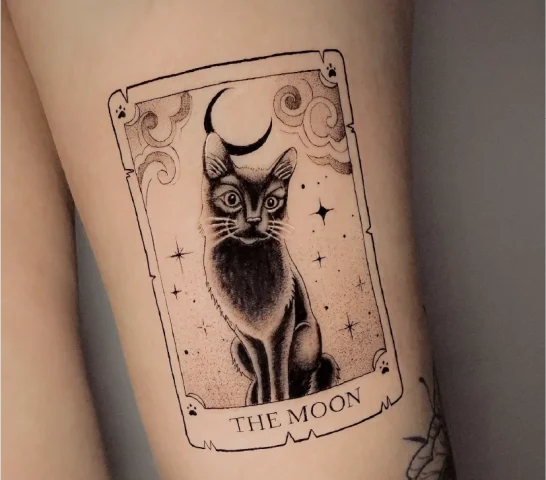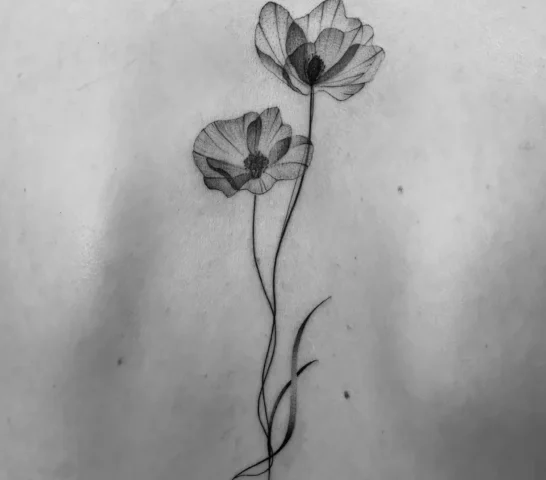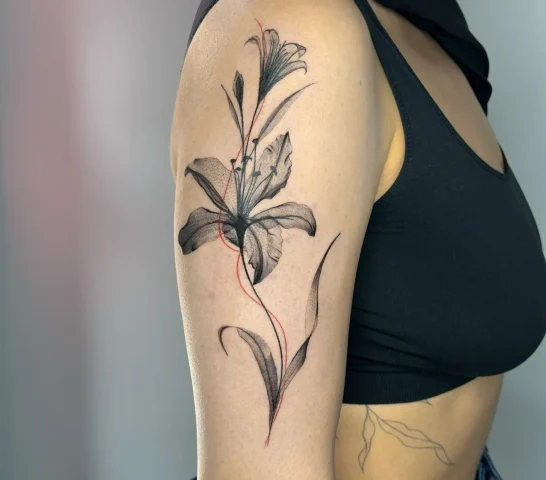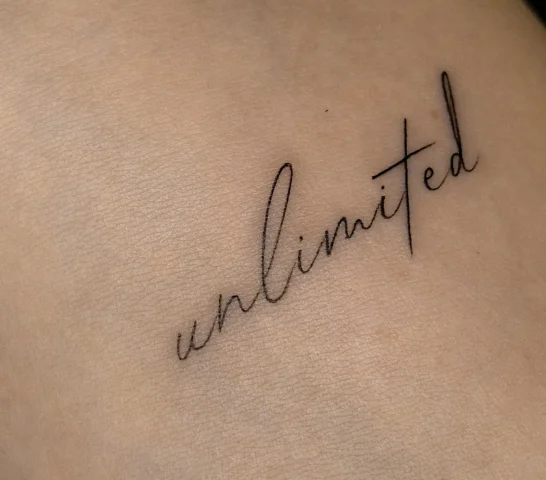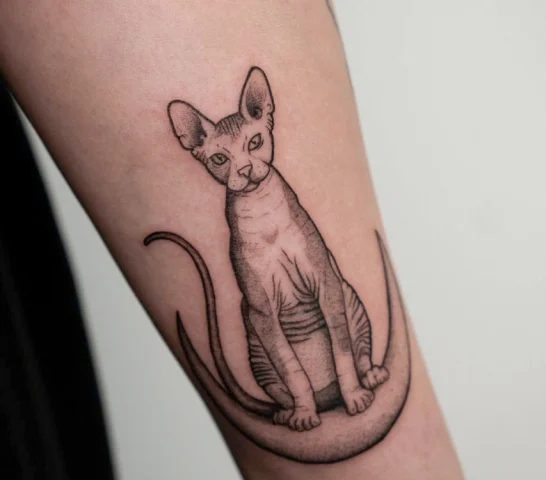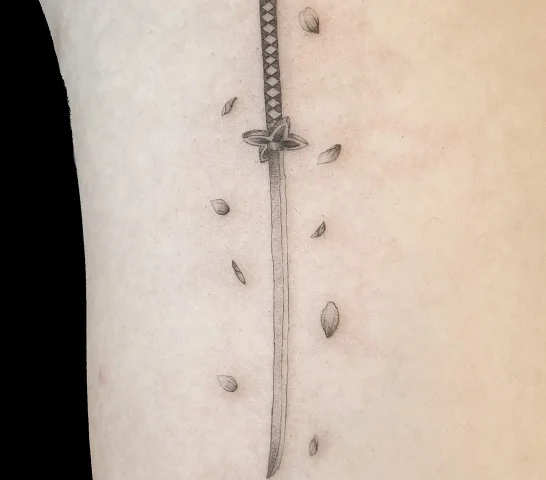
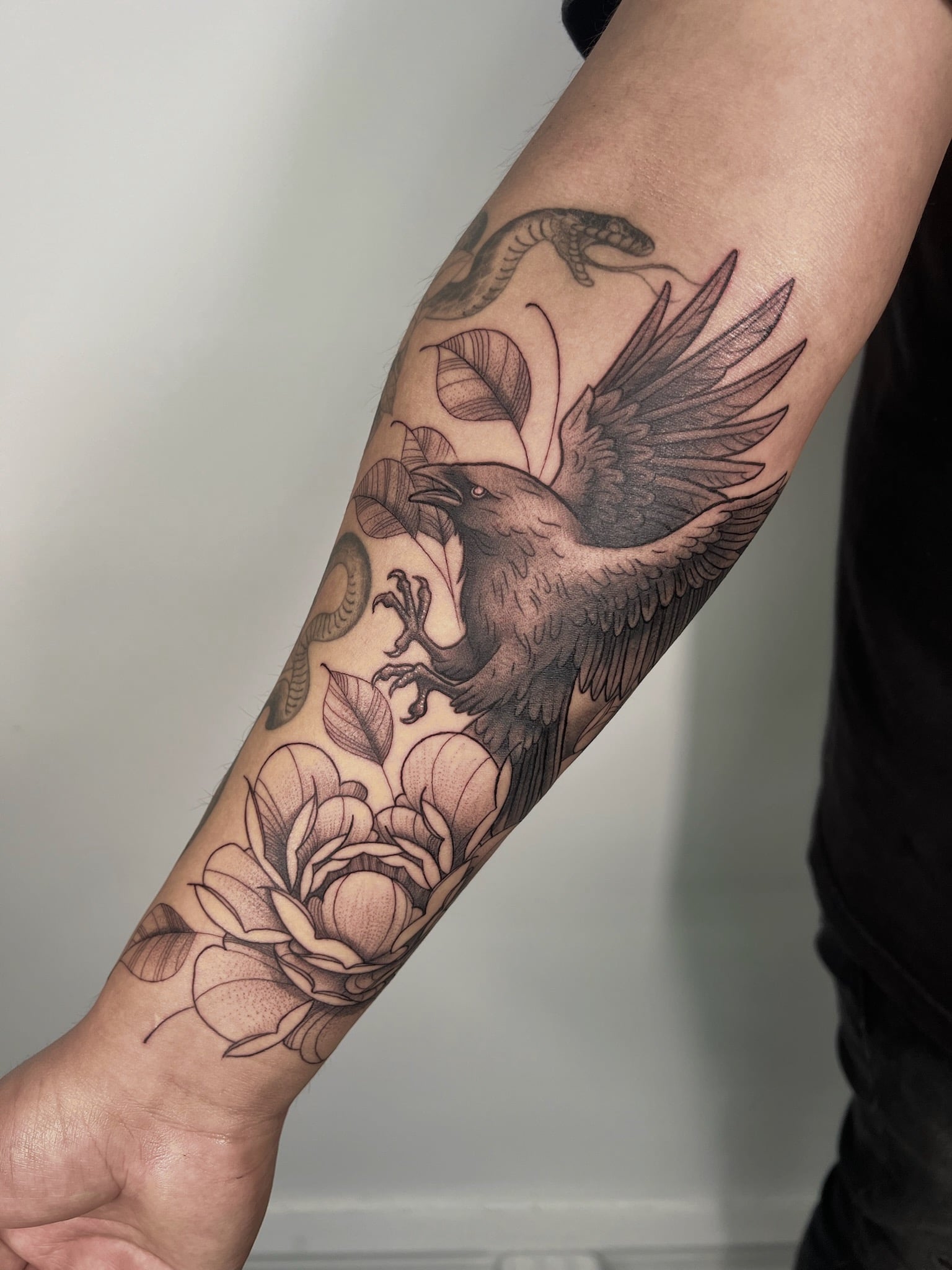
A patchwork sleeve is a collection of individual tattoos placed on the same arm over time, arranged so they gradually form a unified visual story. Instead of a single design drawn from shoulder to wrist in one sitting, each piece stands on its own while contributing to a bigger picture. It is one of the most popular ways to build a tattoo sleeve in 2026, and it works especially well for people who want their ink to grow alongside their life.
How a Patchwork Sleeve Differs from a Traditional One
A traditional sleeve is usually conceived as one continuous image. An artist maps the entire arm at the beginning, and you work through it in multiple sessions until the whole thing is filled in. A patchwork sleeve takes the opposite approach. You start with a single tattoo, then add another when inspiration strikes, and another after that. Over months or years, the arm fills in organically.
The roots of this approach go back to American Traditional tattooing. Sailors and soldiers would get inked in one port, then add something new in another country a year later. They were collectors, not planners. That same spirit carries forward today, but the styles have expanded far beyond bold outlines and anchors.
Patchwork in Fine Line and Fine Art Styles
While the collector mentality started with American Traditional work, fine line tattoos have become one of the most sought-after styles for patchwork sleeves. Delicate single-needle pieces, illustrative black and gray work, and small-scale realism all lend themselves to this format because they leave breathing room on the skin.
Some of the most common approaches include curating a full arm of fine line blackwork, collecting palm-sized micro-realism pieces of animals or flowers, or mixing illustrative and ornamental elements that share a similar weight and feel. The key is that each tattoo is placed like an intentional addition to a growing gallery rather than a random assortment.
Choosing a Unifying Thread for Your Collection
A cohesive tattoo collection does not require a single theme. It requires a consistent visual language. That might mean keeping everything in black and gray, sticking with one style like fine line throughout, or choosing a loose subject area such as botanicals, celestial imagery, or personal milestones.
Some people let the thread emerge naturally. They get a few pieces they love and then realize a pattern has developed on its own. Others walk into their first consultation with a long-term vision already forming. Both approaches work. What matters most is that the pieces share enough in common, in style, scale, or palette, so the arm reads as intentional rather than scattered.
Spacing, Flow, and Negative Space
The gaps between tattoos matter as much as the tattoos themselves. Good placement accounts for the natural curves of the arm, the visibility of each piece, and how future additions will fit into the remaining space. Larger “hero” pieces tend to work best on the outer bicep, outer forearm, or the flat of the inner forearm. Smaller pieces fill the spaces in between.
Planning for Future Additions
A common mistake is placing early tattoos without thinking about what comes next. If you crowd your first few pieces too closely together, you limit your options down the road. Experienced artists think about the arm as a whole, even when working on a single small design. They consider how much negative space to leave, where the eye will travel, and how a new piece will relate to the placement of what is already there.
Tying It All Together with Filler
Once you have your main pieces in place, you will eventually notice awkward gaps that feel incomplete. Filler is the art of tying everything together. In American Traditional work, the classic approach is stars and dots scattered through the negative space. In fine line and illustrative patchwork, filler might look like delicate dotwork, small botanical accents, subtle geometric patterns, or thin linework that bridges the gaps without competing with the main tattoos.
There is no single right answer here. Some people love a fully packed arm where almost no skin shows through. Others prefer to keep generous negative space as part of the composition. Both choices can look cohesive if they are intentional.
Building a Long-Term Relationship with Your Tattoo Artist
Building a patchwork tattoo arm is a long-term relationship. Working with one studio or one artist for most of your pieces creates consistency in line weight, shading technique, and overall aesthetic. Even if different artists contribute to the sleeve, staying within the same studio means the team can coordinate and reference a shared vision.
How to Communicate Your Changing Vision
Your idea of the finished sleeve will change as you add more ink. That is normal and expected. The best approach is to have an open conversation at each session about what you are thinking long term, even if those plans are still loose. Share reference images, talk about what you love about your existing pieces, and ask your artist how they would approach filling a specific area. Collaboration over time is what turns a patchwork arm from a random collection into something that tells a real story.
If you are ready to start planning your sleeve or want to add to an existing collection, booking a consultation is the best first step. A conversation about your vision, your existing tattoos, and the direction you want to go will set the foundation for a sleeve you will love for years.
Getting Started, Even with One Piece
If you do not have any tattoos yet, the first piece sets the tone for everything that follows. Choose something you feel strongly about in a style you are drawn to. Talk to your artist about your half sleeve tattoo planning goals or your full arm ideas, even if you are only getting one small tattoo to start.
For people who already have a few pieces and want to start thinking of their arm as a custom collection, it helps to step back and look at what you already have. Identify the common threads. Are most of your tattoos black and gray? Fine line? Floral? That existing pattern is your starting point. From there, you and your artist can map out how to fill in the remaining space with pieces that feel like they belong.
The beauty of building a tattoo sleeve over time is that it never has to be finished. Each session adds a new chapter, and the story keeps growing as long as you want it to.