You have a folder of saved photos. Delicate stems, petals with visible veins, a wildflower sprig that looks drawn rather than stamped on. Now you need someone who can put that on skin without it going thick or muddy. The search for a fine line floral tattoo artist in NYC comes down to reading portfolios closely for botanical accuracy and steady linework. Follower counts and viral reels tell you very little about how a flower will look six months after it heals. The city is one of the best places anywhere to look for this, since artists from Korea, Japan, and across Europe have moved here to work in the style. That raises the bar for botanical work across Manhattan.
What Makes Fine Line Floral Tattoos Different from Traditional Flower Tattoos?
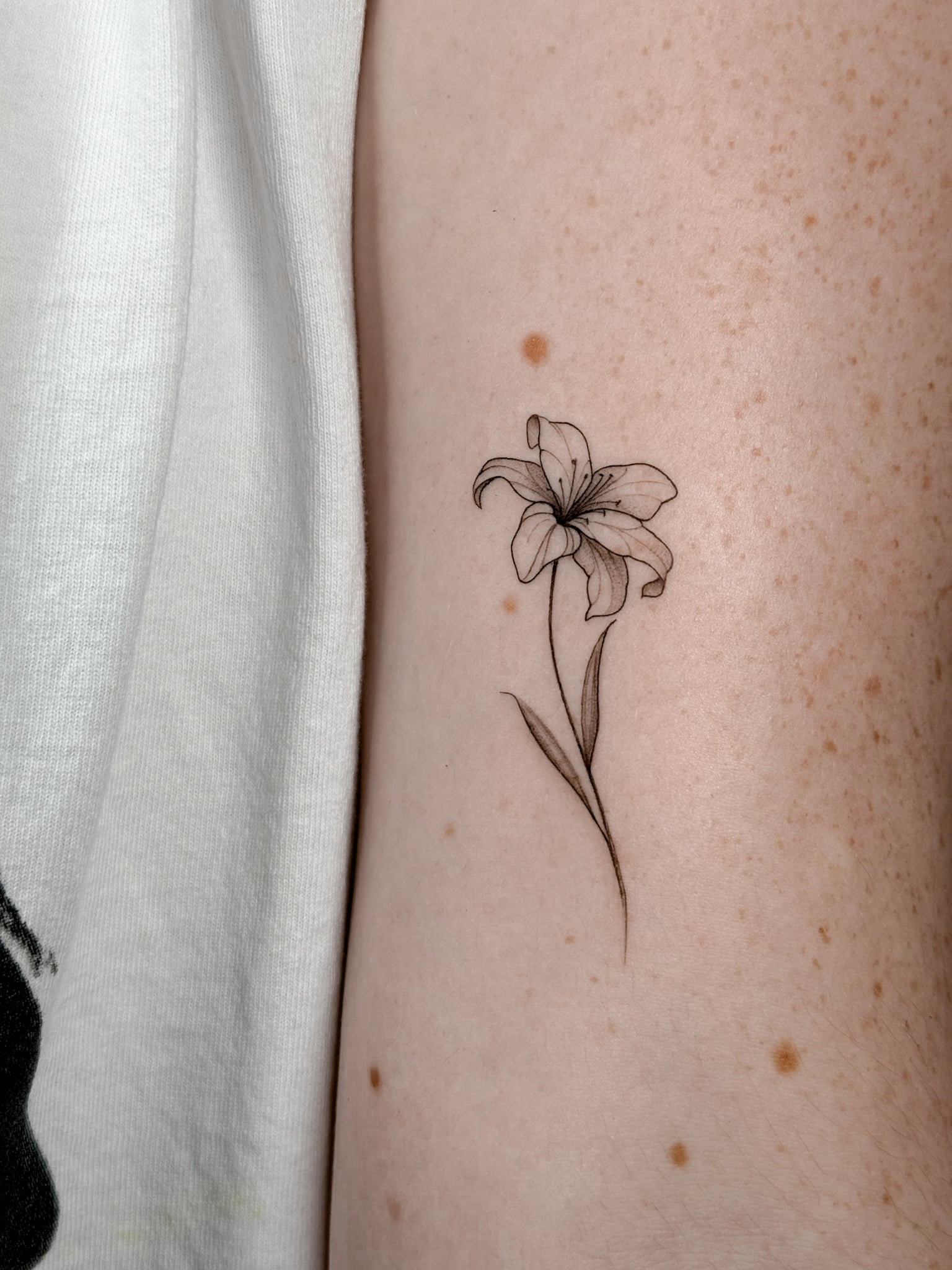
Fine line floral work uses a single needle or a tight grouping to draw flowers the way a botanical illustrator would, thin contours, soft gradient shading, and detail fine enough to show petal veins and leaf texture. Traditional flower tattoos rely on bold black outlines and saturated color fills for a graphic, poster-like effect. The split is realism against stylization. One reads as a quiet drawing on the skin, the other reads as a statement piece meant to be seen across a room.
Neither approach is better than the other. They age differently, suit different bodies, and ask different things of the artist. The table below sorts out the practical differences before you settle on a direction.
Feature | Fine Line Floral | Traditional Floral |
Linework | Thin, single-needle contours | Bold, heavy outlines |
Shading | Soft gradients, subtle | Solid color or none |
Look | Botanical illustration | Graphic, stylized |
Detail level | High, realistic petals | Simplified shapes |
Aging | Lines soften over years | Holds shape longer |
Best for | Delicate, discreet pieces | Bold, high-contrast pieces |
How to Read a Floral Artist’s Portfolio Before You Book
Look for botanical accuracy first, correct petal counts, natural stem curves, and proportions that match the real plant. Then check that line weight stays consistent across the whole piece and that the composition follows the body instead of fighting it. Strong floral work looks effortless. Wobbly lines, uneven spacing, and stiff, flat arrangements are the tells of someone still learning the style.
Healed Photos Matter More Than Fresh Ones
Fresh tattoos always look crisp. The real test is how a flower settles after two or three weeks, once the skin calms and the thinnest lines find their final weight. Ask any artist for healed shots, and notice if the delicate details held or blurred. You can get a feel for this fast by studying floral tattoo portfolio showcasing botanical fine line work, where the same hands appear across many pieces and the consistency becomes easy to see.
Fine Line Flower Tattoo Ideas That Translate Well to Skin
Flowers with clear silhouettes and layered petals work best in fine line, because their structure creates depth even in black and gray. Peonies, roses, wildflower sprigs, and cherry blossoms stay popular for exactly this reason. Tightly packed blooms with dozens of overlapping micro-petals can read as a smudge at small sizes, so the shape of a flower matters as much as your attachment to it.
If the story behind a bloom matters to you as much as the look, our guide to flower tattoo meanings and symbolism pairs well with the suitability notes below.
Flower | Fine Line Suitability | Why It Works | Best Placement |
Peony | Excellent | Layered petals create depth | Forearm, shoulder, thigh |
Rose | Excellent | Iconic silhouette, scales to any size | Almost anywhere |
Wildflower bouquet | Excellent | Organic, flowing composition | Forearm, ribcage |
Cherry blossom | Excellent | Delicate branches, open negative space | Back, collarbone |
Lavender | Very good | Linear form follows the body | Spine, forearm, ankle |
Sunflower | Good | Bold center, detailed petals | Upper arm, thigh |
Orchid | Good | Elegant but complex curves | Ribcage, back |
The NYC Botanical Tattoo Scene and the Styles Within It
New York holds one of the deepest benches of botanical illustration tattoo work in NYC anywhere, partly because the city pulls in floral talent from Seoul, Tokyo, and Europe. That concentration gives clients real range. Two artists can both call themselves floral and produce completely different results, so it helps to know the main directions the style runs in.
Style Archetypes You’ll Meet
Some artists build flowers in pure black and gray, using fine stippling for shadow. Others lean illustrative, treating the skin like an open page from an old botany book. A smaller group works in soft, washed color that mimics watercolor. The best botanical tattoo artist Manhattan has to offer in any of these lanes tends to share one habit, drawing from living plants and pressed references rather than recycled Pinterest screenshots. That reference discipline is why the city’s parks feed this craft. Central Park’s Conservatory Garden, the Brooklyn Botanic Garden, and the High Line’s wildflower beds give local artists real petals to study through the seasons.
Where This Work Clusters in Manhattan
Midtown has quietly become a center for fine line floral tattoos, with several studios within a few blocks of each other. IGLÀ is part of that cluster, and its floral roster spreads across the archetypes above, whimsical botanicals, clean minimalist linework, and x-ray florals that render a bloom as if lit from inside. To see the range in person, our Midtown Manhattan studio, in the heart of NYC’s fine line tattoo corridor keeps walk-in availability alongside booked sessions. Spring and summer are the busy stretch for floral pieces, so portfolios fill faster once the weather turns.
Fine Line Floral Tattoo Sizing and Placement
Fine line florals hold up at almost any size, though the sweet spot lands between three and six inches, large enough to show petal detail and small enough to keep the delicacy intact. Go too small and the thinnest lines risk merging as the tattoo heals. Go very large with ultra-thin lines and you lose some of the structure that keeps a piece readable over time.
Placement is partly aesthetic and partly practical. The inner forearm, an upper-arm wrap, the collarbone, and the ribcage all give a flower room to flow with the body’s curves. High-friction spots such as hands and feet are harder on fine detail, so they call for slightly heavier linework if you set your heart on them.
Do Fine Line Flower Tattoos Age Well?
A well-built fine line floral tattoo lasts a lifetime, though the most delicate lines soften over roughly five to eight years. Pieces with slightly thicker structural outlines and a touch of shading hold their shape better than ultra-thin, outline-free single-needle work. Aging is not a flaw to fear. It is a variable you can plan for with your artist.
A few habits stretch the life of the work. Daily sunscreen on the area does more than anything else to slow fading. Keeping the skin moisturized helps the lines stay sharp, and asking your artist to give key stems or contours a fraction more weight builds longevity in from the start.
What to Ask a Floral Tattoo Artist Before You Commit
The fastest way to choose a floral tattoo artist is to ask a handful of pointed questions and listen for specific answers. Vague replies are a signal, detailed ones tell you the person has thought hard about flowers on skin. Bring this short list to your consultation.
- Do you work from real botanical references or stylized illustrations? Reference-driven artists tend to nail proportion and petal structure.
- Can I see healed photos of floral pieces? Healed work shows you what you will live with day to day.
- How will the design follow my body’s curves? A good answer covers placement and flow, not only the drawing.
- Would you recommend thicker linework anywhere for longevity? This shows the artist is thinking past the appointment.
- How do you handle color versus black and gray for this flower? Some blooms read better one way than the other.
- What size keeps this design readable long term? The honest answer is sometimes bigger than you hoped.
A floral piece is worth the patience it takes to find the right hand for it. Read portfolios slowly, favor healed work, and let the flower guide your choice of artist as much as your choice of bloom.