Losing a pet hits differently than people sometimes expect. They were there for the ordinary parts of your day for years, and then one day they aren’t, and that absence shows up in all the small moments you didn’t think to prepare for. A lot of people find themselves wanting something permanent to carry that connection forward, and a memorial tattoo is one of the most common ways people choose to do that.
If you’re thinking about one, it helps to know the full range of what a pet memorial tattoo can actually look like, because it’s a lot broader than most people realize going in.
It Doesn’t Have to Be a Portrait
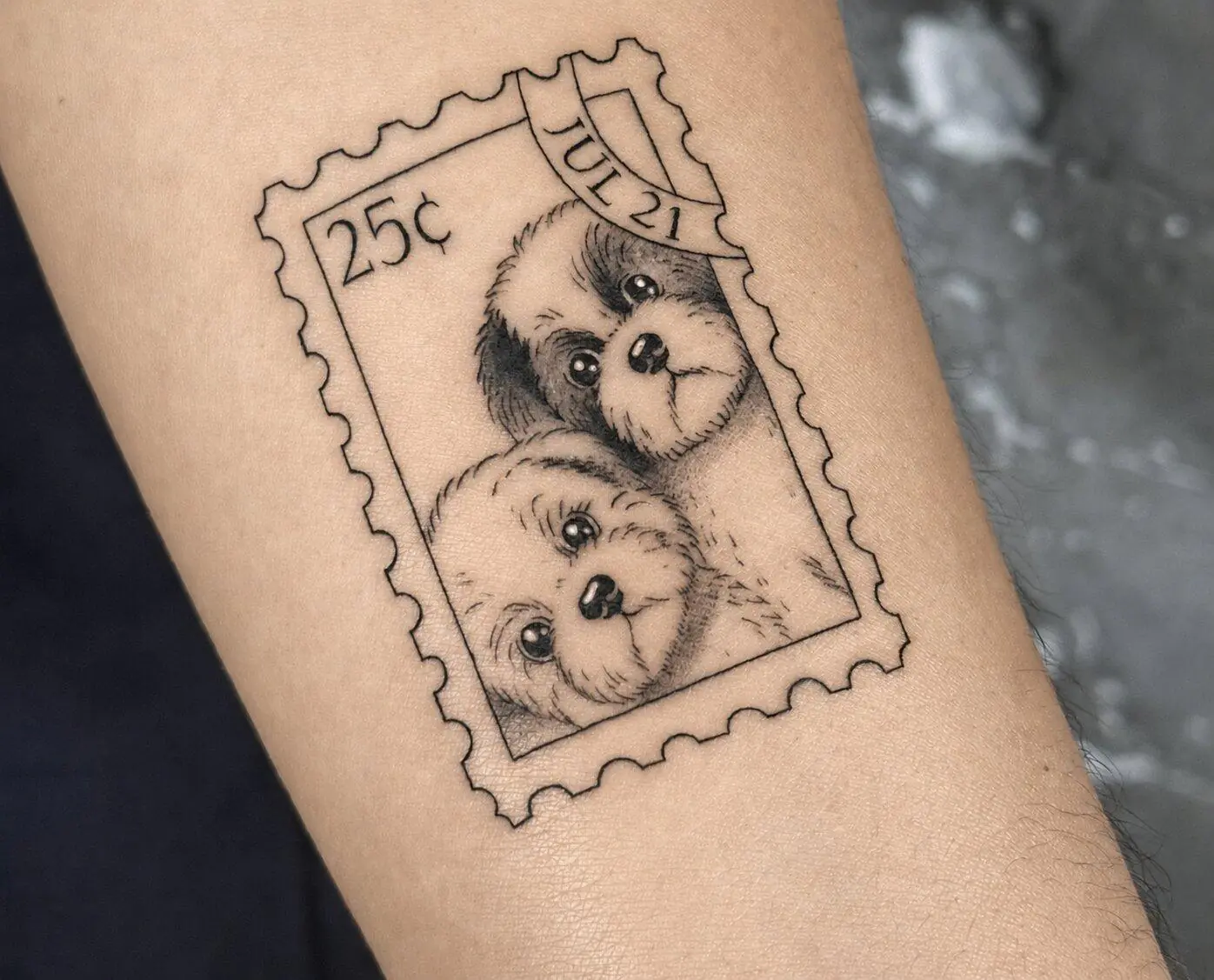
When people hear “pet memorial tattoo,” they often picture a hyper-realistic portrait of the animal’s face, and that’s a beautiful option for the right person. But it’s one option among several, not the default. If a detailed portrait isn’t what you’re picturing, or feels like more than you want right now, there’s no rule saying that’s the only valid way to honor a pet.
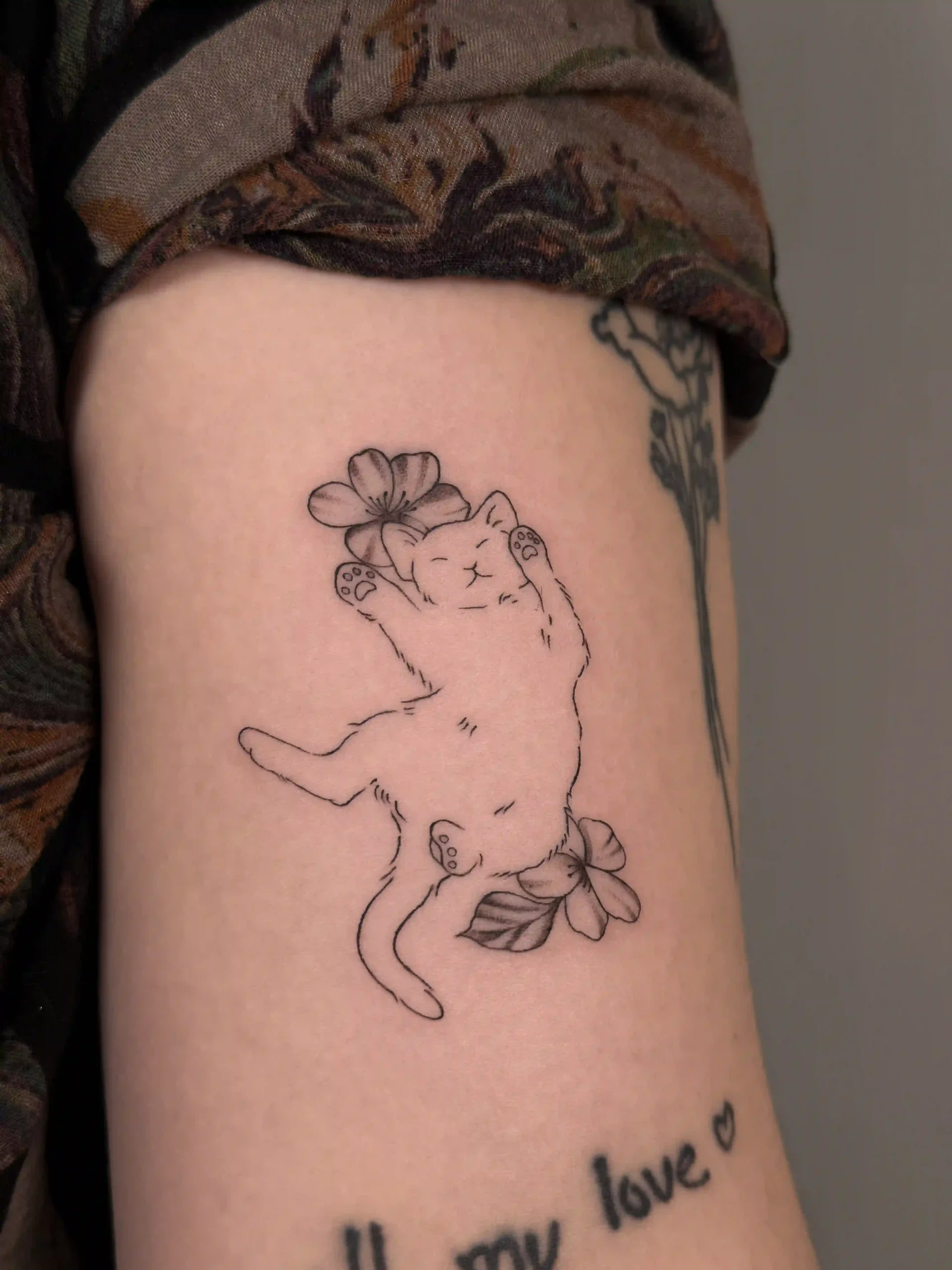
Some people want exactly that lifelike likeness. Others want something quieter: an outline, a symbol, a single line that only means something to them. Both are equally real ways of carrying a pet forward.
Design Directions Worth Considering
Realistic micro-portraits. For pet owners who want an actual likeness, a small, detailed portrait captures markings, expression, and personality in a way nothing else does. This is a specialized skill, and we’ve written a full guide on what goes into getting a pet portrait tattoo done right, from photo selection to finding the right artist, if this is the direction you’re leaning toward.
Fine line outline or silhouette. A simple linear outline of your pet’s shape, often taken directly from a favorite photo, gives you their recognizable form without full realism. These tend to age beautifully and work well at a smaller scale than a detailed portrait requires.
Paw prints. Whether it’s a stylized paw print shape or an actual impression taken from your pet’s paw, this is one of the most common and emotionally direct memorial choices. If you still have a physical paw print from your pet’s life (some vets or pet loss services offer this at end of life), it can be scanned and tattooed as an exact, one-of-a-kind reproduction, not just a generic paw icon.
Name, dates, or a single word. Simple lettering carrying your pet’s name, the years you had together, or a word that captures who they were can be quietly powerful, especially paired with a small symbol.
A symbol that was theirs. Some people choose something that represented their pet specifically, a favorite toy, a star for a pet who loved looking out the window at night, a small bone or fish shape, a collar tag design. These work well because they’re personal in a way a generic pet silhouette isn’t.
Fine line botanical or ornamental framing. Pairing a small symbol or initial with delicate linework, like a wreath of botanicals or a simple ornamental border, is a common way to make a minimal design feel complete rather than sparse.
If You’re Choosing Between Realism and Simplicity
This comes down to what you want day to day. A detailed portrait is striking and unmistakable, but it’s also a bigger piece, generally needs more space, and takes longer in the chair. A simpler design, a paw print or an outline, can go nearly anywhere, including small, private placements you can keep just for yourself. Neither is more sincere than the other. Some people want something everyone will ask about. Others want something only they know the meaning of. Both are good reasons.
Using an Actual Paw Print
If you have a physical paw print impression from your pet, whether from a vet, a cremation service, or one you made yourself, this is worth mentioning to your artist specifically. A real, unique print can be traced and tattooed far more meaningfully than a stock paw shape, since it’s actually your pet’s print and no one else’s. Bring the physical impression or a clear, high-resolution photo of it to your consultation so your artist can work from the real shape rather than approximating one.
If you don’t have a physical print, a clear photo of your pet’s paw pad can sometimes still give an artist enough to recreate a close approximation, though it won’t be as exact as a true impression.
Choosing a Reference Photo
For any design that draws from your pet’s actual appearance, whether that’s a full portrait or a simple outline, photo quality matters more than people expect. A clear, well-lit photo taken straight-on, without heavy shadows obscuring markings or features, gives your artist the most to work with. If you’re choosing between several photos, pick the one that looks most like your pet to you, the one that captures their actual expression, rather than the most technically perfect shot.
Placement Ideas
Memorial tattoos for pets tend to go wherever feels most personal rather than following any particular placement trend. A few common choices:
- Wrist or forearm, for something you’ll see often throughout the day
- Behind the ear or on the ribs, for something quieter and more private
- Ankle or behind the knee, for a small design that’s easy to keep covered when you want to
- Upper arm or shoulder, if you’re considering a larger, more detailed portrait
There’s no wrong placement here. This is entirely about what feels right for how you want to carry this.
There’s No Timeline You Need to Follow
Some people want to book something within days of losing a pet. Others wait months or years before they’re ready, and some people get a memorial piece well after they’ve grieved, simply because they finally feel ready to make it permanent. Both are completely normal. If you’re not sure you’re ready yet, that’s worth listening to. A good artist would rather you come in when you feel settled on the idea than rush into a design you’re still processing.
If you are ready, a consultation is a good space to talk through the idea out loud, even if you’re not sure yet exactly what you want. Bringing photos, describing what you’re picturing, or even just describing your pet’s personality can help your artist suggest directions you hadn’t thought of.
Finding the Right Artist for This
If you know you want a detailed, realistic portrait, it’s worth looking specifically at an artist’s microrealism and pet portrait work before booking, since that’s a distinct skill from other styles. If you’re drawn to something simpler, fine line, a paw print, or lettering, most of our artists work comfortably in that space. Mentioning that your piece is a pet memorial when you book helps us make sure you’re paired with the right artist and given the time this kind of consultation deserves.
What This Costs
Pricing follows the same structure as any custom piece at IGLÀ. Tattoos start at a minimum of $150, with the final price depending on size, detail, and placement, a small paw print or simple outline sits at the lower end, while a detailed realistic portrait is priced as the more involved custom work it is. A deposit of $100 secures your appointment, applied toward your final total.
Carrying Them With You
A pet memorial tattoo isn’t about closure, and it doesn’t need to explain itself to anyone. It’s just a way of keeping something visible that would otherwise only live in memory. Whatever direction feels right, realistic, simple, symbolic, or something only you would recognize, that’s the right one.
<a href=”https://iglatattoo.com/request-an-appointment/”>Book a consultation</a> when you’re ready, and let us know it’s a memorial piece so we can give it the time and care it deserves.
FAQ
Does a pet memorial tattoo have to look exactly like my pet? Not at all. A realistic portrait is one option, but plenty of people choose a simple outline, a paw print, a name, or a symbol instead. The right choice is whatever feels most meaningful to you.
Can you tattoo an actual paw print, not just a generic paw shape? Yes, if you have a physical paw print impression or a clear photo of one, bring it to your consultation. Your artist can work from the real shape rather than a stock design.
How long should I wait after losing a pet before getting a memorial tattoo? There’s no required timeline. Some people book within days, others wait months or years. Both are completely normal, and it’s worth waiting until you feel ready rather than rushing the decision.
What if I don’t have a great photo of my pet to work from? Bring whatever you have. For simpler designs like outlines or symbols, even a less-than-perfect photo can usually give an artist enough to work with. For a detailed portrait, a clearer, well-lit photo will give the best result.
How much does a pet memorial tattoo typically cost? It depends on the design. A small paw print or simple symbol sits closer to our shop minimum of $150, while a detailed realistic portrait is priced based on size and complexity, like any custom piece.