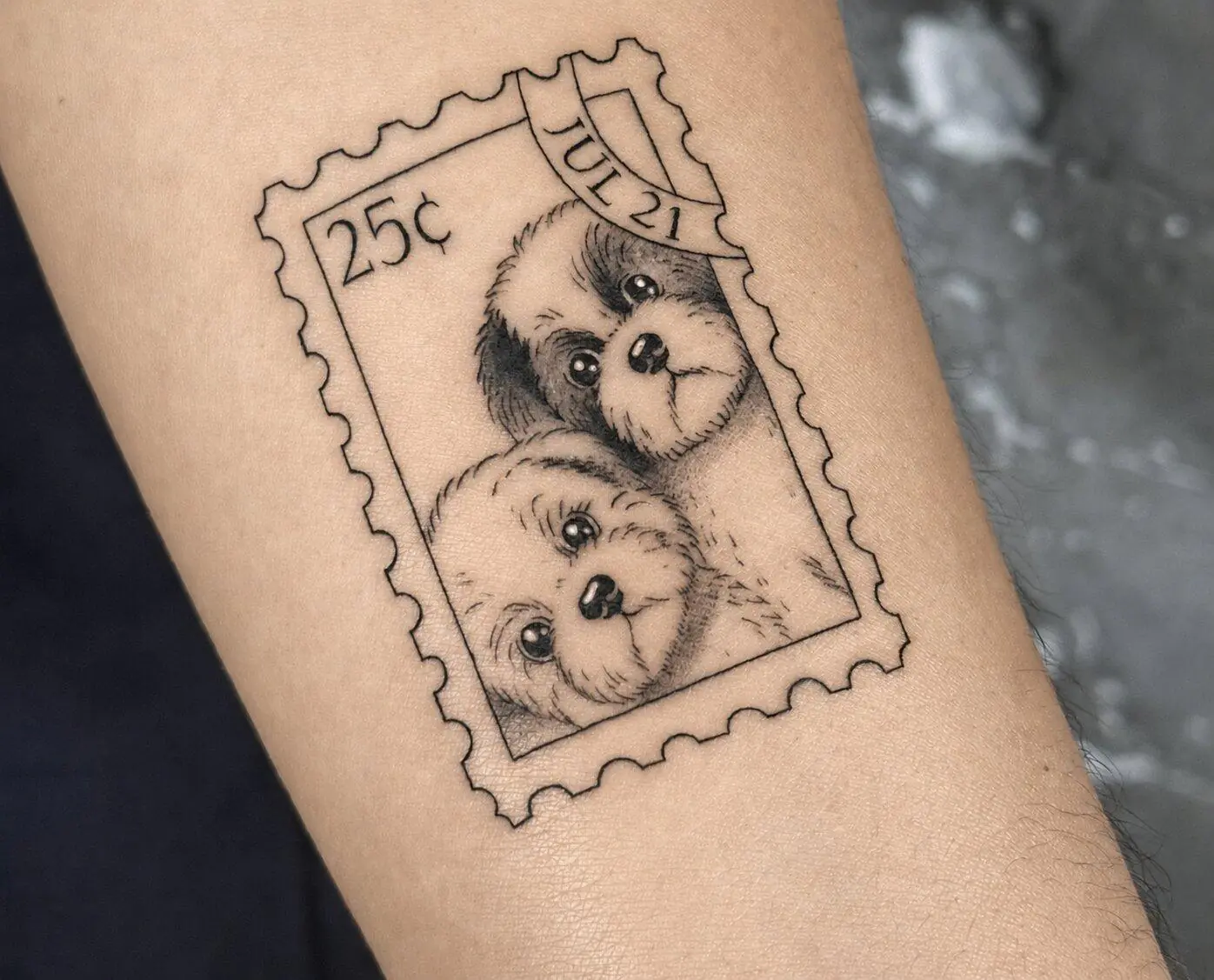
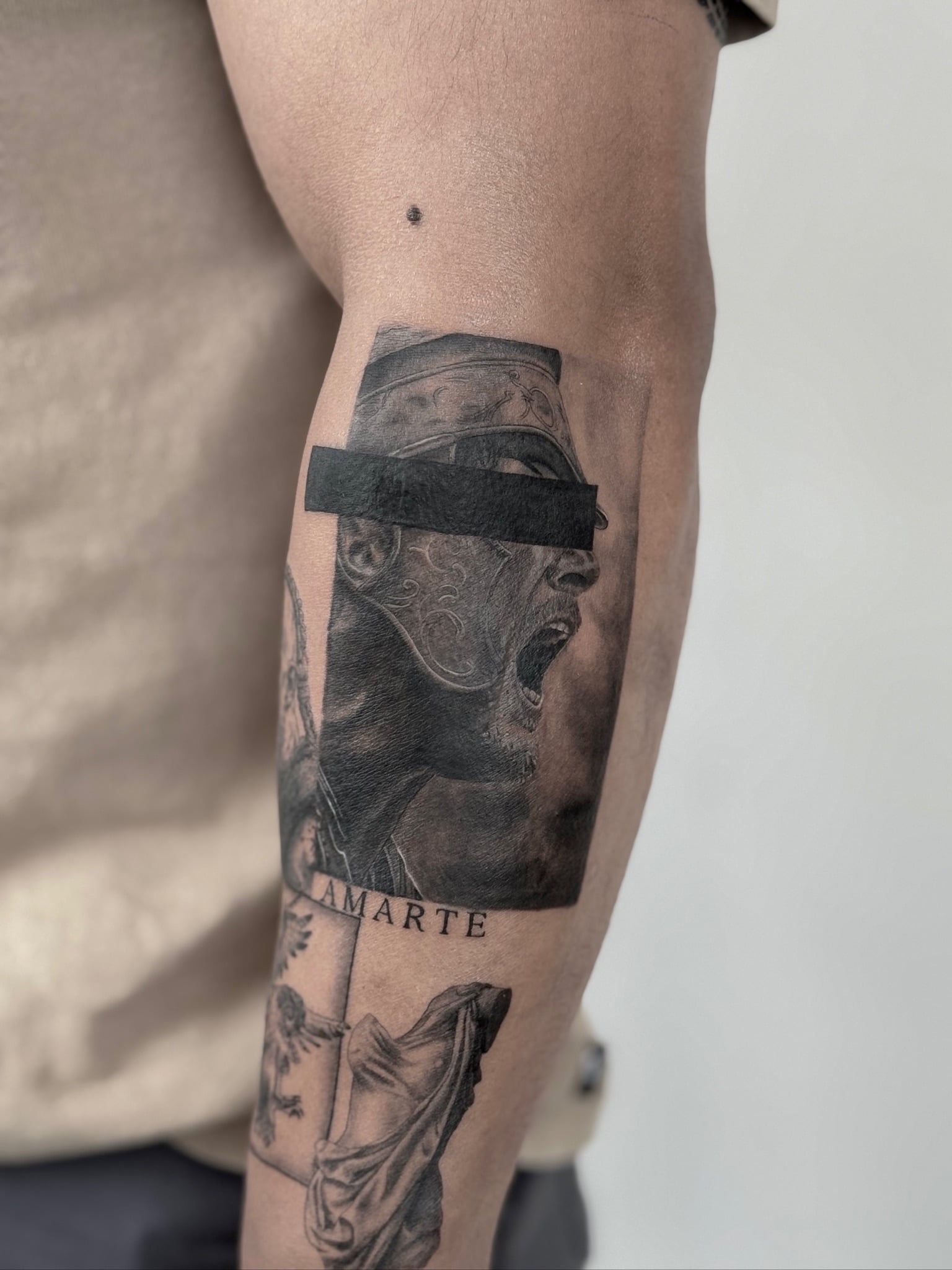
Blackwork has earned its place as one of the most striking forms of body art in the modern studio. It carries weight, both visually and historically, and it pulls in clients who want their ink to read clearly from across a room. The style fits neatly into the all-black aesthetic so common in NYC, where minimalism and bold contrast already shape how people dress, decorate, and present themselves.
This guide walks through what defines the style, the sub-categories worth knowing, how it feels during the session, how it ages, and what removal looks like if you ever change your mind.
What Exactly Is a Blackwork Tattoo?
A blackwork tattoo is built entirely from solid black ink, leaning on stark contrast, negative space, and confident lines without color or grey wash shading. No softening tones, no gradients, no muted middle ground. The whole language of the piece is black against skin.
That restriction is what gives the style its punch. Because there is nowhere to hide a wobbly line or a patchy fill, the design has to be planned with care from the start. Saturation matters. Line weight matters. The space you leave empty matters as much as the space you fill. Black ink tattoos done well feel architectural, almost engineered, with every shape pulling its weight inside the composition.
The Different Styles Within Blackwork
Calling something a blackwork tattoo style is a bit like calling something a painting. The label only tells you part of the story. There are several recognizable branches, each with its own visual rules and its own audience.
Sub-Style | What Defines It | Who It Tends to Suit |
Tribal and Polynesian | Repeated motifs rooted in cultural symbols, heavy saturation, geometric flow that follows the body | Clients drawn to ancestral or ritual themes |
Geometric and Ornamental | Mandalas, sacred geometry, lacework, mirrored patterns | Clients who love symmetry, structure, and heavy ornamental patterns that wrap around the limb |
Dark Lettering | Heavy gothic script, blackletter, oversized typographic statements | Clients who want a phrase or single word to feel like a banner |
Illustrative Blackwork | Figurative imagery rendered only in black, often dotwork or hatching, with no grey midtones | Clients who want narrative or representational work without color |
Each branch demands a different rhythm from the artist. A geometric piece lives or dies by alignment, while an illustrative piece depends on how well the negative space reads as form. If you are looking at bold graphic tattoos and feeling pulled toward something heavier, this is the family of styles worth exploring.
Picking the Right Branch for Your Body
Placement shifts the conversation. A forearm sleeve handles geometric repetition beautifully because the surface is fairly even. The ribcage, on the other hand, rewards illustrative or organic compositions that move with the body. Talk through your reference images with the artist before settling on a sub-style, since the same idea can read very differently on different parts of the body.
Do Blackwork Tattoos Hurt More?
Blackwork tattoos can feel more intense than fine line work because the artist has to pack solid pigment into the skin, which often means going over the same area several times. The needle is not skating across the surface for a single clean line. It is laying down saturation, which the skin registers as repeated pressure.
That said, pain is personal. A small ornamental piece on the outer forearm sits in the mild range for most people. A larger fill on the ribs, sternum, or inner bicep climbs quickly. The artist will usually map out a session length that respects how your body handles sustained work, and longer pieces get split into multiple sittings so the skin has time to recover. Eating well, sleeping properly the night before, and skipping alcohol the day prior all help more than people realize.
How Do Blackwork Tattoos Age Over Time?
There is an old saying in the industry. Bold will hold. Blackwork tends to age remarkably well because heavy black saturation resists fading better than thin grey wash or color, both of which break down faster under sun exposure and time. The pigment particles in black ink are larger and denser, so they stay locked in the dermis longer.
That does not mean the style is immune to wear. Sun is still the main enemy. Friction zones like the side of the hand, the inside of the wrist, and the tops of the feet will soften faster than a piece on the upper arm or thigh. Aftercare during the first few weeks sets the foundation, and long-term sunscreen habit does the rest. Keeping the new tattoo clean, moisturized, and shielded from direct sun during healing is what protects pigment integrity over the years.
Why Saturation Matters More Than You Think
A patchy fill ages worse than a well-saturated one because the gaps tend to spread visually as the skin shifts with age. A piece that was packed evenly the first time keeps its shape for decades. This is a big part of why studios that work in this style price the work the way they do. The labor is in the consistency, not just the outline.
Can You Remove or Cover Up a Blackwork Tattoo?
Removing a heavily saturated blackwork piece is possible but slow, expensive, and rarely complete. Laser removal works by breaking up pigment particles so the body can absorb and clear them, and dense black fills require many more sessions than a light fine line piece. Expect a longer treatment timeline, more out-of-pocket cost, and the real possibility of residual shadowing even after the course is finished. Reputable dermatology sources note that complete removal depends on ink color, depth, and skin type, and that black ink, while one of the most laser-responsive colors, still resists full clearance when packed densely.
Cover-up is often the more practical route. Black ink tattoos make excellent cover material for older work because the heavy saturation can absorb earlier lines and shapes underneath. The trick is finding an artist who can plan the new composition around what already exists, rather than trying to bury it. If you are exploring blackwork tattoo ideas as a way to refresh older ink, bring your existing piece to a consultation. Good artists who handle custom blackwork designs will tell you honestly what the skin can take and what should be lasered down first before any new work happens.
A Few Honest Thoughts Before You Book
This is not a style you scroll into casually. It rewards people who sit with the idea, sketch it, look at it again a month later, and still want it. Pull references from artists whose work you respect, ask about session pacing, and pay attention to how the studio handles consultations. The conversation before the needle does most of the heavy lifting.
If you have been turning over blackwork tattoo ideas for a while and the pull has not faded, the next move is finding an artist whose portfolio matches the weight you want the piece to carry. The ink will outlast the trend cycle. Treat the decision like it deserves that kind of patience.