If you’ve spent any time on TikTok or Instagram this year, you’ve seen it. Sharp black lines wrapping around someone’s arm like digital armor. Abstract patterns that look half-mystical, half-machine. That’s a cyber sigilism tattoo, and it’s become one of the most talked-about tattoo styles of 2026.
But what does it mean? And why is everyone suddenly getting one?
What Is a Cyber Sigilism Tattoo?
A cyber sigilism tattoo is a modern blackwork style built on sharp, thin geometric lines that blend futuristic digital aesthetics with the personal symbolism of ancient sigils. It’s a way of turning invisible things, like intentions, beliefs, or identity, into something permanent on skin.
The name breaks down into two halves. “Cyber” pulls from technology, the internet, and digital culture. “Sigilism” comes from the centuries-old practice of creating sigils, which are symbols designed to carry a specific personal meaning or intention. Put them together and you get a style that feels like it belongs in a sci-fi film but carries real emotional weight for the person wearing it.
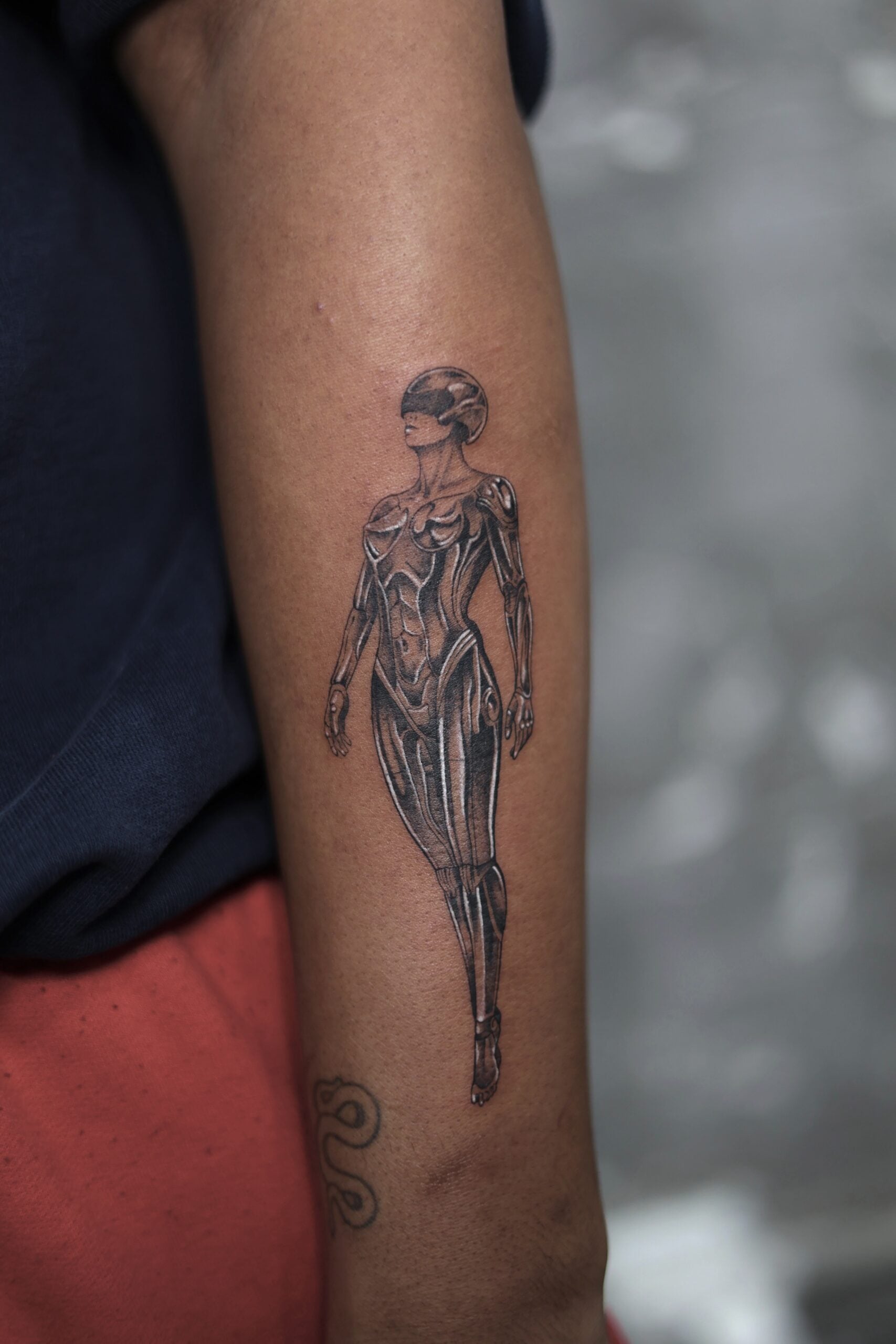
Visually, the look is distinct. Razor-thin black lines, angular shapes, and sprawling abstract forms that follow the contours of the body. Some pieces incorporate subtle figurative elements like butterflies, daggers, wings, or feminine silhouettes hidden within the pattern. The effect is something organic and technological at the same time, like a wireframe drawn directly onto skin.
The Origins of Cyber Sigilism
This style was born in Berlin’s underground club and techno scenes in the late 2010s before spreading globally through social media. The term itself is credited to Aingel Blood, an American LGBTQ+ tattoo artist who helped name and define the movement. From there, artists in Seoul, Buenos Aires, Paris, and New York began developing their own takes on the style.
The influences run deep. Y2K aesthetics, early internet graphics, cyberpunk films like The Matrix, witch house music, and industrial album art all feed into the visual language of cyber sigilism. There’s also a strong connection to rave culture, particularly art-focused electronic music communities where body modification and self-expression overlap.
In NYC, the style has found a natural home among creatives in Bushwick and Brooklyn. The sharp angular lines of a sigilism tattoo mirror the city itself, the steel grids of skyscrapers, the geometric patterns of subway maps, the constant collision between the physical and the digital. For people who live their lives split between screens and streets, this tattoo style feels like a natural extension of that duality.
How Cyber Sigilism Differs from Tribal Tattoos
Cyber sigilism and traditional tribal tattooing are not the same thing. This is a distinction worth understanding clearly, because the two sometimes get confused.
Traditional tribal tattoos carry sacred meaning rooted in centuries of indigenous cultural practice. They belong to specific communities and carry deep spiritual and social significance. A tribal cyber tattoo, by contrast, draws its inspiration from technology, modern mysticism, and digital culture. The visual similarity, both use bold black lines and abstract patterns, is where the overlap ends.
Reputable artists working in this cyber tattoo style create fully original compositions for each client. They’re not pulling from culturally significant patterns or reproducing sacred designs. The sharp, angular forms in cyber sigilism reference circuit boards and digital wireframes, not indigenous traditions. That’s an important line, and good artists respect it.
Iconographic Sources and Visual Elements
Cyber sigilism pulls from a wide range of visual references, fusing organic natural forms with digital and mystical motifs. Lightning bolts, serpentine curves, amulets, and stylized female figures all appear frequently. The word “sigil” itself has a dual meaning. In occult traditions it refers to a pictorial symbol of magic, and in computing it describes a prefix character attached to code. That duality is baked into the style.
Butterflies and wings recur throughout the designs, connecting to older symbolic traditions. Patterns drawn from neotribal and blackwork lineage, the same forms that Leo Zulueta pioneered in the 1980s, create a structural backbone for many cyber sigilism compositions. Shapes range from sprawling back pieces that resemble futuristic body armor to smaller sternum or hand placements that feel more intimate.
The Aesthetic and Technique Behind the Style
The aesthetic of cyber sigilism lives at the intersection of the ancient and the futuristic. Tribal, blackwork, fine line, and ornamental tattooing all feed into the conditions that made this style possible. There’s a constant interplay between those traditions in every design.
Thin black lines are the foundation. Grey wash, which is black ink diluted with water, adds shadow and depth where needed. Some artists use metallic highlights borrowed from 3D realism to give designs an almost sculptural quality. Stippling, a technique more commonly associated with engraving-style tattoos, adds texture and dimension to specific areas.
Occasionally, artists will use a heavily diluted black ink that gives the tattoo a faded, ghostly quality. This “barely there” look ties into broader influences from black metal imagery, lo-fi horror, and musical subgenres like cybergoth and cyberpunk.
Common Designs and Their Meanings
The cyber sigilism tattoo meaning is almost always deeply personal. Each line and shape can represent a specific goal, belief, or aspect of the wearer’s identity. That said, certain design patterns show up again and again.
Abstract geometric patterns are the most common form, dense webs of interconnected lines that spread across large areas of the body. Stylized hearts, wings, and spine-like forms add figurative weight to the abstract framework. Some clients incorporate small symbolic details, hidden letters, angel numbers, or personal glyphs, that carry meaning only they know.
Placement matters with this style. The designs tend to read best on flatter areas where the linework can breathe, like the back, the ribs, or the outer arm. The way a graphic tattoo wraps and flows with the body’s natural shapes is a big part of what makes cyber sigilism feel alive rather than static.
The Role of the Trans Community and Body Transformation
Cyber sigilism has been embraced by members of the trans community as a meaningful form of body transformation, particularly after top surgery. For many people, getting a cyber sigilism piece is a way of reclaiming their body and marking a new chapter in their physical identity.
This connection between the style and personal transformation adds another layer of meaning beyond pure aesthetics. It speaks to the broader appeal of sigilism tattoos as a whole. They’re not decorative in the way a floral piece might be. They’re intentional, built around the idea that the marks you choose to put on your body can carry real purpose and power.
Why Is This Style Defining 2026?
Cyber sigilism is defining this moment because it captures something specific about living a dual physical and digital life. After years of minimalist tattoo trends, there’s a visible shift toward something more complex, more layered, and more personal.
For a generation that grew up online, this style makes sense in a way that older tattoo traditions sometimes don’t. It’s a rebellion against simplicity and a new kind of personal spirituality rooted in technology rather than in opposition to it. And it offers something most digital experiences can’t, a permanent, physical mark in a world where everything else feels temporary.
The illustrative work and graphic tattoo styles that overlap with cyber sigilism continue to evolve in NYC’s underground art and fashion scenes. Cyber sigilism isn’t going anywhere. If anything, it’s still picking up speed.