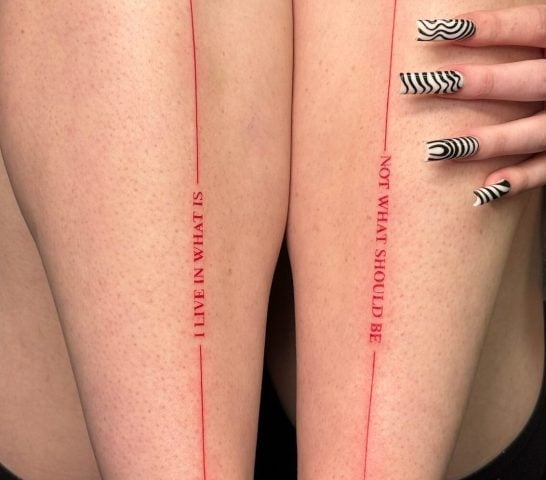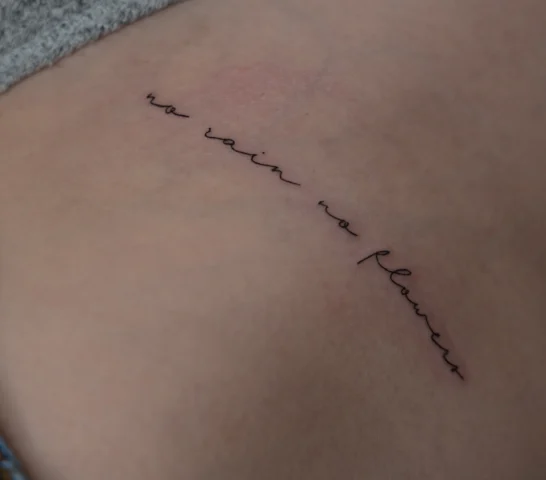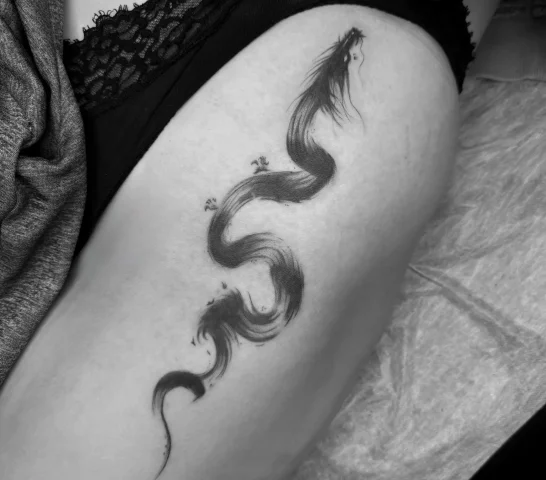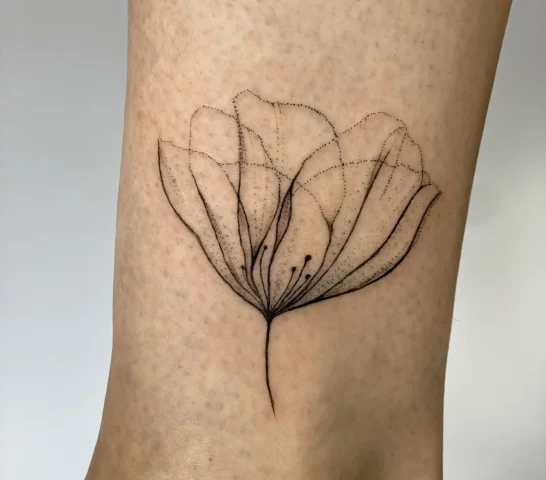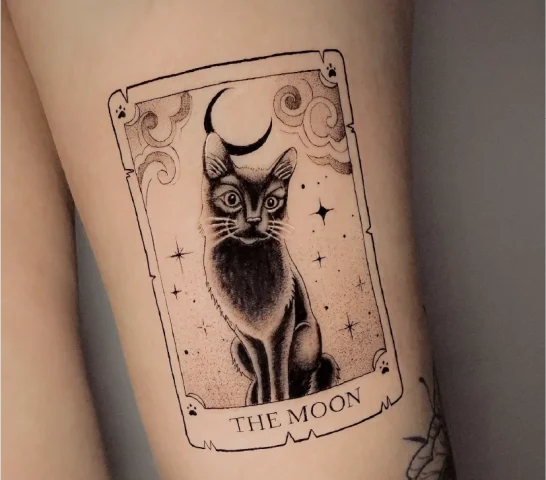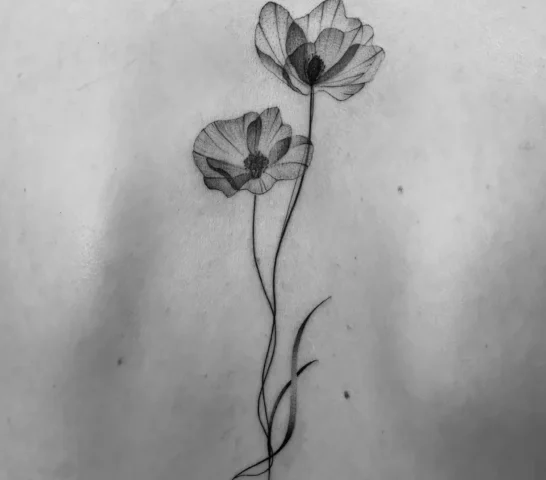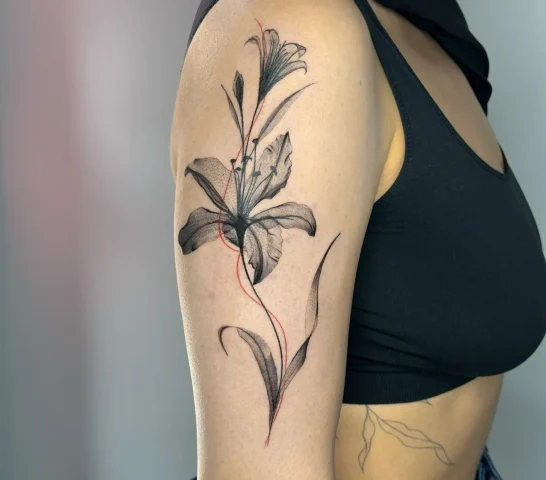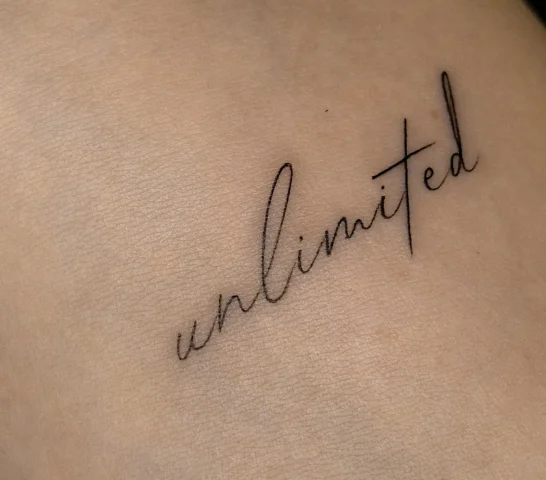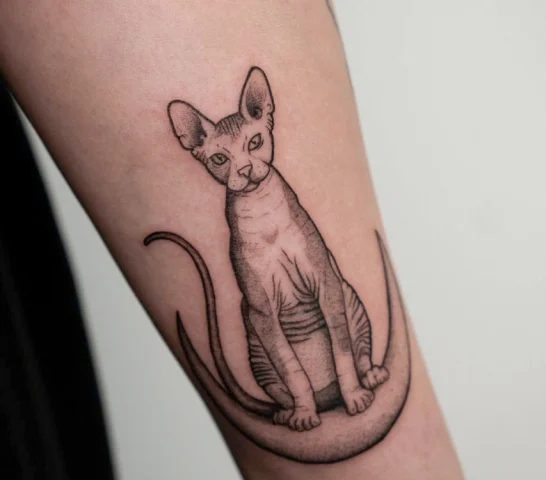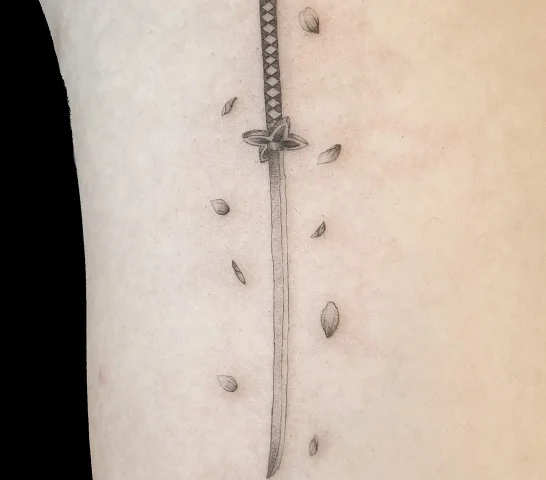
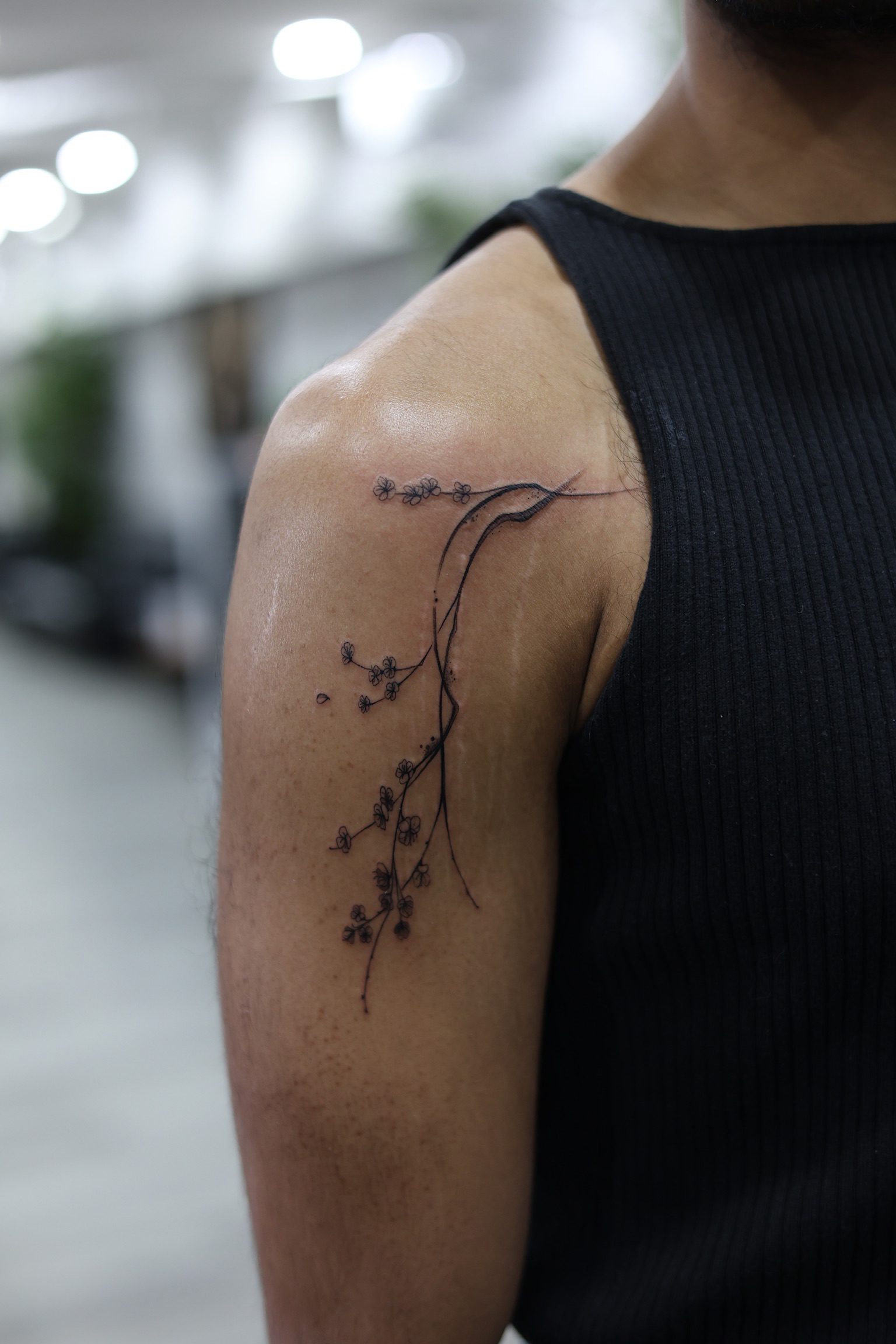
Both styles have become defining looks in New York’s tattoo scene, and from a distance they can seem interchangeable. Thin lines, small scale, delicate detail. But the techniques behind fine line and micro-realism are fundamentally different, and those differences affect how a tattoo looks, how it feels to get, and how it holds up on your skin over years. If you are deciding between the two, this breakdown should help.
Two Approaches to Fine Art Tattooing in New York
Fine line and micro-realism both fall under the fine art tattoo umbrella. What they share is a demand for control and a low tolerance for error at a small scale. What separates them is intent.
Fine lines communicate through shape and outline. The line is the design. Micro-realism communicates through depth and shadow, compressing the visual logic of large-scale portraiture into a compact format. One style is open and graphic; the other is dense and photographic. Neither is a harder or simpler version of the other.
What Fine Line Tattoos Look and Feel Like
The Aesthetic and the Technique
Fine line work uses single-needle or ultra-thin needle configurations to produce clean, minimal compositions with little to no shading. The line carries all the meaning. Botanicals, constellations, handwriting, and small geometric forms are among the most common subjects. In Manhattan’s current tattoo culture, minimalist fine line florals and single-needle line work consistently rank among the most requested styles, especially from clients who want something refined and lasting without heavy visual weight.
Session Length and Comfort
Fine line sessions tend to run shorter, particularly for smaller pieces. Needle pressure is lighter than with denser styles, which most people find more tolerable. Placement still matters significantly. The ribs, sternum, and inner arm are sensitive areas regardless of technique. A small-to-medium piece typically takes one to three hours.
What Micro-Realism Tattoos Look and Feel Like
The Aesthetic and the Technique
Micro-realism condenses photographic realism into a small footprint. Layered shading, tonal gradients, and lifelike texture all compressed into a piece that may be no larger than a few inches. The result reads almost like a photograph sitting on the skin rather than a drawing. Demand for miniature portrait tattoos has surged over the past two years, across portraits, memorial pieces, eyes, and detailed botanical close-ups.
Session Length and Comfort
Because the artist builds ink in layers to simulate light and shadow, sessions run considerably longer. More shading passes mean more time in the chair, and most clients find micro-realism more uncomfortable than fine line work, particularly on areas with thinner skin. A smaller piece might take two to four hours. Complex portrait work often requires multiple sessions.
Fine Line vs. Micro-Realism Over Time. Which Style Lasts Longer?
How Fine Line Holds Up
Fine line tattoos are more vulnerable to fading than denser styles. Thinner ink deposits sit closer to the skin’s surface and can soften over time, especially in high-friction areas like fingers, wrists, and hands, or with prolonged sun exposure. Most clients come back for a touch-up every two to four years. If you’re considering placement in a sensitive area, it’s worth asking your artist what to realistically expect before committing.
How Micro-Realism Holds Up
Denser ink layering gives micro-realism more structural durability. The shading depth helps the image hold its form longer than line-only work. That said, very small micro-realism pieces with extremely tight detail can blur as the skin shifts naturally over time. Placement on flatter, lower-friction surfaces helps significantly. Touch-ups are less frequent but more involved when they happen.
Placement Guide for Fine Line and Micro-Realism Tattoos
Placement affects not only how a tattoo looks on day one but how it reads five years later. Fine line work performs best on areas with stable, relatively flat skin. The inner arm, ankle, collarbone, and sternum are consistent choices. Movement-heavy or frequently flexed spots can distort fine lines over time.
Micro-realism benefits from more surface area. The forearm, upper arm, calf, and thigh give an artist the room needed to build depth convincingly. Placing a high-detail micro-realism piece on a bony or heavily curved area compresses the shading and flattens the dimensional effect the style depends on.
Size Considerations and What Each Style Can Do
The fine line scales down well. A design built from lines can hold its integrity at two or three inches without any area crowding together. Micro-realism has a practical minimum size. Push it too small and the detail collapses into noise. Most artists working in this style set a size floor for portrait work, and that conversation should happen early in the planning process.
An artist experienced in both styles can tell you whether your concept needs to be scaled up for micro-realism to work, or whether a fine line interpretation would serve it better at the size you have in mind. Size is usually one of the first things discussed in a consultation.
What Fine Line and Micro-Realism Tattoos Cost in NYC?
Smaller fine line pieces at quality Manhattan studios typically start in the $200 to $300 range, priced by the piece or by the hour. Micro-realism runs higher. Sessions are longer, the layering technique is more labor-intensive, and complex portrait work can reach $500 to $800 or more depending on size and detail.
Both styles require an artist with specific training in that technique. The gap between skilled and unskilled work is not subtle, and it becomes more apparent over time. Reviewing healed portfolio examples rather than fresh tattoos is the most honest way to evaluate an artist before you commit.
How to Choose Between Fine Line and Micro-Realism
Matching the Style to Your Concept
Fine line suits concepts built on symbolism, simplicity, and quiet elegance. If you want a tattoo that feels like a natural part of you rather than a visual statement, this is usually the right direction. It also tends to be a lower-commitment starting point for first-time clients.
Micro-realism suits concepts that depend on likeness, texture, and depth. Memorial work, pet portraits, and any design where capturing a specific image accurately is the priority are natural fits for this style.
Talking It Through Before You Commit
Many people arrive leaning toward one style and leave a consultation with a different direction after seeing portfolio work in person. Getting an honest artist recommendation based on your concept and sizing before booking is one of the most useful steps in the process, especially if you are still deciding between the two.
The Portfolio Questions Worth Asking Before You Book
Line Consistency and Edge Clarity
Look for consistency in line weight across the piece, clean edges with no wobble, and clarity of form at small scale. Botanical motifs, script, and small geometric compositions are good tests of an artist’s control.
Light, Texture, Depth. The Three Things That Matter
Focus on how the shading reads. Does the light source feel coherent? Does the texture of fur, skin, or fabric look tactile? Does the image hold its form at a small size without muddying? These are the markers that separate strong micro-realism from work that looks impressively fresh but loses integrity fast.
In both cases, healed photos are far more informative than fresh work. Fresh ink always looks sharper. Artists who regularly document and share healed results are giving you the most honest view of what their work does on skin over time.
Still Have Questions?
Can fine line and micro-realism be used together in one tattoo?
Yes. A number of contemporary artists blend both, using fine line for the outer composition and micro-realism for a focal detail within it. It can be a good middle ground for clients drawn to elements of each style.
Do both styles work across different skin tones?
Yes, though the approach shifts. On deeper skin tones, contrast and shading density need adjustment to keep detail legible. This is an important conversation to have with your artist before the session begins.
What if I am still not sure which style fits my idea?
Bring reference images to a consultation. Seeing what is achievable in each style at the scale you are considering usually resolves the question far more effectively than researching online.