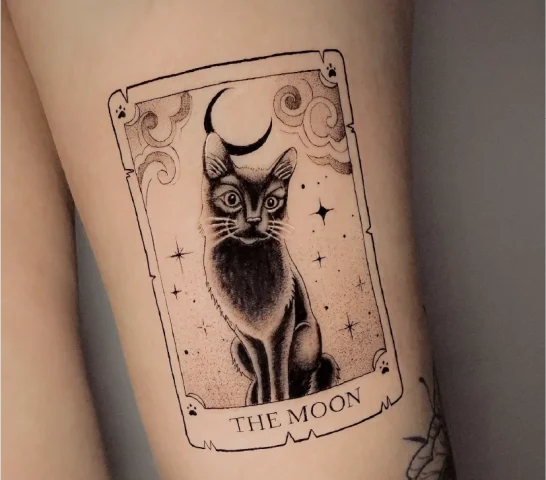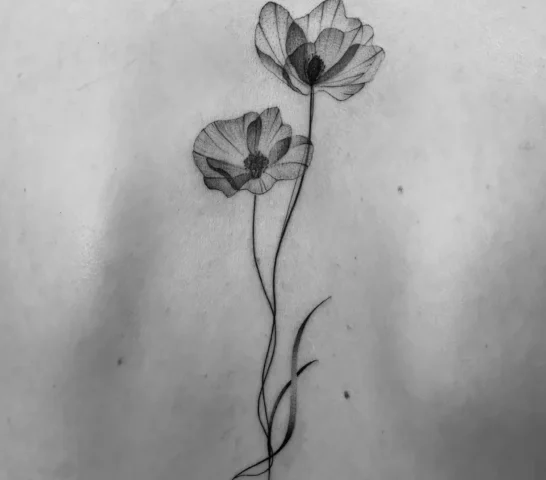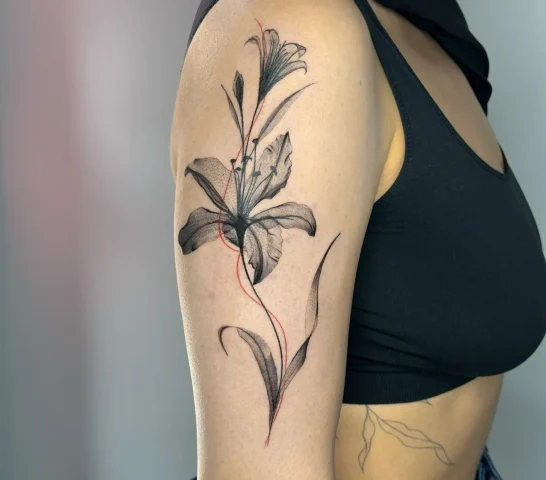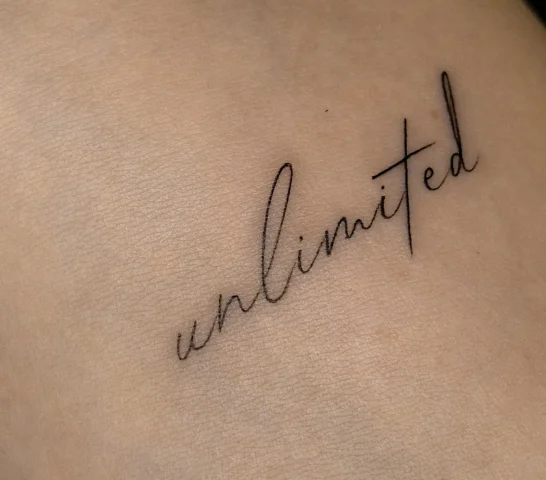
Ornamental tattoos carry centuries of meaning drawn from traditions across continents and cultures. They are visual languages with roots deep enough to span religions, civilizations, and craft histories. Understanding where this style comes from changes the way you see it on skin.
Form, Symmetry, and Why This Style Has Lasted for Centuries
Ornamental tattooing is built around form, symmetry, and rhythm. Rather than depicting a subject or telling a story, these designs create meaning through pattern itself. A mandala does not need a figure at its center to say something. A lacework band along the forearm carries weight without a single representational element.
What defines this style more than anything is the relationship between the design and the body it lives on. The impact comes from repetition, geometry, and flow, with compositions that feel like they belong to the skin rather than sitting on top of it. That quality makes ornamental work remarkably adaptable across placements as different as a sternum centerpiece and a full thigh wrap.
The Cultural Origins Behind Ornamental Tattoo Patterns
Hindu and Buddhist Roots in Mandala Symbolism
The mandala is one of the most recognized forms in ornamental tattooing. In Hindu and Buddhist traditions, mandala tattoo symbolism is tied to wholeness, the cosmos, and the cyclical nature of existence. The word comes from Sanskrit for “circle,” and the design reflects it. Concentric shapes radiate outward from a central point, embodying the idea that all things emerge from and return to a unified source.
Sacred geometry extends this further. Symbols like the Sri Yantra and the Flower of Life appear across ancient civilizations, each carrying a shared belief that mathematical relationships underlie the structure of reality. Every proportion and intersection is intentional.
Islamic Geometric Art and Its Influence on Pattern Work
Islamic art developed one of the most sophisticated visual languages ever built from geometry alone. In contexts where figurative representation was restricted, artists channeled creativity into endlessly repeating geometric forms of remarkable complexity. That tradition is a direct ancestor of modern geometric pattern tattoo ideas, from interlocking stars and tessellations to the arabesque florals that feel simultaneously ancient and contemporary.
European Lacework, Filigree, and Feminine Ornamentation
Lacework and filigree came into tattoo culture through European craft traditions rooted in textile and metalwork. Lacework tattoo meaning draws from associations with femininity, refinement, and handmade elegance. The visual language translates naturally into ink, especially where a light hand can honor the original gossamer quality of the craft.
Polynesian Traditions and Culturally Specific Motifs
Polynesian tattooing is one of the oldest unbroken tattoo traditions in existence. Its patterns communicate identity, lineage, spiritual protection, and social standing through a codified visual vocabulary including spearheads, shark teeth, ocean waves, and turtle shells. These motifs have traveled globally and influenced ornamental work worldwide, but they carry cultural weight that deserves genuine respect rather than surface-level borrowing.
Common Ornamental Motifs and What They Represent
Mandala Tattoos and the Meaning of Balance
As a tattoo, the mandala signals a personal orientation toward balance and inward focus. The mandala tattoo meaning overlaps with meditation, spiritual practice, and the search for equilibrium. The visual experience of following its concentric rings inward mirrors that intention, making it one of the few tattoo forms that works as both an object of contemplation and a statement of aesthetic values.
Sacred Geometry Tattoos and Universal Pattern
Sacred geometry tattoos draw from a belief in the universal language of mathematics. Forms like the Fibonacci spiral, the vesica piscis, and the golden ratio show up throughout nature and have carried meaning across cultures for centuries. Choosing one as a tattoo is a quiet statement about seeing order in the world.
Lacework and Filigree Designs for a Feminine Aesthetic
Filigree designs tend to appeal to people who want something feminine without committing to florals or figurative imagery. The twisting, interlocking lines recall metalwork and textile craft, carrying a handmade intimacy. The contrast between the delicacy of the design and the permanence of the medium is a large part of what makes these pieces endure.
Art Nouveau Style Tattoos and Organic Form
The Art Nouveau tattoo style draws from a late 19th and early 20th-century movement that favored organic, flowing forms over industrial rigidity. Whiplash curves, stylized botanicals, and sinuous natural imagery define the aesthetic. Its influence is visible in older New York subway stations and decorative building facades throughout the city, making it an unusually present visual reference for anyone spending time here.
Why Fine Line Tattooing and Ornamental Work Belong Together
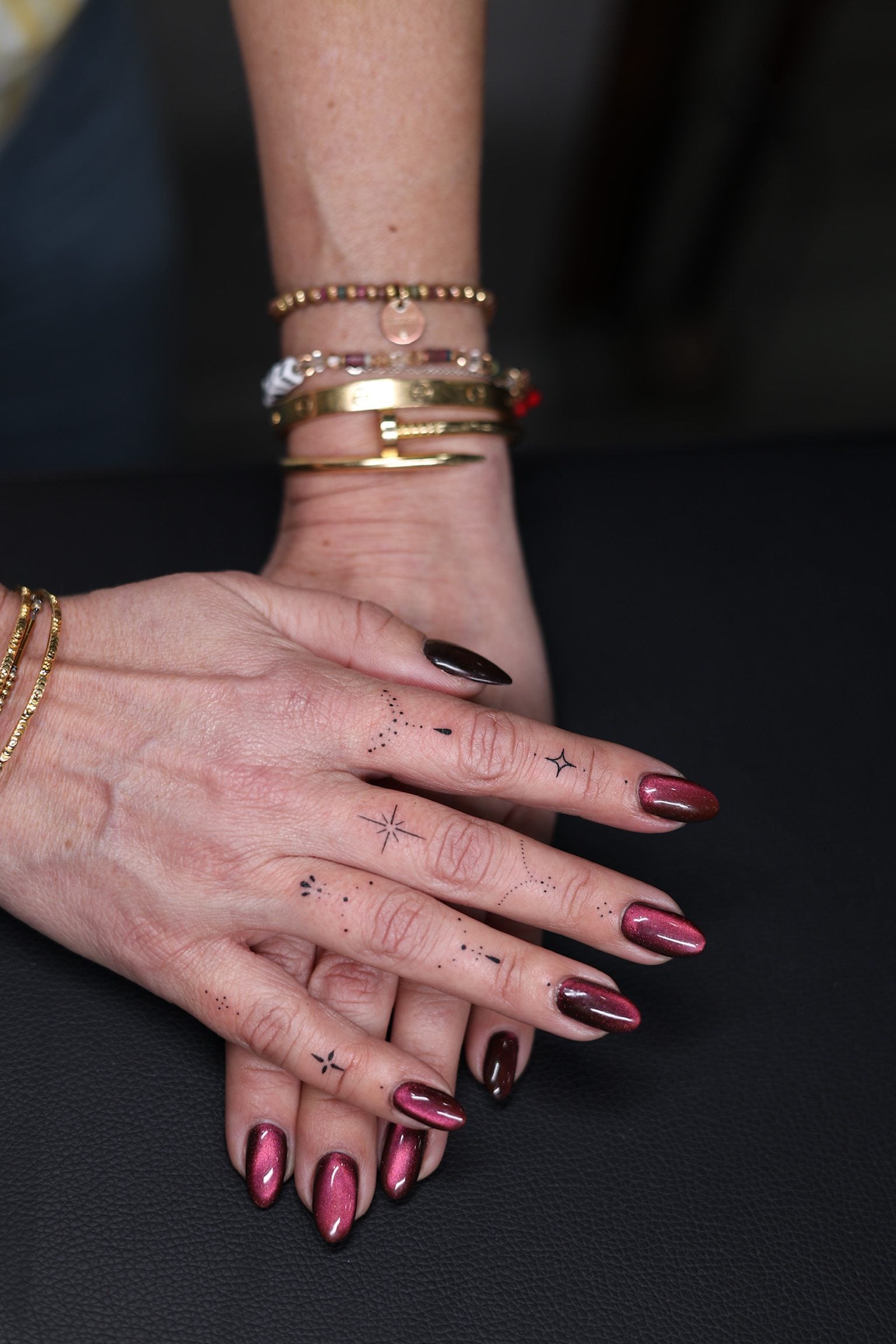
The intricate structure of ornamental work, from hairline divisions between geometric sections to the radiating arms of a mandala and the layered threads of a lacework design, calls for a technique that operates at a small scale without losing clarity. Fine line tattooing works at exactly that level, where subtle shifts in line weight define the entire visual character of a piece.
A heavier needle collapses the negative space that gives a mandala room to breathe or flattens the complexity of a filigree band. That breathing room is what makes delicate ornamental fine line tattoos read as cohesive from edge to edge rather than crowded. Both styles are rooted in restraint, and the beauty in each comes from what is not there as much as what is.
Placement Ideas for Ornamental Tattoos and Why They Work
Ornamental tattoos are designed to feel like they grew from the body. Good placement thinking shapes the composition before a single line is drawn.
Sternum is one of the most popular sites for ornamental work. The vertical and horizontal axes of the chest create a natural framework for symmetrical pieces, and mandalas, geometric drops, and lace-inspired forms read particularly well here.
Spine uses the body’s central axis as a structural guide for elongated or repeating patterns that can extend from the nape of the neck to the lower back.
Forearm bands connect to one of humanity’s oldest ornamentation traditions. In fine line work, these can read as light as a drawn-on bracelet or as layered as a full sleeve section.
Thigh wraps offer surface area and gradual curvature that suits larger compositions, giving designs room to build across multiple planes.
Placement should be part of the conversation early in the custom ornamental tattoo design process, not a decision made after the artwork is already drawn.
How New York Architecture Inspires Ornamental Tattoo Ideas
New York holds more ornamental reference material than most people realize. The cast-iron building facades in SoHo, the Guastavino tile vaulting in Grand Central, and the Art Nouveau ironwork in older subway stations are all real examples of how pattern transforms utilitarian surfaces into something worth looking at for its own sake.
Many clients bring in photographs of architectural details as reference points. Wrought iron from a brownstone stoop, geometric tilework from a station floor, or a carved cornice can all translate naturally into ornamental tattoo motifs, particularly in fine line.
The city’s cultural range also shapes the iconography people bring to consultations. Sacred geometry from South Asian traditions, Islamic-influenced geometric art, West African textile patterns, and Celtic knotwork all appear regularly. The visual environment here is genuinely global.
How to Bring Personal Meaning Into an Ornamental Tattoo
The most resonant ornamental tattoos tend to come from clients who arrived with more than a reference image. An artist can build a technically accomplished mandala from any brief, but having something to say about why the design matters changes the result in ways that are hard to quantify.
Thinking through what draws you to ornamental work, whether that is cultural history, mathematical structure, or a pull toward something feminine and architectural, shapes everything from iconography to pattern density to how the design scales to your body.
You do not need to arrive with a fully formed idea. A general direction gives your artist a working brief to build from. The refinement happens in conversation. For clients considering a meaningful custom ornamental tattoo in NYC, that conversation is where the work begins.
Ornamental and Art Nouveau Tattoo Trends in 2026
Allure’s 2026 tattoo trend report highlighted a significant resurgence in ornamental and Art Nouveau-inspired designs. After years of maximalism and illustrative hyper-realism leading the conversation, there is a clear shift back toward restraint, geometry, and symbolic weight. Fine line ornamental tattoos are drawing renewed interest from people who want something that reads quietly from a distance but rewards a closer look.
A well-executed ornamental tattoo does not date the way trend-specific imagery can. The visual logic of a mandala drawn in 2026 is the same logic as one drawn a century ago or designed in 14th-century Persia. That durability is part of what draws people to this style in the first place.