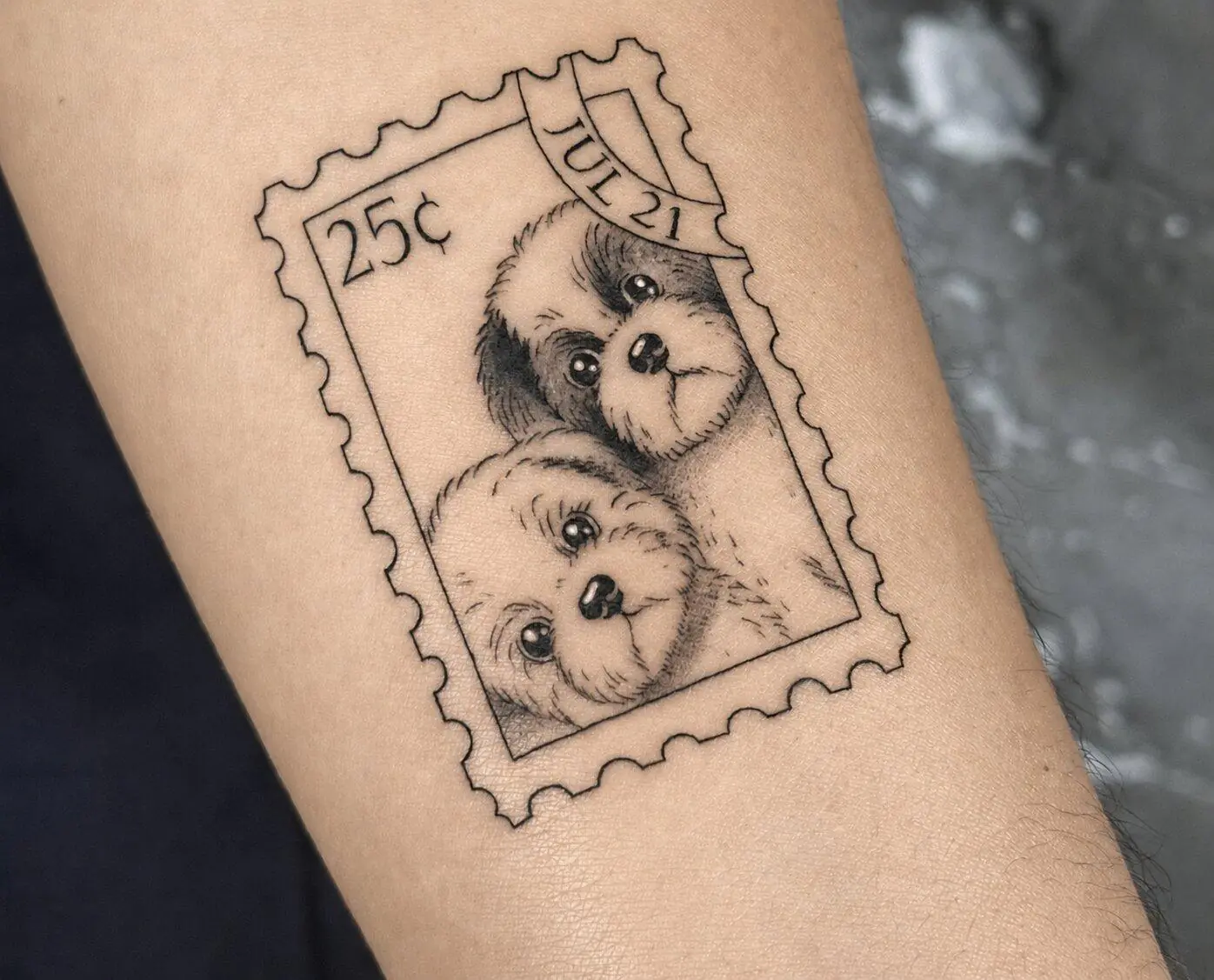
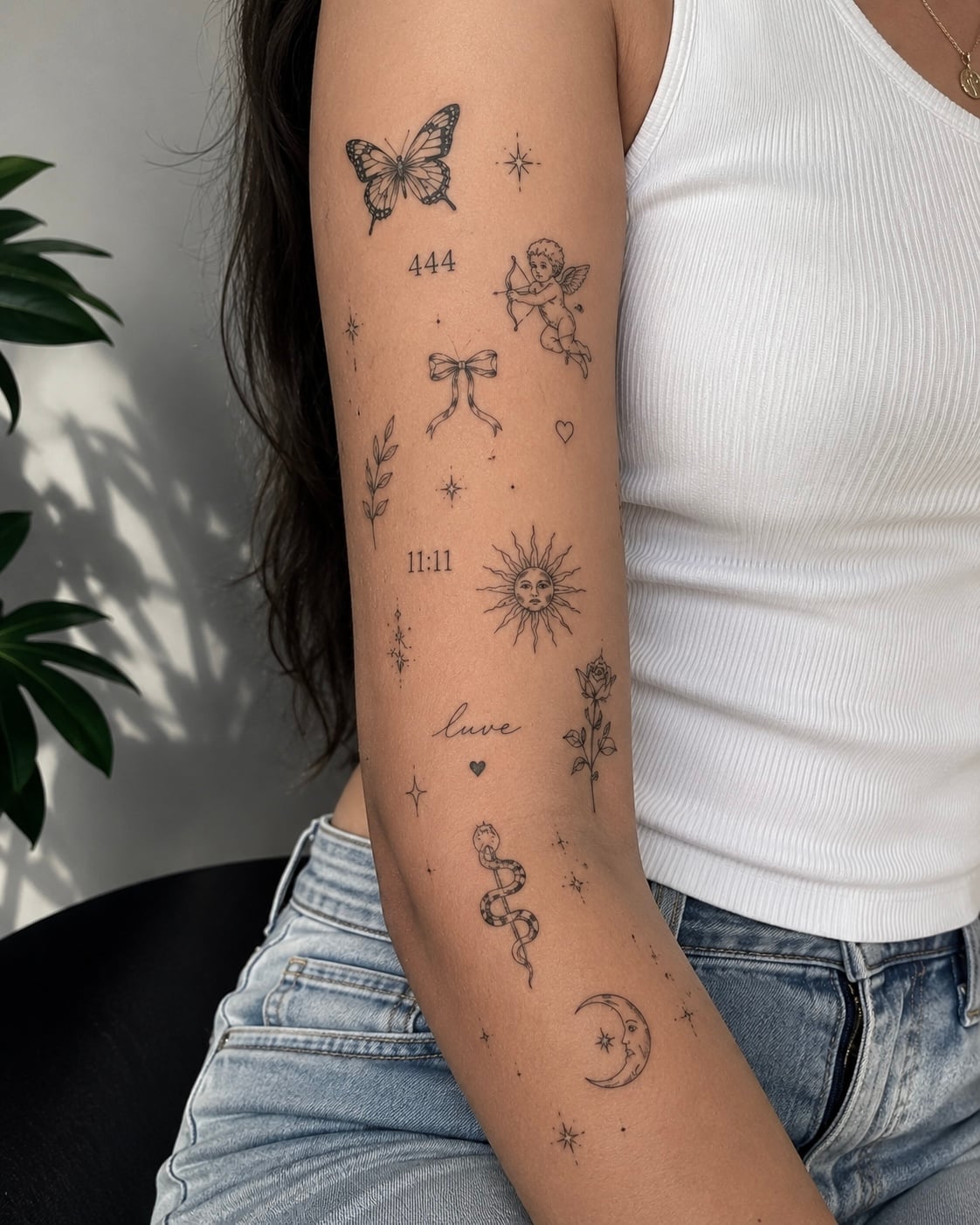
Patchwork tattoos have quietly become one of the most popular ways to wear ink. Instead of one large connected piece, you collect smaller designs over months or years, placing them near each other like patches on a denim jacket. The look is personal, layered, and never quite finished, which is part of the appeal.
This guide covers what defines the style, how to start a collection without regret, and the small rules that keep the whole thing from looking chaotic.
What Is a Patchwork Tattoo Style?
A patchwork tattoo is a collection of separate, unconnected designs placed close together on the body, with intentional negative space between each piece. Think of a sticker book or a wall of pinned postcards. Every tattoo stands on its own, yet the grouping reads as one composition.
This is the opposite of a traditional sleeve, where elements blend into a single illustration with backgrounds and shading tying everything together. Patchwork keeps the gaps. Those small slices of bare skin between designs tell the eye that each tattoo is its own moment.
How to Start a Patchwork Collection
Begin with two or three larger anchor pieces on flat areas of the body, then fill the awkward spaces around them with smaller designs over time. The flat parts of the forearm, outer thigh, and upper arm hold detail well and give you predictable canvas to plan around.
Anchor pieces set the tone for everything that follows. If your first big tattoo is a black ink botanical illustration, the surrounding designs will read more naturally if they share that visual language. Smaller items added later, like mini tattoos make great fillers for the odd corners between bigger work, can include stars, tiny florals, dots, or small symbols that quietly bridge the gaps.
Rules for Keeping Patchwork Tattoos Cohesive
Cohesion comes from one or two unifying threads running through the collection, not from matching every detail. You can mix subjects freely once you commit to a thread. Most collectors pick from the options below and stick with it.
Unifying Element | What It Looks Like in Practice |
Single ink palette | All black, or black with one accent color across every piece |
Consistent line weight | Fine line throughout, or bold traditional lines throughout |
Shared theme | Botanicals, mythology, ocean life, folk symbols, vintage Americana |
One style family | Fine line illustrative, neo traditional, blackwork only |
Repeated motif | A small star, dot cluster, or shape that appears on multiple pieces |
You do not need every rule at once. Pick one anchor element and let the rest stay flexible. A collection unified by line weight alone can include florals, animals, and abstract shapes without losing its logic.
What Throws Cohesion Off
The fastest way to make a patchwork look disjointed is mixing wildly different ink saturations side by side. A heavy black traditional piece sitting next to a soft watercolor wash will fight for attention. Same goes for sizing. Three large pieces crammed too close with no breathing room loses the patchwork feeling.
The Role of Filler Tattoos
Filler tattoos are the small designs that fit into gaps between larger pieces, giving the collection rhythm and balance. They are not afterthoughts. A well placed filler can be the reason a patchwork composition finally clicks.
Common fillers include single line stars, dot clusters, sparkles, tiny hearts, small florals, and short script. Many people pick these up by collecting flash designs from artists they admire, which adds variety while keeping the collection rooted in a recognizable hand. Flash sheets are also a low pressure way to test how a new style sits next to your existing work.
Mixing Tattoo Styles: Does It Work?
Mixing styles in a patchwork can work beautifully, but it requires at least one strong unifying choice to hold everything together. Pure style mixing without a common thread tends to look like a sampler rather than a collection.
Fine line and traditional can share space if the color palette stays consistent. Realism and illustrative can sit near each other if both lean into similar tonal ranges. The pieces that fail are usually the ones where every variable shifts at once, with no anchor pulling the eye back to a unifying idea. A practical approach is to keep the bigger investments, like custom statement pieces, in one consistent style, and let the smaller fillers experiment a little.
How to Plan a Patchwork Tattoo Sleeve
Planning a patchwork sleeve means mapping placement before you book the first session, even if you only commit to two or three pieces at the start. A patchwork sleeve grows organically, but the strongest ones are the result of someone thinking ahead about where the gaps will fall.
A loose sketch on tracing paper or a digital mockup over a photo of your arm helps you see proportions in advance. Knowing where the elbow lands, how the bicep curves, and what shows when your sleeve is rolled up will shape the whole project. The other half of planning is patience. A patchwork sleeve built over a year or two, with intentional pauses to assess what is missing, almost always reads better than one rushed in three sessions.
NYC Walk In Culture and Patchwork Collections
The city is well suited for this style of collecting. Walk in and flash days are a regular fixture across studios, so you can pick up small designs from different artists without the long booking lead time custom work usually requires. Many collectors build a chunk of their patchwork this way, treating each walk in piece as a souvenir from a particular afternoon or neighborhood.
Hopping between studios with no plan can leave you with a collection that feels random. Picking artists whose hands share a similar sensibility, even loosely, gives you the freedom of walk in spontaneity without losing the visual thread.
Are Patchwork Tattoos More Expensive?
Patchwork tattoos are usually priced piece by piece, so the total cost depends on how many you collect and the size of each one rather than the style itself. Smaller fillers and flash pieces can be quick and affordable. Larger anchor work runs the same as any custom tattoo of that size.
Spreading the collection over time also spreads the cost, which is part of why this approach appeals to people who want substantial ink without one heavy financial moment. We do not offer free diagnostics or design consultations, so any planning session for custom anchors is part of the project itself.
A Style That Grows With You
The charm of patchwork tattoos is that the collection becomes a record of where you have been. A piece from your first artist, a flash design from a slow Sunday, a small filler picked up on a trip. Each tattoo holds its own meaning while contributing to the larger picture on your skin.
Start with a clear anchor, leave room for what comes next, and pick one or two threads to carry through the whole collection. The rest builds itself, one piece at a time.