A geometric tattoo uses shapes, lines, and mathematical patterns to build a design that feels balanced and intentional. The style draws from both ancient symbolism and modern aesthetics, and it can be as minimal as a single triangle on the wrist or as layered as a full sleeve of interconnected sacred forms.
What draws people to geometric tattoo designs is the way structure becomes art. These pieces rely on clean linework and visual rhythm rather than shading or color gradients. The result is something that reads as both timeless and contemporary.
If you walk through Midtown and look up at the Chrysler Building’s art deco crown, or study the hexagonal ceiling at the Guggenheim, you’ll see the same principles at work. Geometry has always been part of how we build meaning into visual space, and tattoos are no different.
Geometric Tattoo Meaning, Shape by Shape
Every shape in a geometric tattoo carries its own symbolism. Circles represent wholeness and eternity. Triangles speak to strength and directional energy. Squares ground a design in structure. Understanding what each element means helps you build a piece that says something personal without needing a single word.
Shape | Core Meaning |
Circle | Wholeness, eternity, unity |
Triangle | Strength, balance, mind-body-spirit connection |
Square | Stability, grounding, the physical world |
Spiral | Growth, evolution, the journey of life |
Hexagon | Harmony, natural order, interconnection |
These aren’t rigid rules. A triangle can mean ambition for one person and family for another, depending on how it’s oriented and what it sits next to. Geometric tattoo meaning is personal, and the best designs let the wearer assign their own narrative to the shapes they choose.
Sacred Geometry Tattoos and the Symbols Behind Them
Sacred geometry tattoos draw from patterns believed to reflect the mathematical building blocks of the natural world. These aren’t random designs. They’re specific, historically significant forms that appear across spiritual traditions and scientific observation alike.
The Flower of Life
The Flower of Life is a pattern made from overlapping circles arranged in a symmetrical grid. It appears in ancient Egyptian temples, medieval manuscripts, and Leonardo da Vinci’s notebooks. As a tattoo, it represents creation, connectivity, and the idea that all living things share a common blueprint. The flower of life tattoo meaning resonates with people who are drawn to both the spiritual and the scientific.
Metatron’s Cube
Metatron’s Cube is built by connecting the centers of 13 circles and contains all five Platonic solids within its lines. It’s named after an archangel and is considered a symbol of balance, protection, and universal energy flow. As a sacred geometry tattoo, it appeals to people interested in mysticism, mathematics, or both.
The Sri Yantra
The Sri Yantra is a Hindu symbol composed of nine interlocking triangles radiating from a central point. It represents the union of masculine and feminine energy and is often used as a tool for meditation. On skin, it becomes a deeply personal mark of spiritual intention.
From Dotwork to Fine Line, How Geometric Designs Get Their Look
Geometric tattoos can be executed through several different techniques, each producing a distinct visual effect. The style you choose will affect how the piece ages, how much detail it can hold, and what kind of mood it creates.
Fine Line Geometric Tattoos
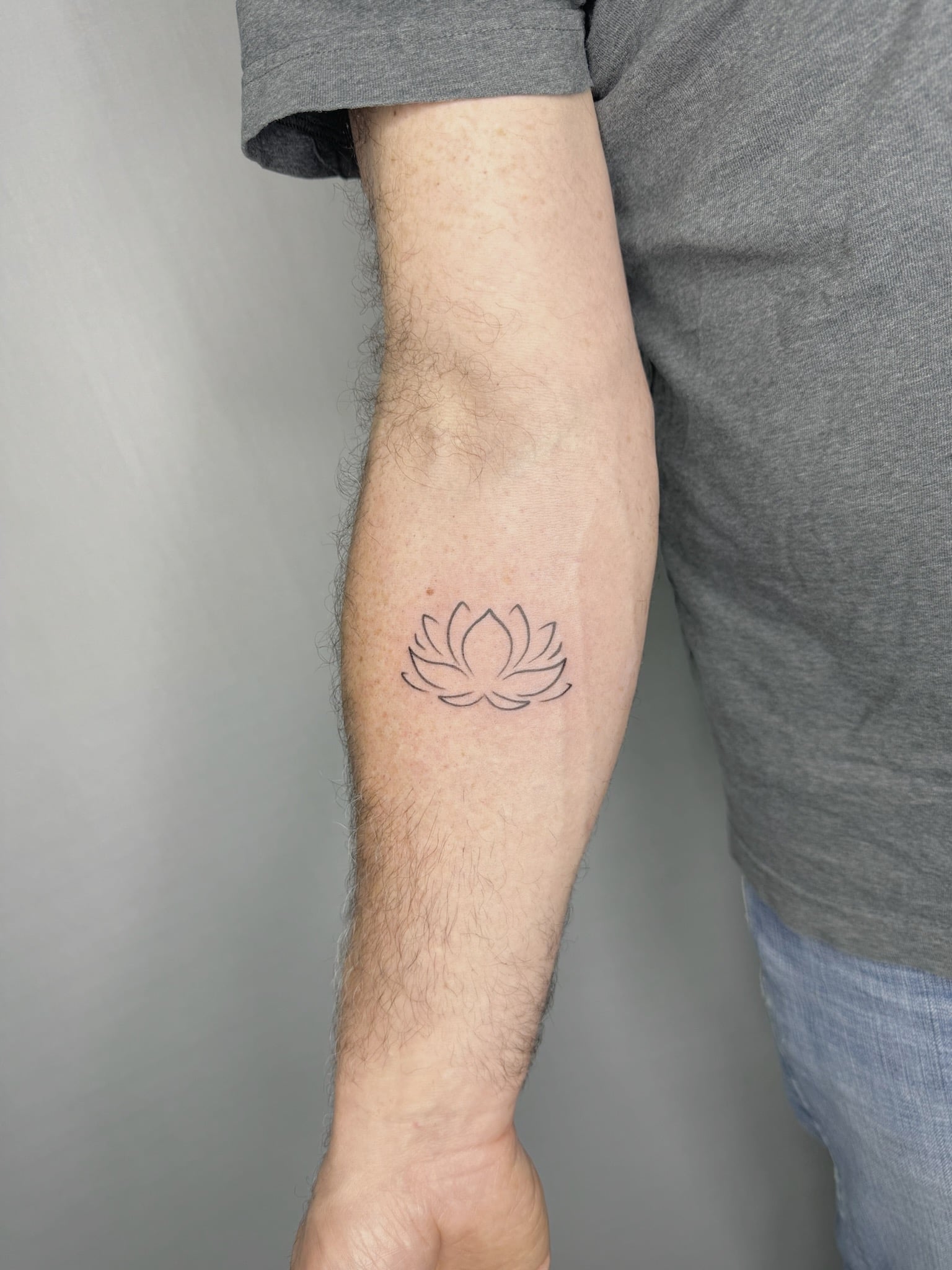
A fine line geometric tattoo uses thin, crisp strokes to form the shapes and patterns. This approach keeps the design feeling light and elegant, and it works especially well for smaller placements like the forearm, ribs, or behind the ear. Fine line execution is ideal for sacred geometry symbols and minimalist geometric designs where every line needs to be intentional.
Dotwork Tattoos
A dotwork tattoo replaces solid lines and fills with thousands of individual dots, creating shading, depth, and texture through density alone. This technique gives geometric pieces a softer, almost ethereal quality. It’s a popular choice for mandalas, the Flower of Life, and patterns that benefit from a gradient-like effect without traditional shading.
Graphic and Bold Blackwork
For bolder geometric tattoo designs, a graphic approach uses solid black fills, high contrast, and heavy linework. This style lends itself to abstract compositions, large-scale geometric sleeves, and designs that combine geometric structure with illustrative elements.
Blending Geometry with Animals and Nature
One of the most popular directions in geometric tattooing blends structured shapes with organic subjects like animals, landscapes, and botanicals. A wolf rendered in angular facets, a mountain range built from triangles, or a tree whose roots dissolve into a mandala. These hybrid designs let you bring symbolic meaning from both worlds into one piece.
Geometric animal tattoo ideas work well for people who want something figurative but don’t want a realistic portrait. The geometric framework adds a layer of abstraction that makes the piece feel more designed and less literal. A lion assembled from polygons reads differently than a photorealistic one. It’s the same animal, but the treatment tells a different story.
How Ornamental and Mandala Tattoos Fit In
Mandalas and ornamental patterns share DNA with geometric tattoos, but they follow their own visual logic. Mandalas are circular compositions that radiate outward from a center point, and they symbolize wholeness, the cosmos, and spiritual completeness. Ornamental motifs pull from classical architecture, henna traditions, and decorative arts to create flowing, symmetrical body pieces.
Where geometric work tends to feel angular and mathematical, ornamental geometric tattoo designs often soften the edges. They introduce curves, floral accents, and filigree-like details that complement the underlying structure. For people who love geometry but also want movement and fluidity, combining both approaches creates something rich and layered.
Planning a Geometric Tattoo That Lasts
The best geometric tattoos start with a clear idea of what you want the piece to mean, and then a conversation with an artist who understands how to translate that into clean, lasting linework. Think about what shapes resonate with you. Do you want something purely abstract, or do you want to weave geometric patterns into an image of something meaningful, like an animal, a landscape, or a symbol?
Consider your placement carefully. Geometric designs that rely on symmetry look strongest on areas of the body that offer a relatively flat canvas, like the upper arm, forearm, sternum, or upper back. Curved surfaces like the ribs or calves can work beautifully too, but the design needs to account for how the body bends and moves. A skilled artist will know how to adjust the composition so it reads well both when you’re standing still and in motion.