Finger tattoos are one of the most requested placements right now. Small, visible, and effortlessly stylish, they let you carry a meaningful symbol in a spot you see all day long. Beautiful finger tattoo ideas are everywhere on social media, from celebrities to everyday people.
But there’s a gap between how finger tattoos look on a screen and how they hold up in real life. They hurt more than most placements, they fade faster, and they need a level of maintenance that a lot of people don’t expect going in. And while they share some traits with full hand tattoos, finger tattoos have their own set of challenges worth understanding separately.
Why Finger Tattoos Are So Popular Right Now
Finger tattoos are popular because they sit at the intersection of subtle and bold. They’re small enough to feel personal, but placed in a spot that catches attention throughout the day. A small finger tattoo can hold real weight without taking up much space, and it works well as a first tattoo or as part of a larger collection.
Part of their appeal is versatility. A single word in clean lettering along the side of a finger reads completely differently than an ornamental band wrapped around the base. Tiny symbols, initials, astrological signs, and delicate florals all translate well here. And because fingers are always in motion, they become a living part of how you express yourself.
How Much Do Finger Tattoos Hurt?
Yes, finger tattoo pain is real, and most people rate it between a 7 and a 9 out of 10. The fingers have very thin skin, almost no fat to cushion the needle, and a dense concentration of nerve endings. That combination means you feel every pass more intensely here than you would on a forearm or thigh.
Why Fingers Are So Sensitive
The anatomy is working against you. There’s barely any tissue between the surface of the skin and the bone, so the vibration of the needle feels sharper and more direct. The sides of the fingers and the skin near the cuticle tend to be the most intense spots.
The saving grace is time. Most finger tattoos are small enough that the session lasts 15 to 30 minutes. The pain is concentrated but brief. If you’ve sat through a mini tattoo on your wrist or ankle, you already have a frame of reference for short, intense sessions.
The Truth About Finger Tattoo Fading
Finger tattoos will fade, and they will fade faster than almost any other placement on your body. This is the most important thing to understand before booking. It’s not a question of if. It’s a question of when.
Why Do Finger Tattoos Fade So Fast?
The skin on your hands regenerates at a much higher rate than other parts of the body. That rapid cell turnover pushes ink out of the dermis more aggressively over time. Your fingers are also exposed to constant friction from gripping, typing, and opening doors throughout the day. Add in frequent hand-washing, hand sanitizer on the subway, and cold winter air followed by dry indoor heat, and you can see why ink in this area breaks down faster.
How Long Do Finger Tattoos Last?
Most finger tattoos start showing noticeable fading within 6 to 12 months. With solid aftercare and sun protection, some people maintain crisp lines for closer to 18 months before needing a refresh. Plan on scheduling a touch-up every 1 to 3 years if you want your tattoo to stay looking sharp.
What Designs Work Best on Fingers
Simple, bold designs with clean lines hold up the longest on fingers. The limited surface area and high rate of fading mean that intricate, detailed work tends to blur and lose legibility within a year or two.
Side Finger Tattoo Ideas
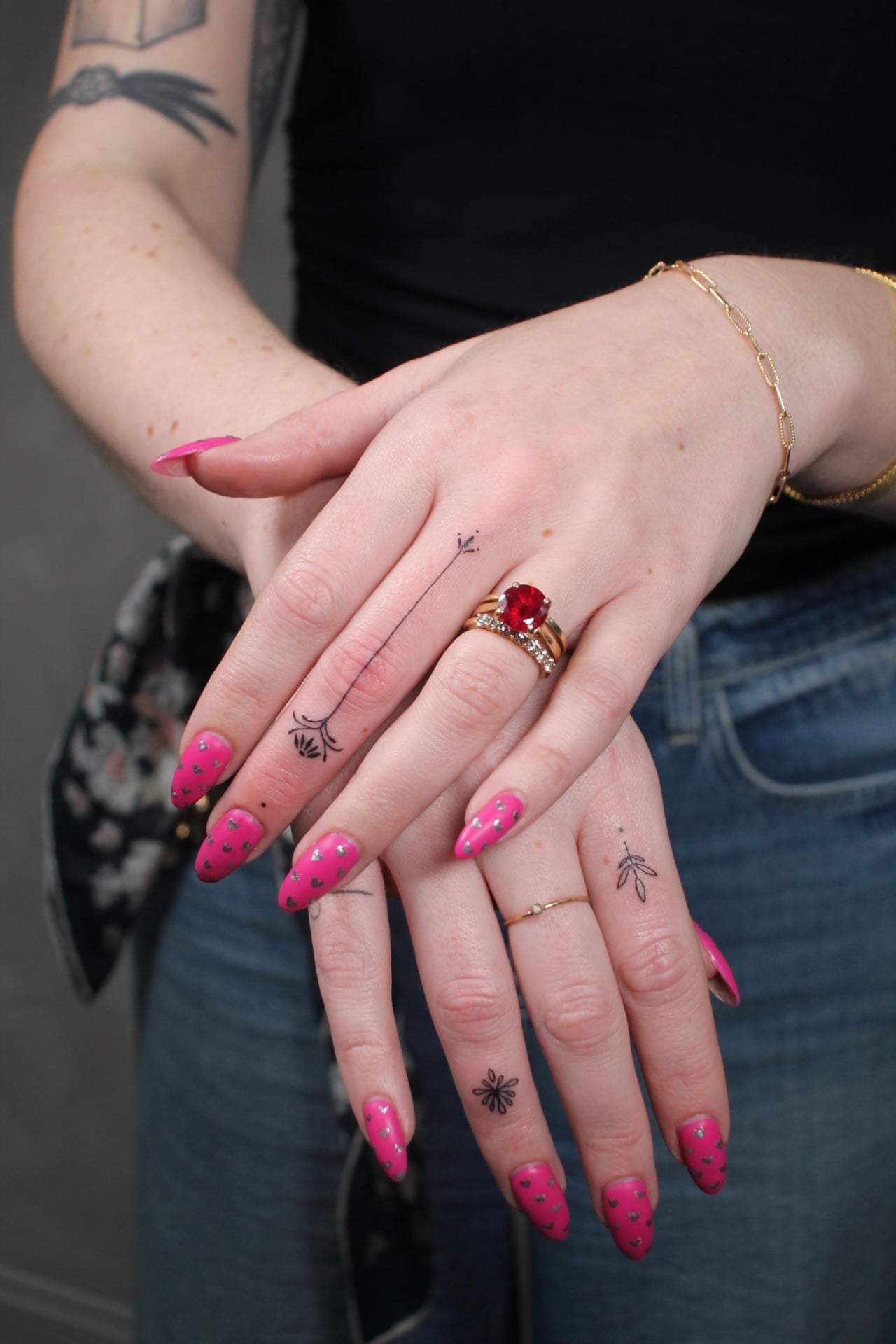
The side of the finger is one of the most popular placements. It’s slightly hidden from direct view, which gives it an understated quality. Single words, roman numerals, tiny hearts, and delicate vine patterns all work well here. Keep in mind that side finger tattoos fade even faster than top-of-finger placements because of how much that surface rubs against adjacent fingers.
Top of the Finger and Knuckle Designs
The flat area near the knuckle gives your artist a bit more room to work with. Small symbols, ornamental bands, and fine line finger tattoo work do well in this spot. Single initials, minimalist florals, and thin geometric shapes are all strong choices. Give the design enough breathing room so it doesn’t collapse into itself as it heals.
Designs to Avoid
Anything with heavy shading, tiny intricate details, or lots of closely spaced lines will struggle on fingers. Realistic portraits and complex mandalas are better suited for placements with more surface area and thicker skin.
How Finger Tattoos Heal
The finger tattoo healing process takes about 2 to 3 weeks on the surface, but the deeper layers of skin need 4 to 6 weeks to fully settle. The constant movement and exposure of your hands make it a more demanding heal than most other placements.
Week One
The first few days are the most critical. Your tattoo is an open wound, and your hands are touching everything. Wash gently with a mild, fragrance-free soap and pat dry. Apply a very thin layer of healing ointment. Thick layers trap heat and bacteria. Avoid soaking your hands in water, and wear waterproof gloves for dishes or cleaning.
Weeks Two and Three
Peeling and flaking will start, and the tattoo may look cloudy or faded. This is normal. The top layer of skin is shedding while new skin forms underneath. Do not pick at it. Switch from ointment to a fragrance-free moisturizer and keep the area hydrated without smothering it. A solid aftercare routine can help you avoid common healing mistakes during this stage.
Keeping Your Finger Tattoo Looking Good Long-Term
Consistent sun protection is the single most effective thing you can do for your finger tattoo’s longevity. UV exposure is the number one enemy of tattoo ink, and your hands get more incidental sun than almost any other body part.
Daily Habits That Help
Apply sunscreen to your hands every morning and reapply throughout the day, especially during warmer months. Use a fragrance-free moisturizer daily to keep the skin supple and prevent cracking. If you wash your hands often, carry a small tube of moisturizer and apply after each wash.
Touch-Ups Are Part of the Deal
Even with perfect care, finger tattoos need periodic touch-ups. Most people find that a session every 1 to 3 years keeps the lines clean and the design readable. Think of it as routine maintenance for a tattoo that lives on one of the hardest-working parts of your body.
Is a Finger Tattoo Right for You?
Finger tattoos are high-maintenance and high-reward. They look incredibly fresh, they carry a level of cool that other placements can’t match, and they live in a spot that’s always with you. But they demand more care and more follow-up visits than a tattoo on your arm or leg.
If you value visibility and are going in with realistic expectations about fading and touch-ups, a finger tattoo can be one of the most satisfying pieces you’ll ever get.