If you have ever stood in front of a Monet at The Met and thought, “I want something like that on my skin,” you already understand the appeal of a watercolor tattoo. Soft gradients, splashes of color, pigment that bleeds and blends like paint on wet paper. It is one of the most visually striking styles out there, and also one of the most misunderstood.
The biggest concern people have is fading. And it is a fair concern. But the full picture is more nuanced than the internet makes it seem. This guide breaks down how watercolor tattoo aging really works, what affects color tattoo longevity, and how to set yourself up for a piece that holds up over time.
What Makes a Watercolor Tattoo Different From Other Styles?
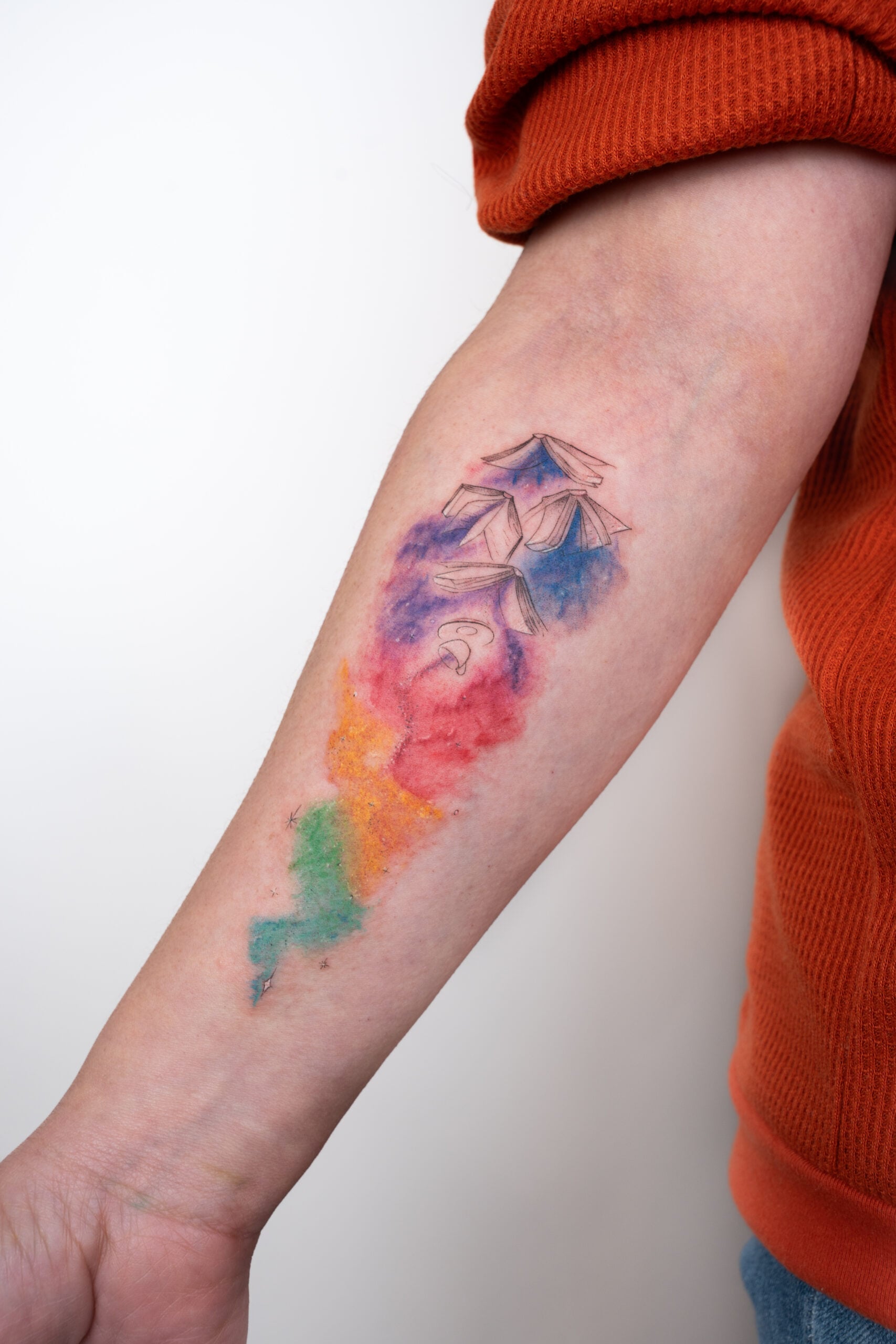
A watercolor tattoo replicates the look of an impressionistic painting on skin, using soft color gradients, ink splatters, and blended shades with little to no black outline. The result is something fluid and expressive, more brushstroke than boundary.
Unlike traditional tattoo styles that rely on heavy outlines and solid fills, watercolor tattoo design leans into negative space and translucent layering. Artists build up color through careful saturation, packing pigment in soft passes to create that hand-painted quality. Think of it as the difference between a photograph and a watercolor sketch. Both are beautiful, but they communicate in very different visual languages.
In NYC’s creative communities, watercolor tattoos feel like a natural extension of the energy you see on gallery walls and in street murals. They are wearable fine art for people who appreciate that painterly, one-of-a-kind quality.
Do Watercolor Tattoos Fade Faster Than Traditional Ones?
Yes, watercolor tattoos can fade more noticeably over time compared to tattoos with bold black outlines. The reason comes down to structure. Black ink acts as a container for the color inside it. Without that outline holding things in place, the pigment has more room to soften and spread as skin naturally regenerates.
But this is not a fast process, and it is not a death sentence for the design. A well-executed piece from an experienced artist can look vibrant and beautiful for years. The fading tends to show up first in the palest, most delicate tones, like light yellows and soft pinks, while deeper blues, purples, and reds hold their saturation much longer.
The “Container” Effect
Think of a traditional black outline as the frame of a stained glass window. It defines where each color begins and ends. Without that frame, the colors slowly shift over time. They do not vanish overnight. The edges soften, the lightest tones become more subtle, and the piece settles into the skin’s texture gradually.
What Affects How Well a Watercolor Tattoo Ages
The longevity of this style depends on four key factors. The artist’s skill with color packing, the contrast level in the design, body placement, and long-term sun protection all play a role.
Artist Skill and Color Saturation
This is the single biggest variable. An artist who understands how to saturate pigment at the right depth will produce color work that holds up dramatically better than a piece where the color was applied too lightly. Underpacked color fades fast. Well-saturated color settles in and stays.
Design and Color Contrast
Higher-contrast watercolor tattoo designs age better than very pale, pastel-only compositions. A piece that pairs deep blues with bright oranges, or rich purples with warm yellows, gives the eye more to hold onto as the subtlest tones naturally soften.
Placement on the Body
Areas with less sun exposure and less friction age better across every style, and watercolor tattoos are no exception. The inner arm, upper thigh, ribcage, and upper back are strong choices. Hands, fingers, and feet see the most wear and will fade the fastest.
Sun Protection and Aftercare
UV exposure is the number one enemy of color tattoo longevity. Sunscreen with at least SPF 30 on healed tattoos is non-negotiable if you want those colors to stay rich. Hydrated skin also holds pigment better than dry, flaky skin. Following solid tattoo aftercare practices from day one sets the foundation for how your piece will look years from now.
How Fine Line Work Changes the Game for Watercolor Tattoos
Many artists now blend watercolor techniques with delicate fine line work, creating a hybrid style that gives you the painterly look of watercolor with significantly better longevity.
A thin, precise black or dark-toned outline defines the shape of the design and gives the color something to anchor to. The watercolor fill still flows and bleeds and blends, but it has structure underneath. The result is a fine line watercolor tattoo that ages more predictably while still feeling loose and artistic.
This approach works especially well for watercolor floral tattoos, where the organic shapes of petals and stems benefit from a subtle framework. You still get the soft, dreamy color blending, but the floral design maintains its form over the years instead of slowly blurring into an undefined wash.
Popular Designs and What Ages Best
Abstract watercolor tattoos with bold color contrast and moderate saturation tend to age the best, while very light, pastel-only pieces need the most maintenance over time.
Here is a general breakdown of how different watercolor design approaches hold up.
Design Type | Color Longevity | Touch-Up Timeline |
Abstract watercolor with bold contrast | Strong | 7-10+ years |
Watercolor floral with fine line framework | Strong | 5-8 years |
Soft pastel watercolor, no outline | Moderate | 3-5 years |
Single-color watercolor wash | Varies by hue | 5-7 years |
Deeper, richer colors like blues, greens, and reds consistently outlast lighter tones. If you love the idea of a watercolor flower tattoo, pairing soft washes with a few strategically placed darker tones gives you the best of both worlds.
Should You Expect to Need a Touch-Up
Plan on a color-refreshing touch-up somewhere between 5 and 10 years to keep your piece looking its most vibrant. This is a normal part of owning this style, not a sign that something went wrong.
Think of it the way you would think about maintaining any piece of art. A painting in your home might need reframing or cleaning over the decades. The same idea applies here. The touch-up process is typically faster and less involved than the original session, because the artist is refreshing existing work rather than starting from scratch.
Some people even prefer the way their piece looks after a few years of natural settling. The slightly softened edges and mellowed tones can give it a lived-in quality that feels more personal than the crisp, bright version from day one.
Making the Right Choice for You
A watercolor tattoo is a commitment to a style that evolves with your body over time. That evolution is part of its beauty. With the right artist, thoughtful design choices, and consistent aftercare, this kind of piece can remain one of the most stunning things on your skin for years.
Go in informed. Lighter colors will soften. Sun protection matters more for this style than almost any other. And pairing watercolor techniques with a fine line foundation is the smartest way to get the aesthetic you love with the staying power you want.