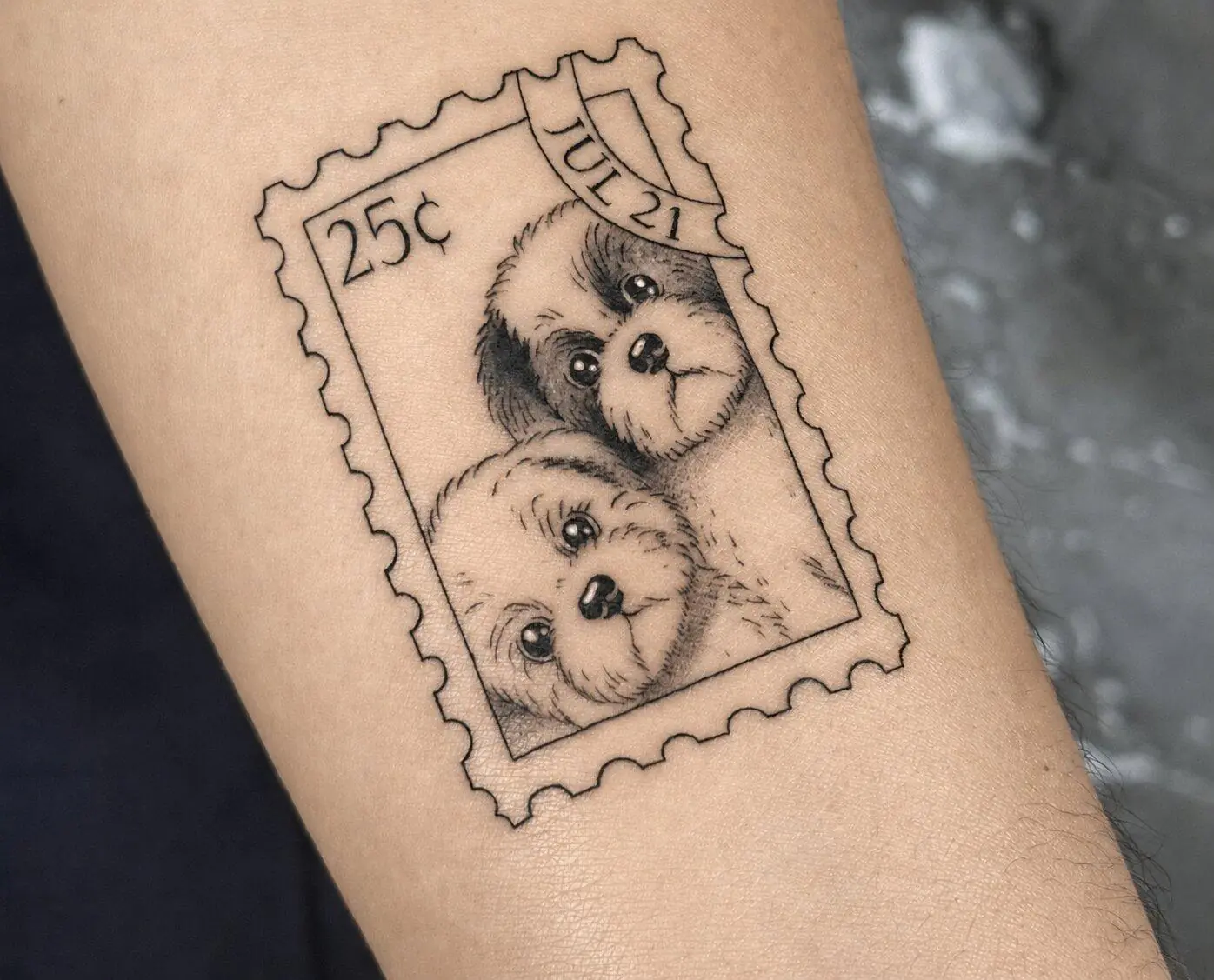

Placement changes the way a fine line tattoo looks, heals, and fits into daily life. A design on the upper arm deals with a different amount of sunlight and friction than the same piece on an ankle or wrist. Skin movement also changes across the body, and some areas give an artist more room for delicate detail. That is why fine line tattoo placement should be decided alongside size and design, not after them. A good placement gives the artwork enough space, works with the body, and does not create unnecessary problems during healing. The right choice depends on the tattoo and on the person wearing it.
Body Areas That Hold Delicate Detail Well
Fine line does not require one specific body area. The artist is looking for enough usable skin to place the design cleanly and preserve the spacing between small details.
Some areas naturally give more room to work.
- The upper arm is useful for florals, lettering, illustrative pieces, and designs that need a little space without becoming large. It can also stay covered easily when needed.
- The forearm works well for designs with a clear vertical direction. Botanical stems, script, ornamental details, and narrow illustrations often sit naturally there. The area is easy to see during stencil placement too, which helps when you are deciding on orientation.
- The upper thigh gives the artist a broader surface. That can be helpful for detailed compositions or designs that looked small on a phone screen but need more room once the actual line spacing is considered.
- The calf is another practical choice for vertical work. It has enough length for botanical pieces, lettering, and detailed illustrations without forcing the design into a tiny area.
- The shoulder blade and upper back can suit fine line work that benefits from a cleaner, more open section of skin. These areas are also covered by clothing much of the time.
When clients ask about the best placement for fine line tattoo work, I usually avoid naming one body part as the winner. The design comes first.
A few questions are more useful:
- How much detail is inside the tattoo?
- Does the design have a clear vertical or horizontal direction?
- How large does the artist recommend making it?
- Does the body area give those details enough separation?
- Will existing tattoos affect the available space?
A tiny symbol can work in a compact area. Detailed lettering or microrealism needs a different conversation.
The studio’s fine line work includes delicate script, botanicals, minimalist designs, geometric details, and micro-art created with single-needle and ultra-fine techniques. Those categories can share a fine line approach while needing very different amounts of skin.
I would choose the approximate body area first, then let the artist test the correct scale there.
Where Friction and Sun Exposure Cause Faster Fading
Some placements experience more daily wear simply because of what touches them.
This is particularly relevant during healing. Fine line aftercare guidance warns about repeated friction from tight clothing and bag straps, along with direct sun exposure.
Think About What Touches the Area Every Day
A placement can look perfect during the consultation and become annoying once normal clothing goes back on.
Common examples include:
- a waistband sitting over a hip tattoo;
- a bra strap crossing the shoulder;
- a watch rubbing the wrist;
- boots or socks covering the ankle;
- a backpack strap passing over the upper arm or shoulder;
- fitted gym clothing pressing against the thigh or ribs.
This is especially worth considering with small tattoo placement because compact tattoos are often placed in areas already occupied by accessories, seams, or straps.
None of those areas are automatically unsuitable. The point is to know what the skin deals with during a normal week.
If you wear a watch every day and want a wrist tattoo, show the artist exactly where the watch sits. If your job requires boots, an ankle design deserves the same kind of discussion.
Sun Exposure Adds Up
UV exposure can fade tattoo pigment over time. The American Academy of Dermatology recommends broad-spectrum, water-resistant SPF 30 or higher on healed tattooed skin when it will be exposed.
That gives uncovered areas a little more long-term upkeep.
Forearms, shoulders, lower legs, hands, ankles, and the upper chest may spend a lot of time in direct daylight depending on clothing and season.
During healing, fresh tattooed skin should stay out of direct sun. After healing, consistent sun protection helps preserve the appearance of the tattoo.
I would not reject a forearm placement because it sees daylight. I would simply treat sun protection as part of owning a tattoo there.
Movement Changes How the Design Sits
The wrist, elbow, knee, ankle, and other joints bend constantly. That affects stencil placement and the way a composition looks in different positions.
Check these tattoos with the body relaxed and in motion.
A wrist design may look centered when the hand is flat and shift visually once the wrist bends. The same thing can happen around an elbow or knee.
Stencil placement is the time to catch that.
How to Choose a Placement for Your Lifestyle
The useful question is not “Which body area is best?” It is “Which body area works with this design and with my normal routine?”
That second part gets overlooked.
Here is a more practical way to compare fine line tattoo locations:
Your Routine | Placement Detail Worth Checking |
You work outdoors | How much direct sunlight the area gets |
You carry a backpack daily | Shoulder and upper-back strap contact |
You wear fitted work clothes | Seams, cuffs, waistbands, and tight sleeves |
You exercise frequently | Compression clothing and sports equipment |
You want easy concealment | Upper arm, thigh, torso, or other covered areas |
You want to see the tattoo often | Forearm, wrist, lower leg, or another visible area |
Your preferred visibility should come into the decision too.
Some people want the tattoo where they can see it throughout the day. The inner forearm works well for that. Others want something personal that stays covered most of the time, which may point toward the upper arm, thigh, ribs, or back.
Work requirements can narrow the options quickly. So can hobbies.
A cyclist may need to think about fitted clothing and repeated contact around the thigh. Someone who climbs regularly may want to consider where a harness sits. A person who carries a shoulder bag every day should look at that exact strap position before settling on the tattoo.
Then there is size.
Fine line does not mean every design should be tiny. A detailed flower with several interior lines may need more space than a simple stem. Script has to remain readable. Micro-level illustration needs separation between tiny elements.
If the artist recommends moving the design slightly or increasing the size, ask why. Usually there is a practical reason connected to spacing, body contour, or long-term readability.
The final check happens with the stencil.
Stand normally. Look at the design at regular viewing distance. Move the limb if the placement is near a joint. Check how clothing will sit around it. You can still adjust the position at this stage.
A good placement feels natural on the body and realistic for the way you live. If you have two areas in mind, bring both options to the appointment or walk-in. Seeing the design at the correct scale on actual skin usually makes the choice much clearer.