When people picture an “Asian-style” tattoo sleeve, they usually picture something bold: heavy black outlines, saturated color, a dragon or koi rendered in the thick, graphic lines of traditional Japanese irezumi. That style is beautiful, and it has its own long history. But it’s not the only way to build a sleeve around these same motifs.
A quieter, more delicate version of this idea has become increasingly popular: the same symbols, dragons, koi, waves, cherry blossoms, chrysanthemums, rendered in fine line work instead of bold traditional style. If you’re drawn to Asian-inspired imagery but don’t want the heavy, graphic look of classic irezumi, this is worth understanding before you start planning.
Fine Line vs. Traditional: Two Different Approaches to the Same Symbols
Classic Japanese traditional tattooing (irezumi) uses bold black outlines, dense color fill, and dramatic composition designed to be seen from across a room. It’s a specific, codified style with centuries of tradition behind it, and we’ve written a separate guide on that tradition and the stories behind its symbols if that bold, classic look is what you’re after.
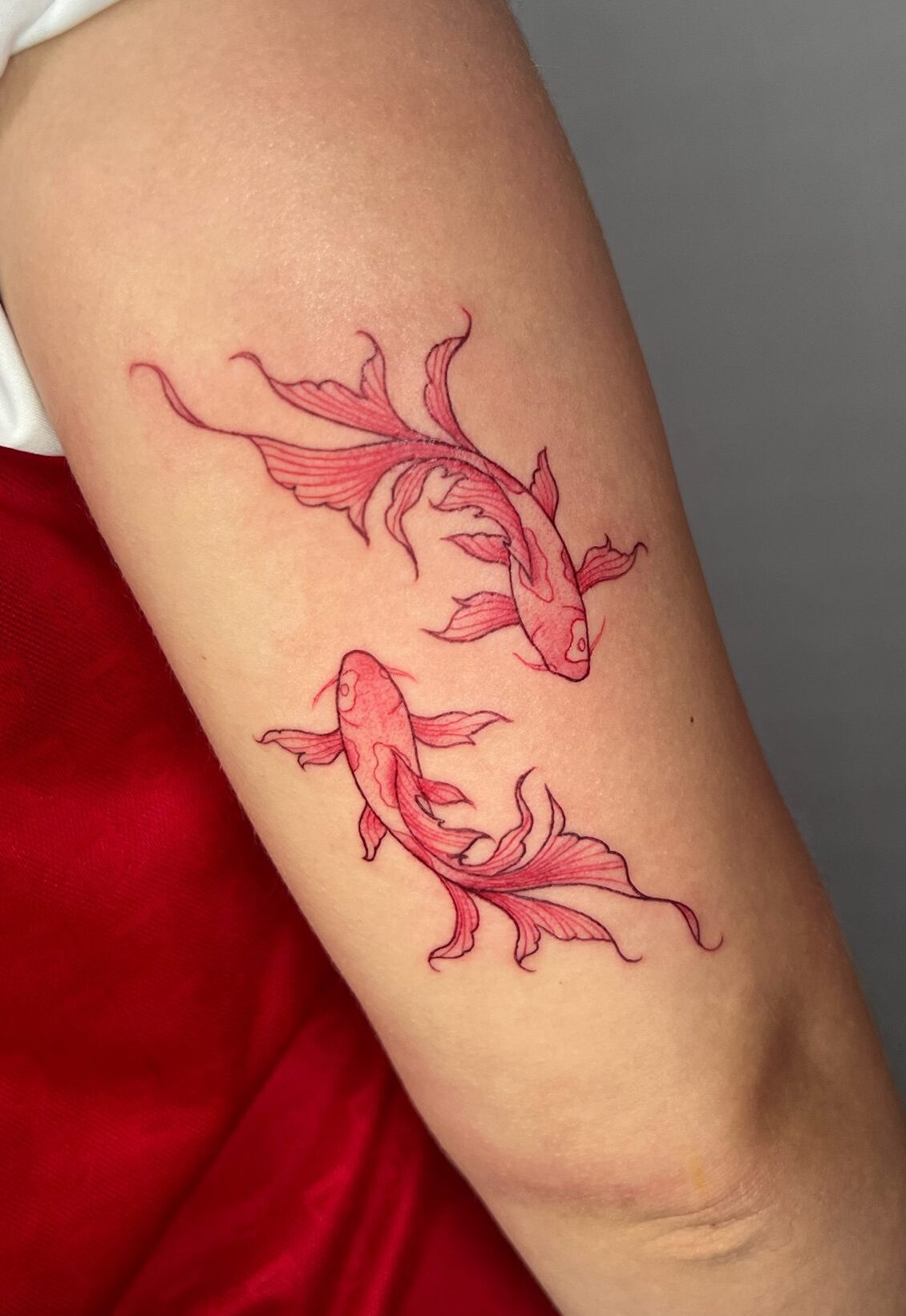
A fine line approach to the same imagery takes a different path. Instead of heavy outlines and solid color fill, the dragon, koi, or wave is rendered in delicate, single-needle linework, sometimes with soft shading, sometimes left as pure line. The result reads as more understated and contemporary, while still carrying the same symbolism and visual drama in its composition.
Neither approach is more “correct.” They’re simply different visual languages applied to shared imagery, and which one suits you depends entirely on the aesthetic you’re drawn to.
Common Motifs and What They Carry
Part of what makes this style of sleeve so popular is that the individual symbols carry real meaning, not just visual appeal.
Koi fish are tied to perseverance and transformation, drawn from the legend of a koi swimming upstream against the current. We’ve covered what every element of a koi design symbolizes in more depth elsewhere on the blog.
Dragons represent strength, wisdom, and protection in East Asian symbolism, and their long, sinuous form naturally suits a sleeve’s wraparound shape better than almost any other motif.
Snakes carry their own rich symbolism around transformation and renewal, and work beautifully in fine line thanks to their flowing, linear shape. We’ve explored snake symbolism in detail in a separate piece.
Cherry blossoms represent the beauty of impermanence, since the flowers bloom briefly and fall quickly. They’re one of the most popular softening elements paired with bolder focal pieces like dragons or koi. We’ve written about their deeper meaning as well.
Waves, often inspired by the famous woodblock print aesthetic, add movement and a strong sense of flow that ties a sleeve’s separate elements together visually.
Chrysanthemums symbolize longevity and resilience in Japanese tradition, and their dense, layered petals give a fine line artist a lot of room to show detailed linework.
Why Fine Line Suits a Sleeve Built From These Motifs
A sleeve needs its elements to relate to each other, not just sit side by side. Fine line rendering naturally helps with this, since consistent, delicate linework across every element creates visual cohesion even when the individual symbols are quite different from each other, a dragon here, cherry blossoms there, a wave connecting the two. Bold traditional style achieves cohesion through consistent heavy outlining and color saturation; fine line achieves the same thing through consistency of line weight and spacing.
This also makes fine line Asian-style sleeves a natural fit for a patchwork approach, where elements are added individually over time but still read as one cohesive piece. If you’re building your sleeve gradually rather than all at once, that’s a real and common way to approach it, and we’ve written a full guide on planning a cohesive patchwork sleeve that applies directly here.
Planning the Composition
A few things make a real difference in how well an Asian-style fine line sleeve comes together:
Pick a primary focal element. A dragon or koi large enough to anchor the design gives everything else something to relate to. Without a clear focal point, a collection of smaller motifs can end up feeling scattered rather than intentional.
Use a consistent connecting element. Waves, clouds, or botanical linework woven between the larger motifs help tie separate pieces together into one flowing composition rather than a series of unrelated images sharing an arm.
Think about direction and flow. Many of these motifs, especially dragons and koi, have a natural directional movement. Planning which way they “swim” or face relative to your arm’s shape and your body makes a real difference in how natural the final piece looks.
Decide on black and gray versus color early. Fine line work can be done in pure black, black with soft gray shading, or with selective color accents. This decision affects how the whole sleeve is planned, so it’s worth settling before the first session rather than deciding element by element. Color work is discussed individually with your artist, since not every artist approaches color the same way.
Building It Over Time
Few people complete a full sleeve like this in one sitting, and most don’t try to. A common approach is starting with the focal piece, then adding connecting and supporting elements in later sessions as your ideas develop or your budget allows. This works especially well with Asian-inspired motifs specifically, since the natural vocabulary of waves, clouds, and botanicals gives you flexible ways to connect new elements to what’s already there, even if they’re added months or years apart.
If this gradual approach appeals to you, mention it during your first consultation so your artist can plan the initial piece with enough visual “room” left for what comes next, rather than designing something that feels finished and hard to build onto later.
Choosing the Right Artist
Fine line rendering of traditionally bold imagery is its own skill, distinct from both classic irezumi work and from fine line florals or lettering. When you’re looking through portfolios, look specifically for examples of linework-based dragons, koi, or waves, rather than assuming any fine line artist or any Japanese-style artist can translate seamlessly between the two approaches. Mentioning the specific look you’re after, delicate and linear rather than bold and saturated, when you book helps make sure you’re paired with the right artist from the start.
What to Expect for Cost and Sessions
Pricing for a piece like this follows the same structure as any custom project. Every tattoo at IGLÀ starts at a minimum of $150, and a larger composition like a sleeve element is quoted individually based on size, detail, and number of sessions once your artist has seen your reference images and talked through your concept. A deposit secures your appointment and comes off your final total, larger projects estimated above $1,000 carry a $200 deposit.
Multi-element sleeves are almost always completed across more than one session, both for your comfort and so each piece gets the attention detailed fine line work actually requires.
Getting Started
If you’re drawn to the symbolism and visual drama of Asian-inspired imagery but want something quieter and more contemporary than bold traditional tattooing, a fine line approach gives you that option without losing the meaning behind the motifs themselves. Bring reference images of the style and symbols you’re drawn to, and your artist can help you figure out a composition that actually works as a sleeve, not just a collection of separate pieces.
Book a consultation and bring whatever references you have, even if you’re still deciding between a few different motifs.
FAQ
Is a fine line Asian-style sleeve the same as traditional Japanese tattooing? No. Traditional irezumi uses bold outlines and dense color, while this approach renders the same symbols in delicate linework. They’re different visual styles applied to similar imagery and symbolism.
Can I mix fine line Asian motifs with other styles in the same sleeve? It’s possible, but it takes careful planning to keep the sleeve feeling cohesive rather than like two separate styles competing for space. Talk through this directly with your artist during the consultation.
Do I need to pick all the elements before starting? Not necessarily. Many people start with one focal piece and add connecting elements over time. It helps to mention this plan upfront so your artist can leave appropriate space for future additions.
Which motifs work best together in one sleeve? Elements that share a natural visual relationship, like a koi with waves, or a dragon with clouds, tend to connect more naturally than unrelated symbols placed side by side. Your artist can help you choose combinations that flow well together.
How long does a full Asian-style fine line sleeve take to complete? It depends entirely on the scope of the design and how many elements you’re including. Most are completed across several sessions, whether planned all at once or built up gradually over time.