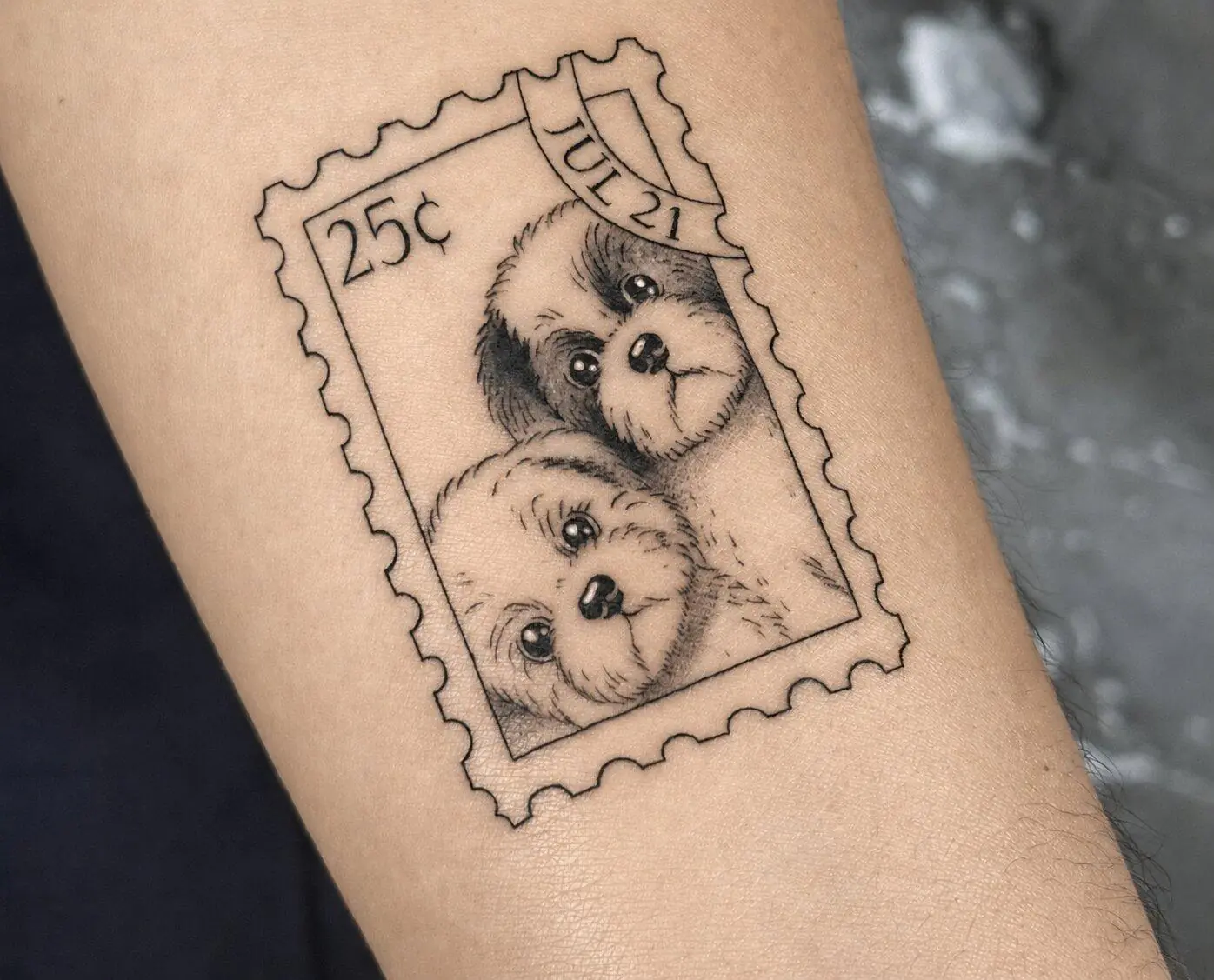
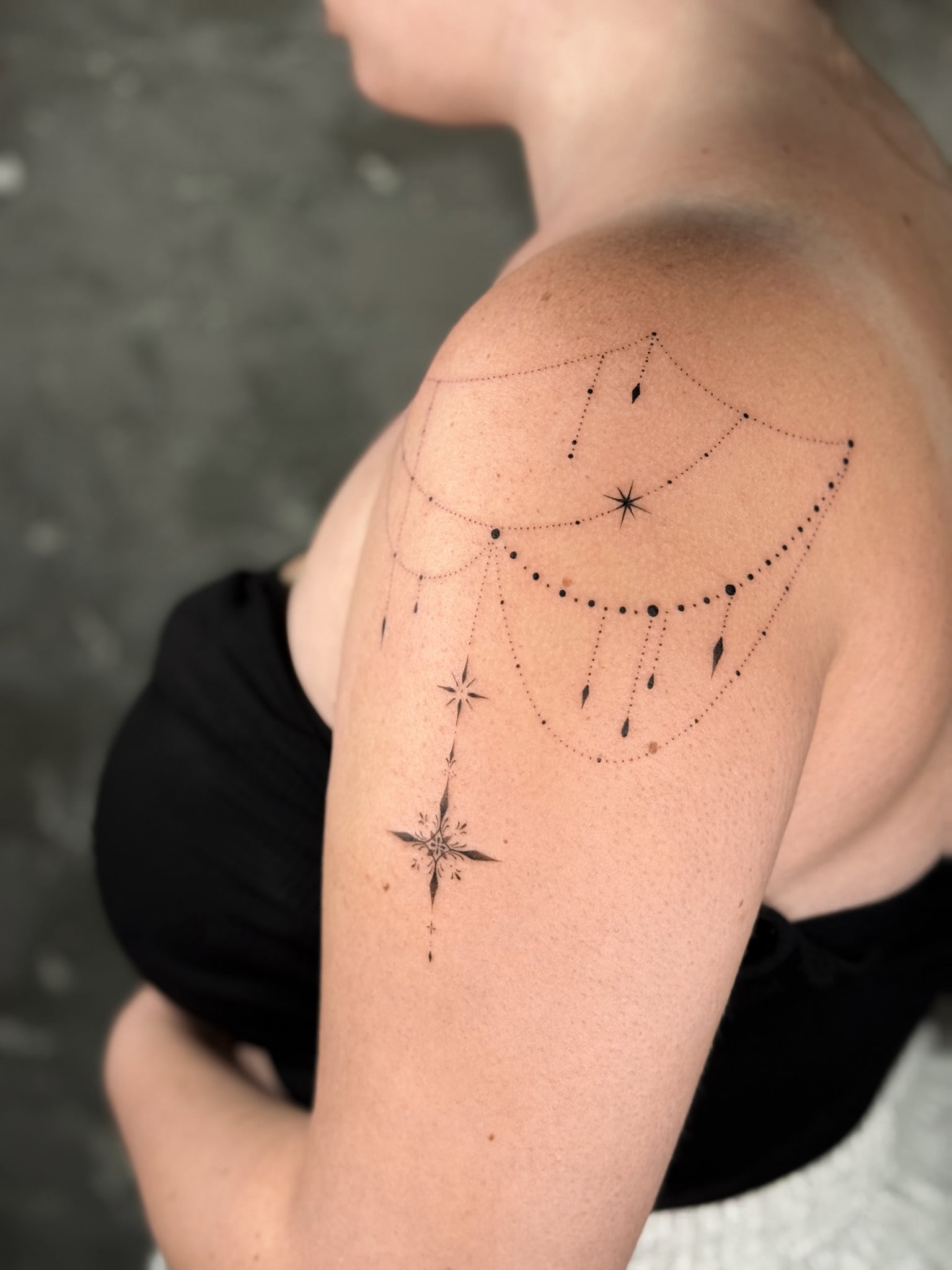
Yes, a full sleeve can be built with fine line work, absolutely. The part to think about is neither whether it can be done or not nor deciding whether you want one in the first place. What needs figuring out is predicting how the arm should/will fill up over time. The finished project should not look like the new pieces got added wherever the most space happened to be.
A fine line tattoo sleeve can be one continuous piece. It can also be several separate tattoos that slowly start talking to each other visually. Or something halfway between those two. Very common, actually.
There are things you need to think about, such as spacing, scale, line weight. Also, where the larger pieces are placed and how the tattoos distort when the arm turns. Because the arms turn. People plan sleeves on flat screenshots all the time and then forget the body is not flat.
How to Connect Individual Elements Into a Cohesive Design
You can absolutely build a sleeve one tattoo at a time.
Just do not treat every tattoo like it exists alone.
That is usually where the weird gaps start later. One piece sits too close to the elbow. Another takes up the best part of the forearm. Then six months later you want to add something larger and suddenly there is nowhere useful to put it.
Not ideal.
I prefer having at least a loose idea of the whole arm early. Not every flower. Not every symbol. Just the general direction.
A few things are worth keeping consistent:
- Line weight. It does not have to match perfectly. It should still feel related.
- Scale. Tiny pieces everywhere can get visually busy fast.
- Spacing. Empty skin helps. You do not need to fill every little gap.
- Repeated details. Similar florals, geometric accents, soft shading, or recurring subjects can tie things together.
- Direction. A design near the shoulder sits differently than one on the inner forearm.
- Visual weight. Some pieces should lead. Others can be quieter.
If you are planning a fine line sleeve NYC project, bring references for the overall look, not just individual tattoos you like.
Maybe one photo has the spacing you want. Another has the line weight. A third has the general amount of detail.
That is enough to start a useful conversation.
You do not need to arrive with an entire arm mapped perfectly. Honestly, that can be too rigid anyway. Once the first few pieces are actually on the skin, the next choices often become clearer.
And sometimes they change.
Fine Line Sleeves vs. Patchwork Sleeves
These two get confused a lot because people use “sleeve” for almost any arm with lots of tattoos.
A continuous sleeve is planned more like one composition. The sections connect visually. The artist can think ahead about the inner arm, elbow, shoulder, and all the annoying little spaces that are easy to forget at the beginning.
Patchwork is looser.
Each tattoo stays more separate. The sleeve builds piece by piece, sometimes over years.
Continuous Fine Line Sleeves
This works well when you already know you want the arm to feel like one project.
Botanical work is an easy example. Stems, florals, leaves, ornamental lines, small details. They can move around the arm without needing every section to look identical.
Large custom work may take several sessions.
That gives the artist room to work section by section and make decisions about spacing as the project grows.
I like this approach for someone who already knows the general theme and wants a more planned result.
Patchwork Sleeves
A fine line patchwork sleeve is more flexible.
You can get one tattoo now. Another later. Different subjects are fine.
A small flower can sit beside lettering. Then maybe a miniature illustration. Something geometric. It can work.
The problem comes when every piece is chosen with zero thought about the rest of the arm.
I usually pay attention to three things first: spacing, size, and where the eye lands.
Too much even spacing can look strangely planned in a bad way. Completely random spacing can leave ugly little gaps later.
Somewhere in between usually feels better.
And a delicate tattoo sleeve does not mean twenty-five tiny tattoos.
One larger piece can actually help. It gives the smaller work somewhere to sit around. Makes the arm feel less scattered.
How to Plan a Multi-Session Project
A full sleeve usually needs multiple appointments. Large, detailed custom pieces can take several sessions, and the exact amount depends on the design itself.
Do not try to solve the entire schedule before the first session.
That gets annoying quickly.
Start with the arm.
Bring photos of what is already there, if anything. Show references. Talk about the kind of sleeve you are imagining and how much open skin you want to keep.
Then decide what should happen first.
Maybe it is the largest focal piece. Maybe the lower arm. Maybe the tattoo you already know you want and have been saving for months.
There is no magic first section.
What I would avoid is filling small random spaces too early. Those awkward empty areas sometimes become useful later once the larger structure is in place.
After the first session, look at the arm again.
Not immediately. After it heals.
You may notice that the next piece needs to be longer than you expected. Or narrower. Or shifted slightly because the existing tattoo occupies more visual space than it seemed to on paper.
That is normal.
Real skin gives you information.
The project can adjust.
Custom work requires an entire process:
- Consultation
- Sketches/digital illustration
- Draft review
- Revisions
Larger pieces need even more time before tattoo day. Then there’s healing.
Each tattooed area needs time before nearby work continues. Fine line aftercare includes protecting the area, avoiding unnecessary rubbing and scratching, and keeping fresh work out of direct sun.
Do not decide the skin is ready just because it looks mostly fine on top.
Ask if you are unsure.
Budget should come into the conversation early too.
Large projects are easier when you know roughly how the work will be split up. Ask how the artist expects to divide the sleeve, what sections may need separate appointments, and how the project will progress.
If you need longer gaps between sessions because of your schedule or budget, say it.
No issue.
A sleeve does not need to be finished quickly to be planned well.
That is probably the biggest thing I would keep in mind. Let it grow without rushing to fill every open area. Keep the linework related. Give the larger pieces enough space. Let the artist look at the whole arm, not only the next empty patch.
If you already have a few fine line tattoos and are wondering how they could turn into a full sleeve, bring photos or come in with the arm itself. Once the artist sees the spacing in real life, the next move usually becomes much easier to figure out.