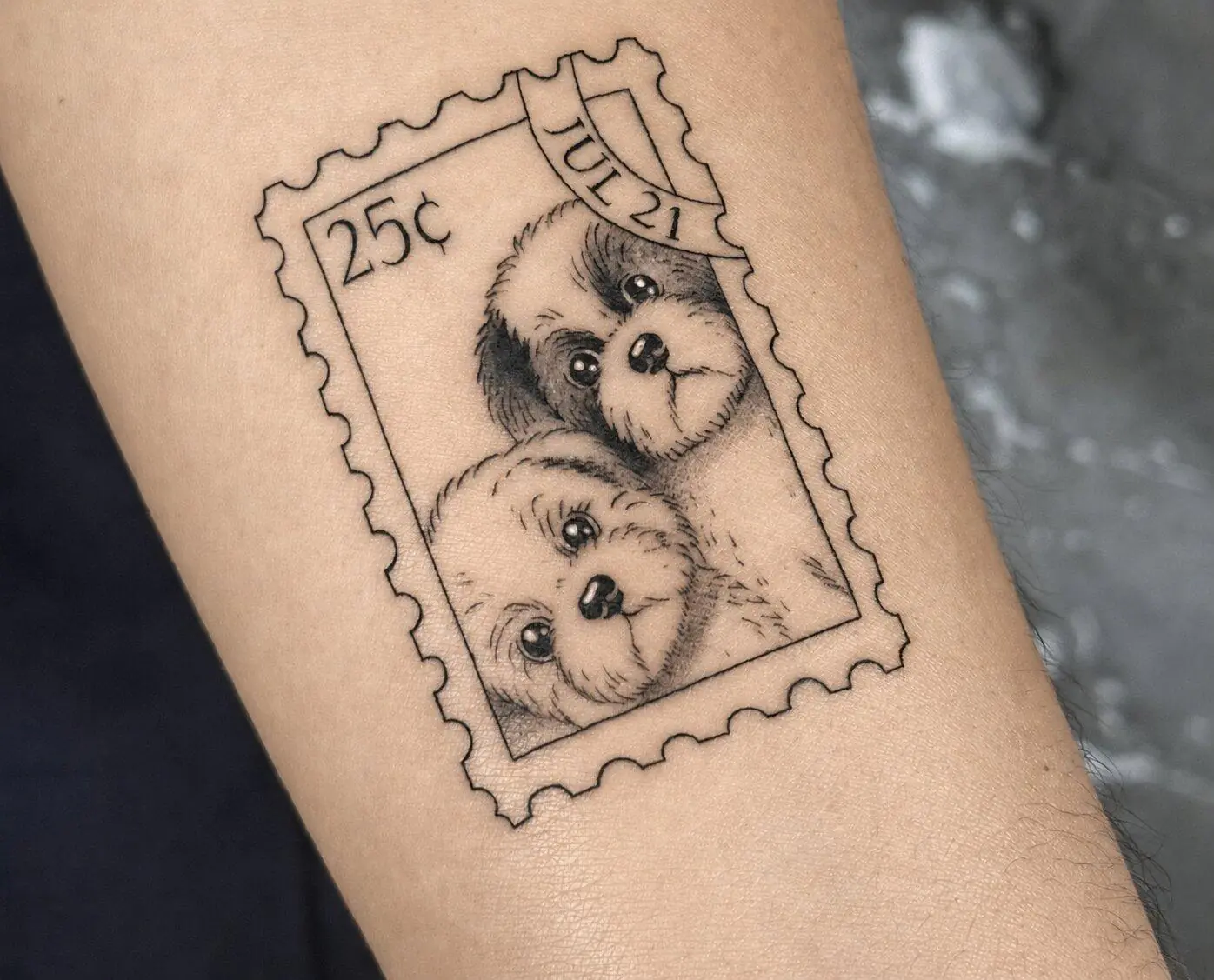

Fine line tattoos do change over time. Every tattoo does. Skin ages, pigment settles, sun exposure adds up, and extremely delicate details can soften as the years pass. The concern behind do fine line tattoos blur is understandable because thin lines leave less visual room for change than heavier tattoo work. That does not mean a fine line tattoo is destined to become indistinct. Technique, spacing, placement, healing, and long-term skin care all influence how the piece develops. The useful question is how those factors work together. Once you understand that, you can make better decisions about design size and placement before the tattoo is even started.
Why Every Tattoo Changes as It Ages
Tattoo pigment is deposited into the dermis, the deeper layer of skin beneath the epidermis. Pigment remains visible partly because immune cells called macrophages capture and retain tattoo particles. Research has shown that this process continues as old macrophages die and new ones take up released pigment.
The skin around that pigment does not stay exactly the same for life.
Normal aging changes its thickness, elasticity, texture, and response to environmental exposure. UV radiation also affects both skin and tattoo pigment. Dermatologists specifically warn that ultraviolet light can fade tattoo ink over time.
So fine line tattoo aging needs to be understood in context. A tattoo photographed immediately after the session is not the permanent final appearance. The skin still has to heal, settle, and continue changing over the years.
A few changes are completely expected:
Change | What It Can Look Like |
Initial healing | Temporary redness, dryness, peeling, or a slightly dull appearance |
Settled tattoo | Softer appearance than the fresh tattoo |
Long-term aging | Some loss of sharpness or pigment intensity |
UV exposure over time | Increased fading of tattoo pigment |
Natural skin aging | Changes in texture and the way details appear |
Fine line work can show these changes more noticeably because the design relies on thin marks and lighter ink density. The studio’s aftercare guidance explains that fine line tattoos commonly settle into a softer appearance after healing and may sometimes need a touch-up for crispness.
That softer healed look should not automatically be interpreted as a failed tattoo.
How Technique, Skin, and Placement Affect the Lines
People asking do fine line tattoos fade are usually thinking about the needle alone. The needle is only one variable.
Fine line work often uses a single needle or a tight needle grouping. This creates narrow linework and allows very small details. The studio’s healing guidance notes that fine line pieces generally use less ink density than bold tattoo styles, which leaves less room for small healing changes.
Several other factors influence the healed appearance.
Technique and Design Density
Thin lines need control, and spacing deserves just as much attention.
A design with many tiny elements packed close together gives the skin very little visual space between those marks. As the tattoo settles over time, extremely tight details may become harder to distinguish.
This is why I pay close attention when someone wants a detailed reference reduced dramatically. The drawing may look perfectly readable on a phone screen. Skin has different limitations.
Good fine line design usually considers:
- the thickness of individual lines;
- spacing between neighboring details;
- the amount of information inside a small area;
- the size required for lettering to remain readable;
- how the composition will sit on the chosen body area.
The artist may recommend making the design slightly larger or removing one small element. That advice is usually about preserving clarity.
Skin and Healing
No two clients heal identically. Tattooing temporarily disrupts the skin barrier and triggers a normal inflammatory healing response. Dryness, peeling, itching, mild swelling, and temporary changes in appearance can occur while the tattoo settles.
Aftercare can affect this stage. Repeated friction, excessive moisture, picking at peeling skin, and sun exposure can interfere with healing.
The studio’s fine-line guide gives special attention to friction because delicate work has less ink density. Tight clothing, bag straps, and repeated rubbing are specifically discouraged during healing.
Placement and Daily Exposure
Placement changes what the tattoo experiences every day.
Some areas get more sun. Others deal with regular friction through clothing, footwear, straps, or normal movement. Hands and other highly exposed areas also experience frequent washing and environmental contact.
There is no honest rule saying one body area guarantees perfect longevity. I would think instead about what happens to that skin during an average week.
A frequently exposed placement may require more attention to sun protection once the tattoo is fully healed.
What Helps a Fine Line Tattoo Stay Crisp
A good healed fine line tattoo starts with decisions made before the appointment and continues with sensible care afterward. You cannot freeze a tattoo in its fresh state permanently. You can avoid several things known to accelerate fading or interfere with healing.
I would think about longevity in this order.
- Choose a scale that supports the design. Tiny does not automatically suit every fine line idea. Detailed lettering, microrealism, flowers with several interior elements, and ornamental work need enough room for separation.
- Listen when the artist recommends more spacing. A half-inch change can sometimes give a detailed composition much more usable room. The goal is a tattoo that still reads once the skin has settled.
- Follow the aftercare instructions you receive. The studio’s published guidance recommends gentle cleaning, appropriate moisturizing, avoiding scratching or picking, and keeping the healing tattoo out of standing water. The exact covering routine depends on the bandage used.
- Reduce unnecessary friction during healing. Loose clothing can help when the tattoo sits under fabric. Think about backpack straps, waistbands, tight sleeves, footwear, and anything else that repeatedly rubs the placement.
- Protect healed tattooed skin from UV exposure. The American Academy of Dermatology recommends broad-spectrum, water-resistant sunscreen with SPF 30 or higher on tattooed skin when exposed to the sun. UV light can fade tattoo ink.
- Judge the tattoo after it has actually healed. A piece can look dull, dry, or slightly uneven during the early stages. The studio’s aftercare timeline notes that deeper healing continues even after the surface appears settled.
- Ask about a touch-up if something still looks incomplete once healed. Delicate work can occasionally need small corrections. Give the skin enough time to settle before evaluating the final result.
Fine line tattoos are designed around subtlety, so their long-term appearance depends heavily on good technical decisions at the beginning. Size, spacing, placement, and aftercare all play a role. Sun protection then becomes part of keeping tattooed skin looking its best over time.
If you have a design in mind and are unsure how small it can safely go, that is worth discussing before the session. Bring the reference to a consultation or walk-in and let the artist assess the detail, placement, and scale on actual skin rather than guessing from an image.