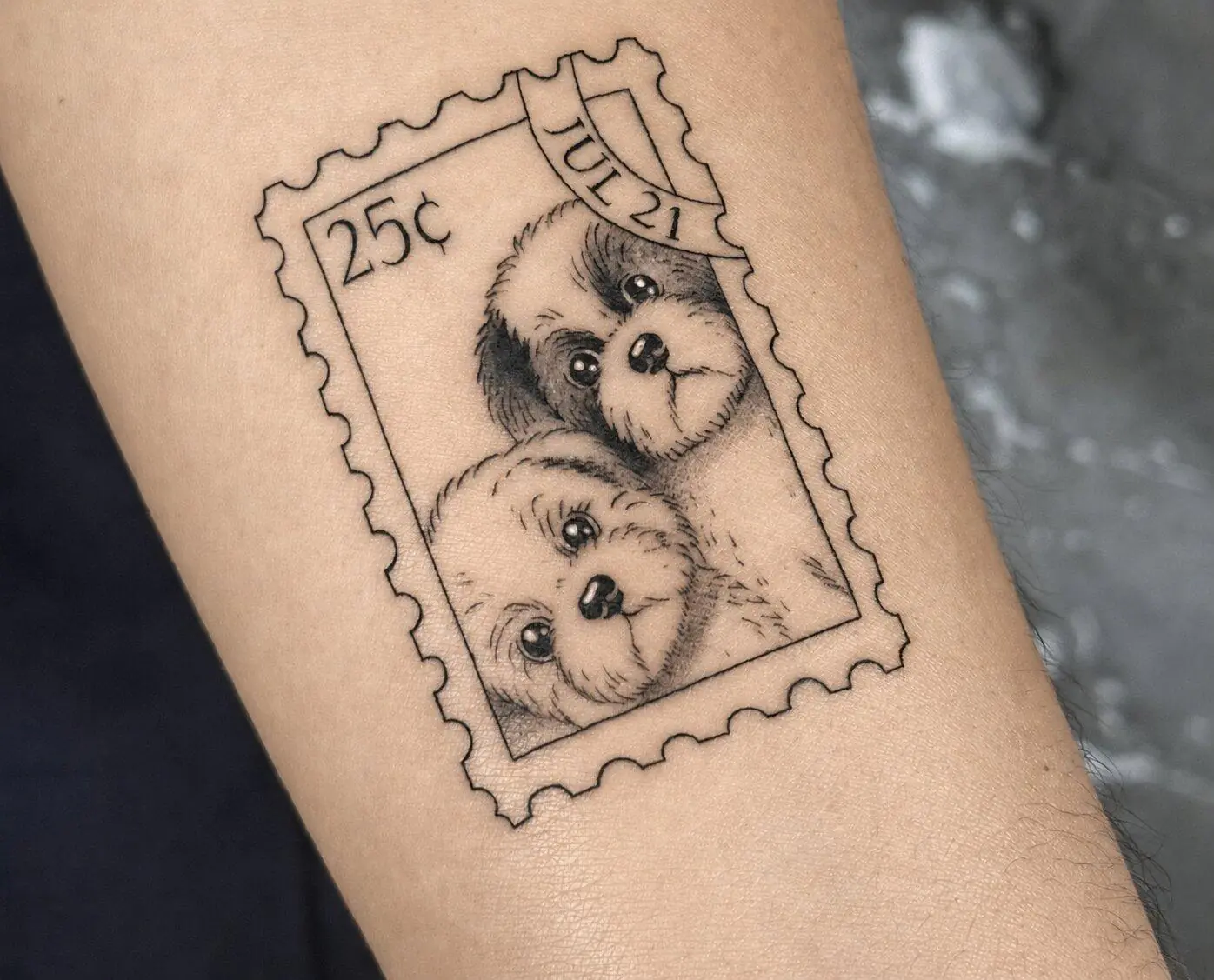
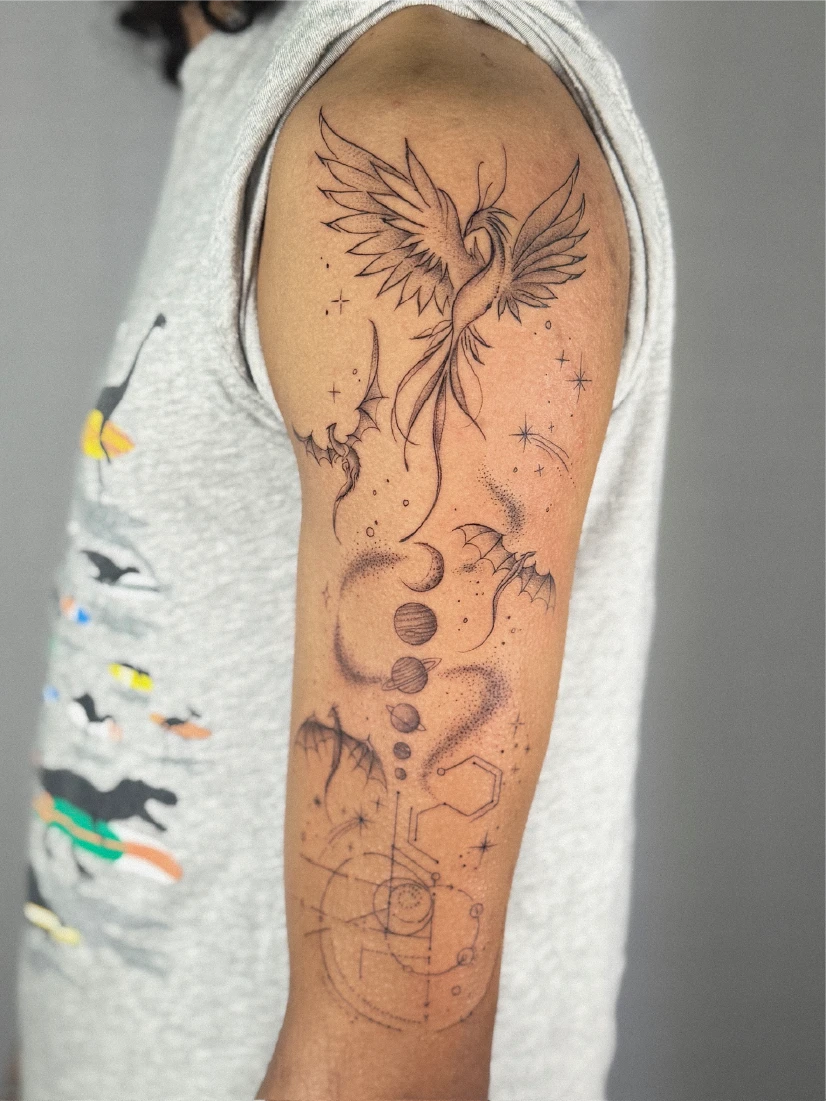
Sleeves, full-leg pieces, large back work, and other extended tattoos need more planning than a small standalone design. You are dealing with a much larger area of skin, several sessions, healing gaps, design continuity, and a budget that usually has to be considered across the whole project. For anyone starting a large tattoo project NYC studios can help organize the process, but it still helps to understand the decisions involved before the first appointment. You do not need every inch planned on day one. You do need a clear direction, realistic timing, and enough flexibility for the artwork to develop properly.
How to Choose a Cohesive Concept and Style
Large work occupies enough skin that individual design decisions start affecting each other. The first tattoo may establish the line weight, density, color approach, scale, and spacing that future sections need to work around.
A continuous sleeve can be mapped as one composition and completed across several sessions. Patchwork develops differently. Individual tattoos are added over time, with each piece able to stand on its own while still contributing to the overall look.
If you are planning a tattoo sleeve NYC project, decide early how connected you want the finished arm to feel. That one choice influences almost everything that comes after it.
For a continuous piece, I would discuss the overall composition before focusing too heavily on individual details. The artist needs to know which elements deserve the most visual space and how the design should move around the arm.
With patchwork, consistency can come through:
- a shared tattoo style;
- similar line weight;
- a controlled color palette;
- repeated subject categories;
- intentional spacing;
- related scale across neighboring pieces.
A sleeve does not need one literal theme. Several subjects can live together successfully when the visual language stays coherent.
Leave Room for the Body
Large tattoo plans should also account for natural contours and available skin.
An arm has broad areas, narrow areas, joints, curves, and sections that become more visible depending on position. A leg presents its own set of proportions. Large anchor pieces usually need enough open space to read clearly, while smaller elements can occupy areas around them later.
This is where I would resist planning the tattoo entirely on a flat digital mockup. The artist needs to see how the concept relates to the actual body.
Reference images are still useful. Bring examples that communicate style, subject, density, and details you like. Then let the consultation deal with scale and placement.
Why Large Tattoos Usually Require Multiple Sessions
A big tattoo asks the artist to do several kinds of work: stencil placement, linework, shading, texture, fine detail, and sometimes color. There is also a practical limit to how much tattooing a person can comfortably sit through at once.
Large or heavily detailed custom projects may require multiple sessions. The timeline is discussed before tattooing begins, so the client knows how the project will be approached.
Planning getting a full leg tattoo in NYC is a good example. The design has to account for a large area, several contours, and enough session time to complete each section properly. There is no useful universal session count because the artwork itself determines how the work gets divided.
The exact breakdown depends on the design. One artist may structure a large piece around major sections of the composition. Another project may progress through linework first and detail during later appointments.
A few factors can increase the amount of session time required:
- large skin coverage;
- dense detail;
- extensive shading;
- complex custom composition;
- several connected elements;
- color work;
- placement across curved or moving areas.
Client tolerance enters the picture too. People respond to long tattoo sessions differently, and that response can change depending on placement or the amount of work already completed that day.
I would never build a large-project schedule around the maximum amount of time you think you can tolerate. Give the artist room to plan sensible stopping points.
Multiple appointments also give tattooed skin time to recover before additional work is done in that area. Your artist can explain when the next section is ready and how the appointments should be spaced for the particular project.
How to Estimate the Timeline, Budget, and Healing Process
A large custom project becomes easier to organize once you separate three things: design preparation, tattoo sessions, and healing. Budget belongs in that conversation as well, especially when the work will continue across several appointments.
If you are planning a custom large tattoo Manhattan appointment, these are the steps I would work through before trying to lock in the entire calendar.
Step 1: Start With the Consultation and Design Timeline
Custom work starts with an inquiry and a consultation. Bring reference images, a rough description, preferred placement, approximate size, and a budget range if you already have one.
During the consultation, the artist can discuss the design direction and suggest adjustments based on size and placement.
Once that direction is established, design development begins. Custom artwork may involve pencil sketches, digital illustration, or both. Most pieces have a stated design phase of one to three weeks after consultation, depending on complexity. Larger or more complicated projects may require additional time.
Clients can review a draft and request changes. Most custom designs are finalized within one or two revision rounds, while more complex work may need further development.
For a large project, I would avoid setting a hard tattoo date before understanding how much design work has to happen first.
Step 2: Build the Session Plan With the Artist
Once the design is ready, discuss how the tattoo itself will be divided. Ask:
- Which section will be tattooed first?
- Which areas need their own appointments?
- How much work is planned for each session?
- At what point will the artist reassess the next stage?
- How should healing affect the next booking?
Large and heavily detailed projects may need several appointments. The artist should walk you through the expected timeline before the tattooing starts.
On each tattoo day, the approved design is placed as a stencil first. Size and positioning can still be adjusted before the needle touches the skin.
Step 3: Get a Project Estimate Before Committing
Tattoo sessions are priced by project, and the final price is communicated before an appointment is confirmed. Size, placement, and design complexity are used when the estimate is prepared.
With a large tattoo, ask how pricing will be handled across the planned sessions. You should understand the financial structure before committing to an extended project.
I also recommend telling the studio your budget range during the early design conversation. That information can help define the scope before significant design work is underway.
Do not shrink an ambitious design purely to force it into a lower budget. Ask what changes are technically sensible. Sometimes scope can be adjusted. Sometimes the project simply needs to be planned over a longer period.
Step 4: Plan Around Healing
A fresh tattoo needs recovery time.
The surface layer typically heals within two to three weeks, while deeper skin continues settling afterward. After each session, the tattoo is cleaned, protected, and aftercare instructions are provided.
Basic healing guidance includes keeping the tattoo clean, following the instructions for the covering used, avoiding direct sun, and staying out of standing water while the tattoo heals.
Large projects make this stage especially important because another appointment may already be on the calendar. Do not decide for yourself that the area is ready simply because it looks fine on the surface. Check with your artist if you are unsure.
For long-term projects, I like to think in stages: design first, one session at a time, proper healing after each appointment, then reassessment. That approach keeps the plan realistic and gives both the artwork and the skin enough time to progress properly.