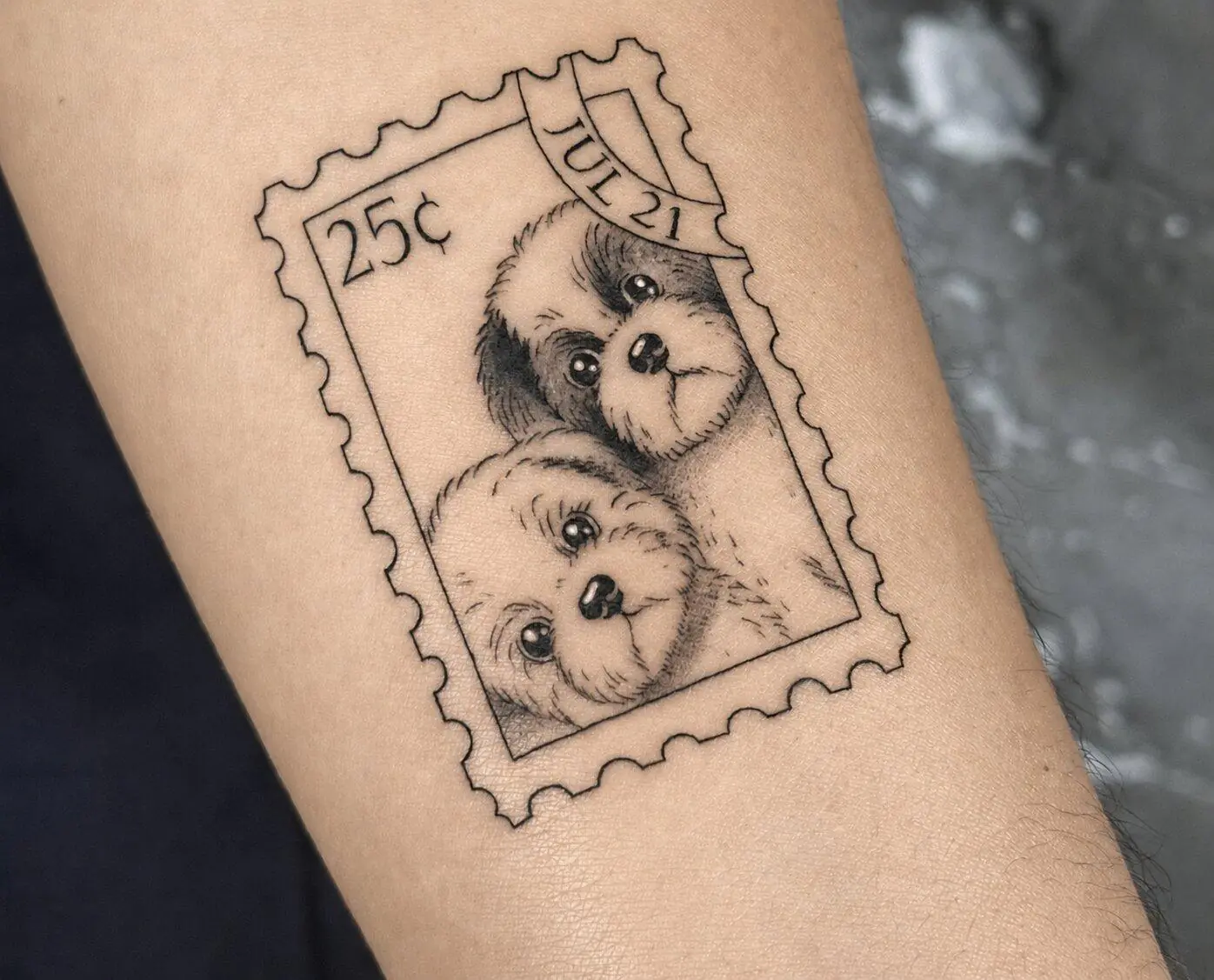
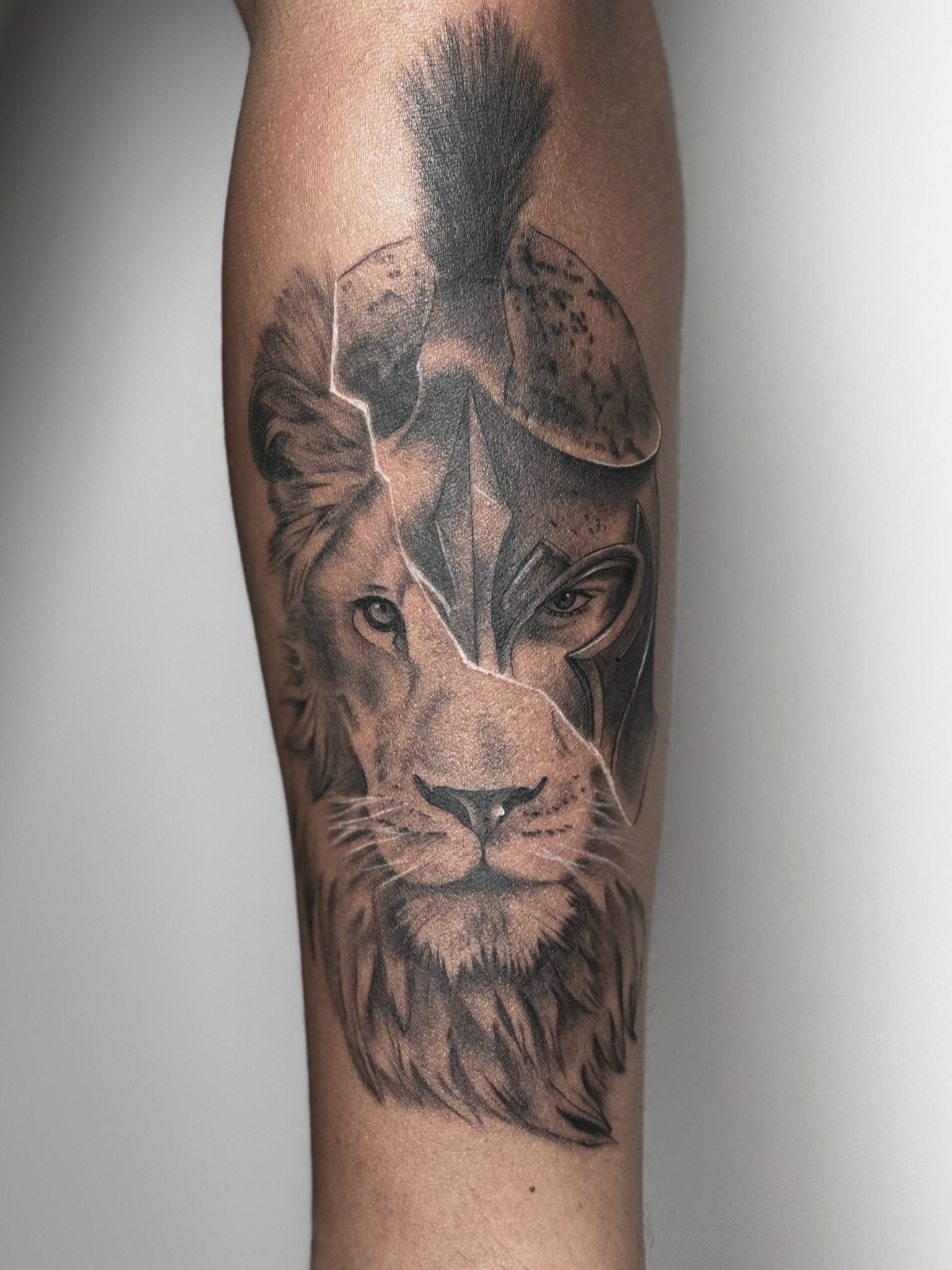
A quarter sleeve is one of those tattoo terms everyone throws around with slightly different assumptions about what it actually means. Some people picture a single design covering the upper arm. Others picture something on the forearm. Some assume it’s basically a big tattoo, others assume it’s barely bigger than a standard piece. Before you can plan one well, it’s worth getting clear on what you’re actually asking for.
What “Quarter Sleeve” Actually Means
Think of a full sleeve as the entire arm, shoulder to wrist. A quarter sleeve is roughly one quarter of that canvas, most commonly either the upper arm (shoulder to elbow) or the forearm (elbow to wrist), though exactly where it starts and stops is flexible and gets worked out with your artist based on your design and your arm.
This matters because the two options read very differently. An upper arm quarter sleeve is usually easier to keep covered for work or formal settings, while a forearm piece is more visible day to day and wraps around a narrower, more curved area that affects how certain designs sit. Neither is more “correct,” but it’s worth deciding which half of the arm you’re actually picturing before you get too far into design conversations.
Why Quarter Sleeves Are a Popular Entry Point
A quarter sleeve sits in a useful middle ground. It’s a real commitment, bigger and more involved than a single small piece, but it doesn’t require the multi-year planning and budget of a full sleeve. For a lot of people, it’s the natural next step after a first tattoo or two, or a way to finally commit to a larger concept without taking on an entire arm at once.
It’s also a smart way to test whether you actually want to keep building toward a half or full sleeve later. A well-planned quarter sleeve can expand naturally if you decide to keep going, while a poorly planned one can make future additions feel cramped or disconnected. More on that below.
What Affects the Cost
There’s no single flat rate for a quarter sleeve, and anyone who quotes you one number without seeing your idea is guessing. A few things move the price:
Size and coverage. A quarter sleeve that’s mostly negative space with a few focal elements costs less than one with dense, continuous coverage across the whole area.
Level of detail. Fine line botanical work with lots of small individual elements takes longer than bold, simpler shapes covering the same physical space.
Color versus black and gray. Color work generally adds time compared to linework or shading alone.
Number of sessions. Quarter sleeves are usually completed across more than one sitting, both for your comfort and for the quality of detailed work, and the total session count affects the overall cost.
At IGLÀ, every tattoo starts at a shop minimum of $150, but a quarter sleeve is quoted as its own custom project once your artist has seen your reference images and talked through your concept. A deposit of $100 secures your first session, or $200 if the full project is estimated above $1,000, and that amount comes off your total rather than being charged separately.
How Many Sessions to Expect
Most quarter sleeves take more than one appointment, though exactly how many depends entirely on the design. A simpler concept with a couple of focal pieces might be finished in two sessions. A densely detailed design with a lot of fine line work or shading can take three or more. Your artist will give you a realistic session estimate once the design is finalized, which is also a good moment to talk through budget and timing for each visit.
Spacing sessions out gives your skin time to heal between visits, which matters more for larger, more detailed work than it does for a small single piece.
Design Approaches That Work Well at This Size
A single large focal piece with supporting elements. One strong central image, a large botanical arrangement, an animal, a portrait, surrounded by smaller complementary details that fill the space without competing with it.
A cohesive cluster of smaller pieces. Several related elements grouped together, connected by consistent linework style or a shared theme, rather than one dominant image. This approach, sometimes called patchwork when done well, works especially nicely for fine line quarter sleeves. We’ve written a full guide on planning a cohesive patchwork sleeve if this direction interests you.
Wrapping ornamental or botanical linework. Continuous flowing linework that wraps naturally around the arm’s shape tends to look intentional at this size in a way it sometimes doesn’t on a single small piece, since there’s enough room for the design to actually move with the arm’s contours.
Negative space design. Leaving deliberate open skin between elements, rather than filling the entire area, often reads as more sophisticated than dense coverage and gives the piece room to breathe.
Planning for Future Growth
If there’s any chance you’ll want to extend this into a half sleeve or full sleeve down the road, say so during your consultation. Your artist can plan the composition with that possibility in mind, leaving the right kind of space and avoiding a hard visual “edge” that would be awkward to build past later. Even if you’re not sure yet whether you’ll continue, mentioning that you’re open to it costs nothing and keeps your options open.
If you’ve already decided you want to go further eventually, it’s worth reading about how larger, multi-session projects come together so you know what that longer-term planning conversation looks like.
Upper Arm or Forearm: Which to Choose
A few practical differences worth weighing:
- Visibility. Forearms are visible in short sleeves and everyday situations; upper arms are easier to keep private for work environments with dress codes.
- Shape and curve. Forearms narrow and curve more than upper arms, which affects how certain designs, especially anything with straight symmetry, need to be adapted to sit naturally.
- Pain and sensitivity. Both areas are generally considered moderate for discomfort, though individual experience varies more than placement charts suggest.
- How it reads with clothing. If you wear a lot of short sleeves, a forearm piece will be part of your everyday look. If you mostly wear long sleeves for work, an upper arm piece might feel more like it’s just for you.
There’s no wrong answer here, only the one that fits how you actually live and dress.
Preparing for Your First Session
Since a quarter sleeve usually starts with a longer sitting than a small tattoo would, the usual preparation advice matters even more: get a good night’s sleep, eat a real meal beforehand, stay hydrated, and skip alcohol for at least 24 hours prior. Wear something that gives easy access to the area without needing to fully undress, and plan for the session to run longer than you might expect for a smaller piece.
If you want to explore the level of detail and style this kind of piece often involves, our fine line tattoo work is a good place to start, and looking through individual artist portfolios will help you find the right fit for the specific style you’re picturing.
Ready to Plan Yours?
A quarter sleeve is enough of a commitment to deserve real planning, but it’s also one of the more approachable ways to finally start a bigger piece you’ve been thinking about. Bring your reference images and ideas to a consultation, and your artist will help you figure out the right size, placement, and session plan for what you have in mind.
Book your consultation and let us know you’re thinking about a quarter sleeve so we can plan accordingly from the start.
FAQ
Is a quarter sleeve the upper arm or the forearm? It can be either. “Quarter sleeve” refers to roughly one quarter of the full arm, and whether that’s the upper arm or forearm is up to you and gets worked out with your artist based on your design.
How much does a quarter sleeve typically cost? There’s no fixed rate since it depends on size, detail, and number of sessions. Every tattoo starts at our $150 shop minimum, with a quarter sleeve quoted individually once your artist sees your concept.
How many sessions does a quarter sleeve usually take? Most take two or more sessions, depending on the level of detail. Your artist will give you a realistic estimate once your design is finalized.
Can a quarter sleeve be extended into a half or full sleeve later? Yes, especially if you mention that possibility during your initial consultation. Planning the composition with future growth in mind makes it much easier to build onto later.
Does a quarter sleeve hurt more than a smaller tattoo? Pain is more related to session length than placement alone. A longer sitting for a larger piece can feel more tiring than a quick small tattoo, but it’s generally manageable with breaks as needed.